







gear teeth types is a key solution in the manufacturing industry, specifically within General equipment manufacturing industry and Manufacturing of bearings, gears, and transmission components. This article explores how SHIJIAZHUANG JINGSHI NEW MATERIAL SCIENCE AND TECHNOLOGY CO.,LTD supports professionals with durable, high-performance products, and explains why this product is an ideal choice for businesses in these sectors.
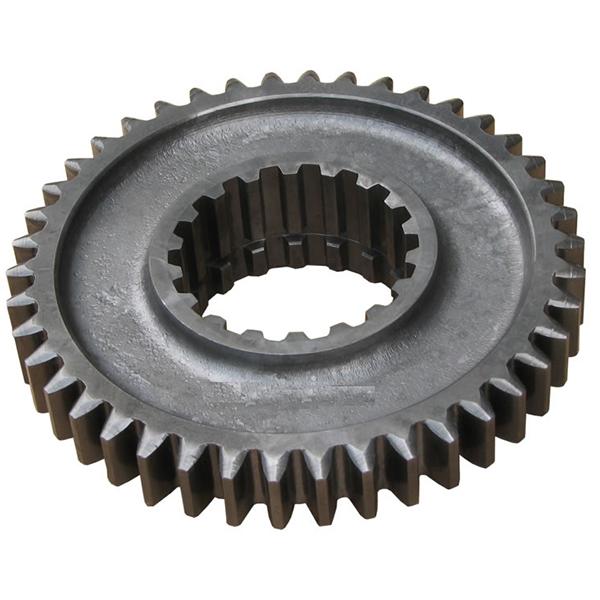
Table of Contents
- gear teeth types Overview
- Benefits & Use Cases of gear teeth types in Manufacturing of bearings, gears, and transmission components
- Cost, Maintenance & User Experience
- Sustainability & Market Trends in manufacturing
- Conclusion on gear teeth types from SHIJIAZHUANG JINGSHI NEW MATERIAL SCIENCE AND TECHNOLOGY CO.,LTD
gear teeth types Overview
In precision power transmission, gear teeth types describe the geometry, orientation, and profile of a gear’s working surface. From spur and helical to bevel, hypoid, worm, internal, rack, and herringbone, each tooth form influences load capacity, efficiency, noise, and manufacturability. B2B decision makers comparing mechanical gear types and mechanical gearbox types weigh factors like pressure angle (often 20°), module/DP, helix angle, face width, case depth, and surface hardness because these parameters determine NVH, torque density, and service life. For quick reference, the classic six types of gears—spur, helical, bevel, worm, rack-and-pinion, and hypoid—cover most industrial and automotive needs, and are the backbone of many gear types with images you see in catalogs and CAD libraries.
SHIJIAZHUANG JINGSHI NEW MATERIAL SCIENCE AND TECHNOLOGY CO.,LTD specializes in engineered gears and transmission components, with strong competencies in powder metallurgy (P/M) and precision machining. Typical specs include modules from approximately 0.3–6, tight dimensional tolerances for concentricity and runout, and heat treatments such as carburizing or nitriding to achieve robust surface hardness and wear resistance. In one OEM program, switching from fully machined spur gears to sintered, finish-machined helical gears helped reduce post-processing while improving tooth-to-tooth consistency—supporting quieter operation and stable assembly yields.
Benefits & Use Cases of gear teeth types in Manufacturing of bearings, gears, and transmission components
Manufacturers of bearings, gears, and transmission components depend on the right gear teeth types to match duty cycles and packaging constraints. For automotive engine and transmission systems, helical and hypoid teeth reduce noise and deliver higher torque density. In industrial gearboxes, spur and helical options provide cost-effective, efficient power transfer, while worm gears deliver high reduction ratios and smooth motion for material handling and actuators. Internal gears and precision splines are advantageous for compact planetary gearsets and e-mobility drives, aligning well with modern mechanical gearbox types used in robotics, e-bikes, power tools, and agricultural implements.
- Performance: Optimized profiles for lower NVH, greater load sharing, and improved efficiency.
- Manufacturability: Near-net-shape P/M gears minimize machining, support internal features, and enhance repeatability.
- Quality: Controlled porosity, surface densification, and post-sinter finishing enable reliable tolerances and long life.
Backed by an experienced engineering team and disciplined quality systems, SHIJIAZHUANG JINGSHI NEW MATERIAL SCIENCE AND TECHNOLOGY CO.,LTD delivers application-specific designs and validated processes for both legacy platforms and new product introductions. Whether your project calls for the classic six types of gears or a custom hybrid geometry, the company’s prototyping-to-mass-production support helps derisk timelines and shorten PPAP and SOP cycles.
Cost, Maintenance & User Experience
Total cost of ownership is driven by more than unit price. With optimized gear teeth types and P/M near-net-shape production, material utilization improves and secondary machining steps are reduced, cutting cycle times and energy use. For high-volume programs, consistent tooth geometry stabilizes assembly processes, while robust surface treatments extend service intervals—translating to lower warranty risk and stronger ROI over the lifecycle of mechanical gear types and gearbox assemblies. Many buyers report smoother startup costs and faster changeovers when designs are DFM/DFA-aligned from the outset.
- Durability: Properly specified modules, pressure angles, and heat treatments minimize wear and micro-pitting under dynamic loads.
- Maintenance: Standard lubrication practices, routine condition monitoring, and periodic backlash checks maintain performance and help avoid unplanned downtime.
- User feedback: Industrial and automotive clients value stable dimensional capability, predictable NVH, and streamlined supply—key drivers of reduced scrap and rework.
SHIJIAZHUANG JINGSHI NEW MATERIAL SCIENCE AND TECHNOLOGY CO.,LTD collaborates early to balance tooth design with process capability, helping procurement and engineering teams achieve competitive landed cost without compromising gear mesh quality or regulatory compliance.
Sustainability & Market Trends in manufacturing
Sustainability is reshaping sourcing decisions in the gear industry. Near-net-shape routes, such as powder metallurgy, can significantly reduce material scrap and machining time compared with fully subtractive methods, supporting cleaner production and lower embodied carbon. Evolving regulations and customer expectations—from REACH/RoHS considerations to end-of-life recyclability—encourage lighter, quieter, and more efficient transmissions across automotive, industrial, and electrified platforms. Meanwhile, digitization and in-line inspection bolster traceability, enabling precise control over module, helix, and tooth profile deviations to maintain performance with less waste.
- Trend drivers: Electrification, NVH-sensitive applications, compact mechanical gearbox types, and cost-per-newton-meter targets accelerate demand for advanced tooth geometries.
- Eco approach: Material-efficient processes, optimized heat-treatment windows, and durable coatings help extend service life and reduce lifecycle impacts.
SHIJIAZHUANG JINGSHI NEW MATERIAL SCIENCE AND TECHNOLOGY CO.,LTD positions itself as a forward-thinking, eco-conscious partner—investing in process control, energy-efficient furnaces, and recyclable packaging where appropriate. The outcome is a supply chain aligned with modern ESG objectives, without sacrificing the precision and reliability expected of premium gear teeth types.
Conclusion on gear teeth types from SHIJIAZHUANG JINGSHI NEW MATERIAL SCIENCE AND TECHNOLOGY CO.,LTD
Selecting the right gear teeth types is pivotal for optimizing torque density, NVH, efficiency, and durability across the General equipment manufacturing industry and Manufacturing of bearings, gears, and transmission components. With engineering-led design support and proven manufacturing capabilities, SHIJIAZHUANG JINGSHI NEW MATERIAL SCIENCE AND TECHNOLOGY CO.,LTD helps B2B teams bring robust, cost-competitive gear solutions to market quickly and reliably. From spur and helical to hypoid and worm, the company tailors geometry and processing to your performance and sourcing goals.
- Count on consistent quality, efficient production, and application-focused support.
- Partner with a manufacturer recognized for dependable delivery and engineering rigor.
- Strong CTA: Contact us: email: jspmtech@163.com — Visit our website: https://www.jssintering.com









