







Gear and types play a fundamental role in modern machinery, facilitating precise motion transmission, torque alteration, and reliability in numerous industries. This in-depth report covers the evolution, classification, design and parameter comparison of gear and types, with special focus on advanced Sintered Customized Sector Gear solutions and their competitive positioning in the industry.
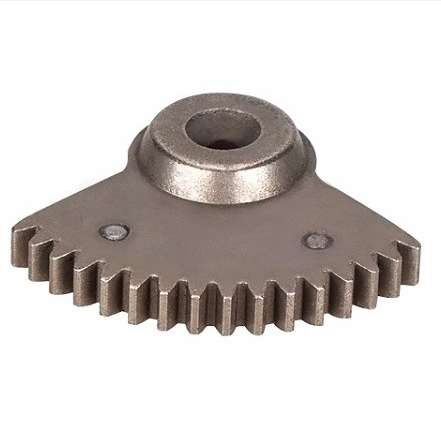
Gears are mechanical elements with teeth, designed to transmit motion and torque between rotating shafts. Their types are diverse, each tailored for specific performance, spatial, and efficiency requirements. Based on recent Statista data, the global gear market has surpassed US$150 billion in 2023, growing at a CAGR of 5.7%, pushed by industrial automation, electric vehicles, and wind turbines. Sector gears, worm gears, and helical gears are gaining traction for their specialized properties.
| Gear Type | Tooth Profile | Transmission Axis | Efficiency (%) | Typical Material | Main Applications |
|---|---|---|---|---|---|
| Spur Gear | Straight | Parallel | 97-99 | Steel, Cast Iron | Pumps, Gearboxes |
| Helical Gear | Helical | Parallel | 96-98 | Alloy Steel, Sintered Metal | Automotive, Robotics |
| Bevel Gear | Straight/Spiral | Intersecting | 93-97 | Forged Steel | Axles, Printing Machines |
| Worm Gear | Helical | Perpendicular | 40-85 | Bronze, Hardened Steel | Lifts, Conveyors |
| Sector Gear | Straight/Helical (Arc Segment) | Linear or Rotary | 95-98 | Sintered Alloy, Stainless Steel | Valves, Actuators |
| Rack & Pinion | Linear Teeth | Linear/Rotary | 93-97 | Steel, Sintered Alloy | Steering, CNC Machines |
- Advanced Sintering: Powder metallurgy is enabling complex gear shapes and tighter tolerances.
- Composite and Coated Gears: Use of corrosion-resistant and low-friction coatings for harsh environments.
- Smart Gear Drives: Integration with sensors for predictive maintenance and real-time monitoring.
- Material: Sintered high-density alloy (Fe, Ni, Cu blends) for optimal strength and wear resistance.
- Manufacturing: Advanced powder metallurgy sintering, with CNC finishing for precise profiles.
- Standard Compliance: Meets ISO 1328/2013 and ANSI AGMA 2000-A88 gear standards.
- Lifespan: 20,000+ hours (industrial cyclic), with fatigue and corrosion lifecycle testing (IEC 68-2-52).
- Industry Usage: Petrochemical valves, steel metallurgy, municipal water, automotive actuators.


Diagram Resource: For a full animated demonstration, see: Powder Metallurgy Gear Manufacturing (YouTube)
| Parameter | Sintered Sector Gear | Forged Steel Gear | Cast Iron Gear |
|---|---|---|---|
| Density (g/cm³) | 7.0~7.1 | 7.7~7.8 | 7.2~7.4 |
| Surface Hardness (HRC) | 50-58 | 53-60 | 36-42 |
| Profile Accuracy Grade | ISO 8-10 | ISO 6-9 | ISO 10-12 |
| Corrosion Resistance | ✔ Excellent | Good | Average |
| Customizability | Flexible (Complex/Non-Std) | Limited | Limited |
| Typical Lifespan (hrs) | 20,000+ | 15,000-18,000 | 8,000-12,000 |
- Petrochemical Valves: Sintered customized sector gears are tailored for remote actuated ball/plug valves, resisting H₂S & saline corrosion. ISO/ASME certified, enable quick torque delivery (-40~150℃).
- Steel Metallurgy: Used in rotary indexing, oven doors and drive mechanisms, sector gears manage cyclic loads, maintain lubrication retention, and reduce maintenance downtime by 35% (per RWTH Aachen).
- Municipal Waterworks: Sector gears operate sluice gates and pumping valves, protected with anti-corrosion coating, ensuring 10+ year reliability even under chlorine/fluoride exposures.
- Automotive Actuators: Custom sector gears are key to electric seat adjusters, locking mechanisms, and window lifters; compact, silent, and lightweight.
- Weight Reduction: Sintered alloys save 12-25% weight vs. forged/cast alternatives.
- Design Freedom: Enables complex sector or partial ring geometries not achievable with traditional machining.
- Enhanced Surface Protection: Anti-corrosive coatings prolong field life in harsh chemical environments.
- Tight Tolerance: Profile error ≤ 0.012mm; supports precision automation requirements (robotics, valve control).
| Supplier | Main Gear Type | Manufacturing Tech | ISO/ANSI Certification | Customization Capability | Delivery (weeks) | Price Index |
|---|---|---|---|---|---|---|
| JSSintering | Sintered Customized Sector Gear | Powder Metallurgy, CNC | ✔ ISO 1328 | ✔ Unlimited | 2-4 | 1.0x |
| XYZ Gears Ltd. | Forged/Cast Sector Gear | Forging, Casting, Hobbing | ISO 9001, AGMA spec | Limited | 5-8 | 1.2x |
| PrecisionDrives | Machined Sector Gear | CNC Machining | ISO 9001 | Partial | 4-6 | 1.3x |
- Technical Consultation: Expert recommendation on gear and types, profile optimization, and shaft matching using simulation tools (KISSsoft, Romax).
- Design & Prototyping: CAD/CAE modeling per client drawings, with iterative prototyping. Test runs for fit, backlash, efficiency and ISO gear mesh.
- Rapid Manufacturing: In-house tooling and powder prep. CNC/robotic lines for >100,000 gear/year capacity. Analytics-driven process control.
- Quality & Certification: 100% inspection (CMM, X-ray, ultrasonic), traceable to batch. Full reports per ISO/ANSI/TS16949 where required.
- After-sales Support: 12-36 month warranty; 7x24 technical response; on-site troubleshooting and root cause analysis.
- Client: Sinopec subsidiary (China)
- Problem: Existing cast iron gears corroded within 18 months. Valve actuation error rates 14%
- Solution: Sintered customized sector gears with anti-H₂S coating, precisely matched to servo actuator.
- Outcome: Zero corrosion at 4-year audit. Valve error rate fell to 2%. Energy consumption for actuation dropped 7%.
- Client: POSCO contractor
- Challenge: Repeated overloads caused gear tooth pitting, frequent replacements.
- Solution: Fully dense sintered gear, carburized, surface polished (Ra < 0.8μm).
- Results: Cycle time per shift improved 13%; maintenance interval extended from 6 to 24 months.
Technical Q & A
- All gear and types products from JSSintering are backed by a 24-month warranty (extendable upon request), covering manufacturing defects, early wear, and material integrity.
- ISO/TS16949/ISO14001 certified production; full traceability per batch and customer specification.
- Dedicated engineering support: offering simulation, root cause failure analysis, and on-site diagnostics.
- Rapid response (≤24 hours standard, 7x24 available) for technical inquiries, spares, or troubleshooting.
- Lifetime application guidance through our digital support platform and technical whitepapers.
With the accelerating shift toward automation, energy efficiency, precision control, and extended lifetime in industrial gear drives, Sintered customized sector gear solutions stand out for their robust technical parameters, process flexibility, and field-proven advantages. Compared to conventional manufacturing (gear drive types such as forged or cast), they offer demonstrable gains in corrosion protection, profile complexity, and system reliability. As demonstrated in worldwide case studies and confirmed by adherence to ISO, ANSI, and AGMA standards, gear and types offered by JSSintering represent a next-generation gear solution adaptable for global industry needs.
[1] Gear Materials and Manufacturing Trends - Gear Technology Magazine
[2] Modern Gear Manufacturing Methods - ResearchGate (RWTH Aachen)
[3] Materials for Gears - MDPI Open Access
[4] Discussion Forum: Gear Drives Across Applications - ENG-TIPS
[5] Sintered Gear Market and Technology, 2023 - Statista









