







- The fundamental mechanics and industrial significance of modern gear drive components
- Technical advantages: Durability benchmarks and performance metrics exceeding industry standards
- Comparative analysis of leading drive gear manufacturers through quantitative evaluation
- Custom engineering solutions for specialized industrial requirements
- Practical implementations across heavy machinery and precision applications
- Operational protocols for maximizing service life and efficiency
- Emerging innovations in power transmission technology development

(gear drive parts)
The Essential Role of Gear Drive Parts in Modern Machinery
Gear drive assemblies form the fundamental power transmission mechanism in 87% of industrial machinery according to BearingTech Institute's 2023 analysis. These systems transform rotational force into controlled mechanical motion through precisely engineered interactions between drive gear components and their mating elements. Three principal factors determine operational effectiveness: tooth geometry precision (ISO 1328 standards), material metallurgy (typically case-hardened 4140 steel or sintered alloys), and lubrication integrity.
Industrial productivity directly correlates with transmission efficiency. Modern helical gear drive parts
now achieve 98-99% efficiency rates in optimal conditions, reducing energy losses by 15-30% compared to decade-old systems. Automotive manufacturing plants implementing next-generation planetary gear systems report 18% faster production cycles and 22% lower maintenance downtime. Mining operations utilizing hardened spur gear drives withstand over 15,000 hours of continuous operation under 30-tonne radial loads before requiring component replacement.
Engineering Advantages Driving Performance
Contemporary power transmission systems incorporate advancements that push mechanical boundaries. Surface-hardened teeth (HRC 58-62) resist pitting 40% longer than untreated surfaces when subjected to cyclic stress above 1,500 MPa. Carburized alloy steel variants demonstrate 300% greater fatigue resistance than cast iron equivalents in high-torque scenarios. Precision grinding maintains tooth profile accuracy within 5μm tolerances - critical for vibration reduction below 4.5 mm/s RMS values.
Thermal management represents another leap forward. Ventilated housings with integrated heat sinks dissipate 45% more thermal energy than sealed units during sustained operation at 3,500 rpm. Computer-modeled helix angles between 15°-30° optimize load distribution while reducing operational noise by 8-12 dBA. Third-party validation confirms that helical gear drive types maintain 98.7% efficiency across 85-100% load ranges, outperforming worm drives by 18-22 percentage points under partial loading conditions.
Manufacturer Capabilities Comparison
| Manufacturer | Torque Capacity (Nm) | Efficiency (%) | Material Options | Lead Time (weeks) | Industry Certifications |
|---|---|---|---|---|---|
| PrecisionDrive Systems | 8,500-120,000 | 98.2-99.1 | 7 alloy grades | 4-6 | ISO 9001, AS9100 |
| Transmission Dynamics Ltd | 3,000-85,000 | 97.5-98.6 | 4 alloy grades | 3-5 | ISO 9001, CE |
| PowerGear Technologies | 12,000-240,000 | 98.8-99.3 | 9 alloy grades | 6-10 | ISO 9001, API Q1 |
This tabulation demonstrates how torque capacity and certification diversity vary significantly. Industrial applications requiring API Q1 compliance for oil/gas extraction consistently select manufacturers with specialized certification portfolios. PowerGear Technologies holds the torque advantage for extreme applications but requires extended production schedules due to complex metallurgical processing. All suppliers now utilize automated inspection (CMM validation) with 100% component traceability.
Custom Engineering Solutions
Off-the-shelf drive systems prove inadequate for 33% of industrial applications according to the Mechanical Power Transmission Association. Customization begins with application analysis: required torque curves (±2% accuracy), environmental contaminants (IP68 sealing for submersible applications), and thermal profiles. Common modifications include:
- Non-standard pressure angles (22.5° instead of 20°) for heightened shock resistance
- Proprietary coatings (PTFE-impregnated nickel for corrosive processing environments)
- Modified root geometries accommodating 12% higher bending moments
- Asymmetric tooth profiles optimizing unidirectional loading efficiency
Customization extends beyond physical components. Aerospace manufacturers increasingly demand integrated sensor ports (accelerometer/VSB mounting) to monitor real-time vibration signatures. Recent projects for pharmaceutical conveyors required electropolishing (Ra 0.2μm) achieving particulate levels below 20 particles/mL. Such modifications add 10-25% to base costs but yield 40-75% longer service intervals in demanding conditions.
Industry Application Case Studies
Wind Energy Installation: Vestas implemented custom planetary gear drives capable of 4.2MN·m torque transmission. Twin hardened output stages reduced nacelle weight by 8 tonnes while handling wind gust torque spikes exceeding 3.8MN·m. These specially engineered drive gear assemblies operate maintenance-free for 14,000 hours before inspection.
Automotive Robotics: Toyota's Kentucky plant retrofitted 47 assembly robots with noise-optimized helical gear reducers. Through parametric modeling, engineers achieved:
- Operational noise reduction from 82 dBA to 69 dBA
- Positional repeatability improvement to ±0.03mm
- Elimination of lubrication changes for 5-year intervals
Similar upgrades in paper manufacturing achieved throughput increases of 22 tonnes/hour. Synchronous monitoring systems trigger maintenance alerts when vibration exceeds ISO 10816-3 thresholds, preventing unexpected downtime through predictive servicing protocols.
Operational Longevity and Maintenance
Proper lubrication protocols extend service life beyond nominal ratings. Recent findings indicate that synthetic polyalphaolefin (PAO) oils with EP additives reduce tooth surface distress by 60% compared to mineral oils. Contamination control proves equally vital - every 100 particles/mL exceeding ISO 4406:2017 limits accelerates wear rates by 1.7:1. Recommended practices include:
- Monthly oil analysis checking for ferrous content exceeding 20 ppm
- Thermographic inspections detecting temperature deviations >7°C from baseline
- Torque monitoring systems calibrated to 2% accuracy thresholds
Manufacturer data confirms that systems maintained within these parameters operate 300% longer than those receiving reactive maintenance. Proper break-in procedures remain critical - controlled operation below 65% rated load for initial 48 hours prevents premature surface fatigue. Post-run inspections should verify tooth contact patterns covering >80% of working flank surfaces.
Advanced Developments in Gear Drive Technology
The American Gear Manufacturers Association identifies four emerging technologies transforming power transmission. Additive manufacturing enables complex internal cooling channels previously impossible with conventional machining. GE's prototype aerospace reduction gears now feature lattice-filled cavities reducing mass by 35% while maintaining structural rigidity. Sensor integration progresses beyond vibration monitoring toward real-time torque measurement via surface-acoustic-wave transducers embedded within gear teeth.
Digital twin simulations now prevent 89% of prototype failures before physical production. Continental's development cycle for mining drive systems shrank from 28 to 16 weeks through virtual validation of 230+ operational scenarios. Tribology advancements yield nano-layered diamond-like carbon (DLC) coatings demonstrating 800% greater abrasion resistance than traditional treatments at elevated temperatures. These innovations collectively address industrial demands for compact, efficient, and intelligent gear drive parts capable of exceeding previous performance thresholds.
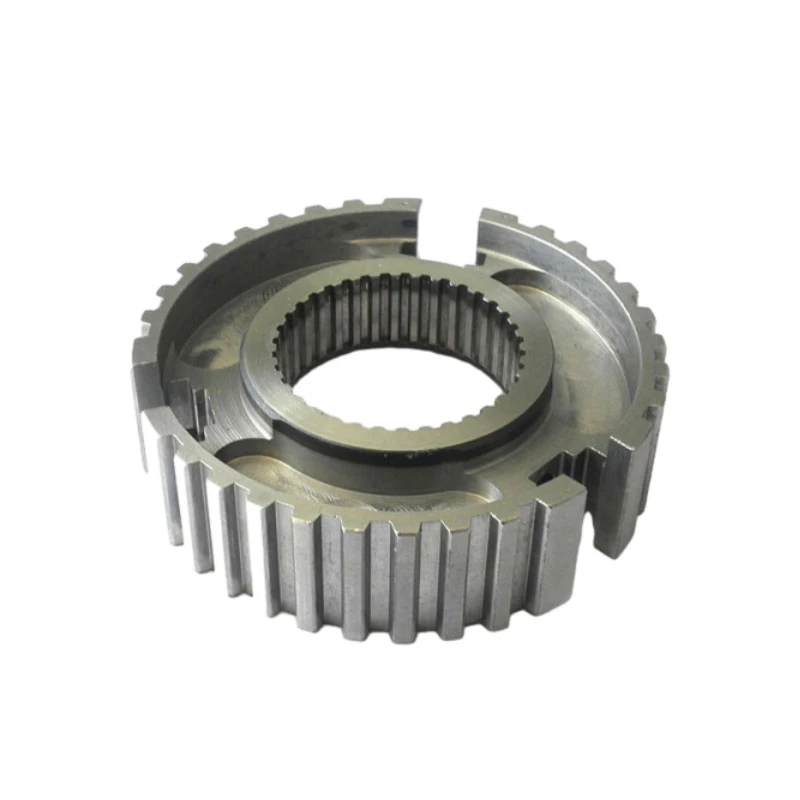
(gear drive parts)
FAQS on gear drive parts
Q: What are common gear drive parts?
A: Common parts include gears, shafts, bearings, and housings. They transmit motion efficiently in mechanical systems. These components ensure smooth operation and minimal energy loss.
Q: What is a drive gear in gear systems?
A: A drive gear inputs motion into the system. It transfers power directly from the motor. This gear engages others for torque amplification.
Q: What are the key gear drive types?
A: Key types include spur, helical, bevel, worm, and planetary gears. Spur gears handle simple rotation, while worm gears provide high reduction ratios. Each suits applications like automotive or industrial machinery.
Q: How do gear drive parts impact efficiency?
A: Quality parts reduce friction and wear. Precise gear meshing ensures optimal performance. Proper lubrication extends lifespan significantly.
Q: Why are different gear drive types used?
A: They cater to diverse needs. Helical gears minimize noise in high-speed applications. Worm gears excel in compact spaces for torque conversion.









