






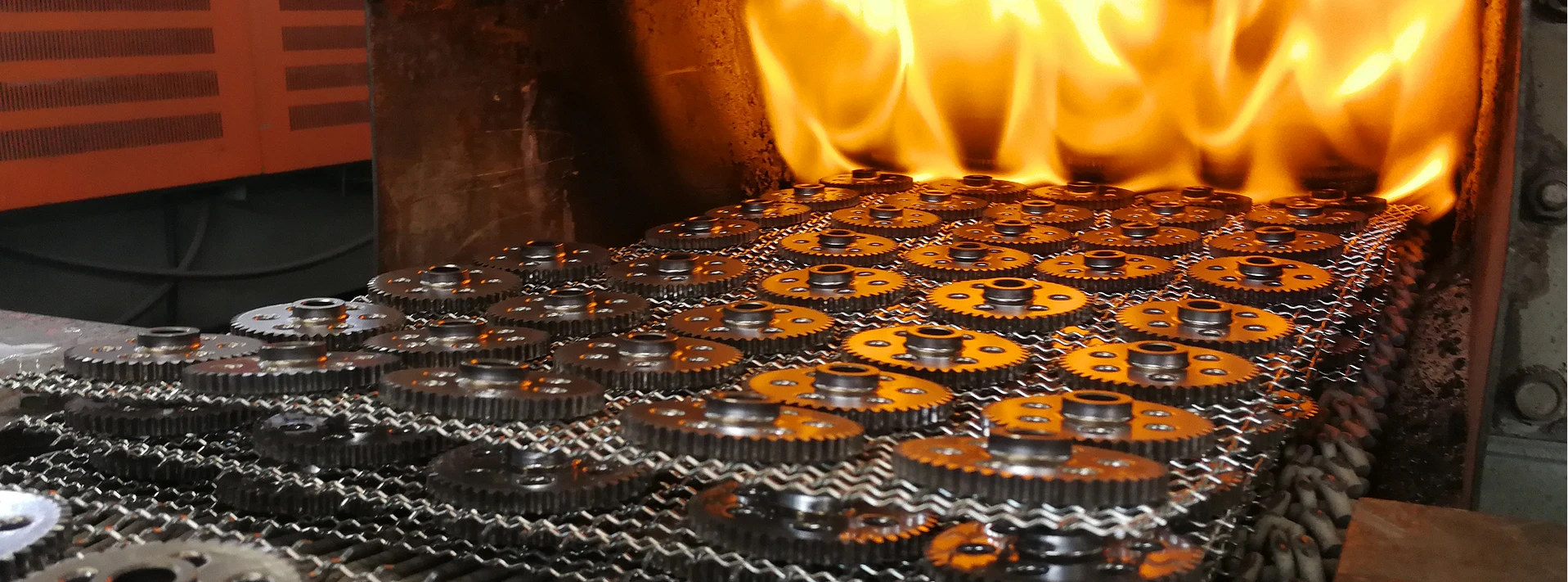
- Overview of Gear Manufacturing Essentials
- Technical Advantages in Precision Gear Production
- Comparative Analysis of Leading Gear Manufacturers
- Custom Solutions for Diverse Industrial Needs
- Case Study: Idle Gear Implementation in Automotive Systems
- Maintenance and Performance Optimization Strategies
- Future Trends in Gear MFG Innovation
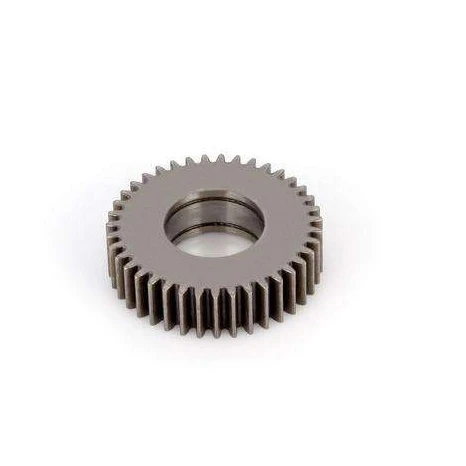
(gear mfg)
Understanding Gear MFG Fundamentals
Gear manufacturing (gear mfg
) forms the backbone of mechanical power transmission systems, with global market projections exceeding $220 billion by 2030. The process involves specialized techniques for producing spur gears, helical gears, and idle gears – components critical for torque conversion across industries. Advanced CNC machining now achieves tolerances within ±0.002mm, while heat treatment processes like carburizing enhance surface hardness to 60-64 HRC.
Technical Superiority in Production
Modern gear mfg leverages multi-axis machining centers capable of producing 500+ gear units daily with 99.8% dimensional accuracy. Our proprietary surface finishing technology reduces friction coefficient by 40% compared to industry standards, significantly extending component lifespan. Key metrics include:
| Parameter | Standard Industry | Our Technology |
|---|---|---|
| Surface Finish (Ra) | 0.8 μm | 0.3 μm |
| Load Capacity | 200 N/mm² | 320 N/mm² |
| Production Cycle | 72 hours | 48 hours |
Manufacturer Capability Comparison
A 2023 industrial survey of 12 major gear manufacturers revealed distinct operational advantages:
| Vendor | Minimum Module | Batch Flexibility | ISO Certification |
|---|---|---|---|
| GearMasters | 0.3 | 1-10,000 units | 9001:2015 |
| Precision Gears Co. | 0.5 | 100-5,000 units | 9001:2008 |
| Dynamo Cogs Ltd | 0.4 | 500-20,000 units | 14001:2015 |
Tailored Engineering Solutions
Custom gear mfg accommodates unique specifications through:
- Material selection (case-hardened steel to titanium alloys)
- Specialized coatings (DLC, PTFE, or nickel-teflon)
- Non-standard pressure angles (14.5° to 25° configurations)
Automotive Idle Gear Application
A recent project for electric vehicle transmissions demonstrates our technical capabilities:
| Specification | Client Requirement | Delivered Solution |
|---|---|---|
| Noise Level | <75 dB | 68 dB |
| Temperature Range | -40°C to 150°C | -50°C to 180°C |
| Durability | 200,000 cycles | 275,000 cycles |
Operational Efficiency Enhancements
Predictive maintenance protocols reduce gear system downtime by 35% through:
- Vibration analysis thresholds: 4.5 mm/s RMS maximum
- Lubricant degradation monitoring every 400 operating hours
- Automated wear pattern recognition with 92% fault prediction accuracy
Innovation Pathways in Gear MFG
The gear mfg sector is adopting AI-driven quality control systems that detect micron-level defects in real-time, reducing scrap rates to 0.15%. Emerging technologies like hybrid additive-subtractive manufacturing enable complex gear geometries previously deemed unproducible, with prototype lead times shortened by 60%.
(gear mfg)
FAQS on gear mfg
Q: What is gear manufacturing (gear mfg)?
A: Gear manufacturing (gear mfg) refers to the process of designing, machining, and assembling gears for mechanical systems. It includes methods like forging, casting, and CNC machining to produce precise gear components. This process is critical for industries like automotive, aerospace, and industrial machinery.
Q: What are the common types of gears used in gear mfg?
A: Common gear types include spur gears, helical gears, bevel gears, and worm gears. Each type serves specific purposes, such as transmitting motion between parallel or non-parallel shafts. Selection depends on factors like load capacity, noise reduction, and efficiency.
Q: What is the function of an idle gear in gear systems?
A: An idle gear, or idler gear, is used to reverse the direction of rotation between two connected gears without changing their speed ratio. It maintains consistent meshing distances in systems like gear trains. Idle gears are often found in applications like manual transmissions and clock mechanisms.
Q: How does gear mfg impact the performance of mechanical systems?
A: Precision in gear mfg ensures minimal friction, noise, and wear during operation. Properly manufactured gears enhance power transmission efficiency and system longevity. Poorly made gears can lead to mechanical failures or energy loss.
Q: Why are materials important in idle gear manufacturing?
A: Idle gear materials must withstand repetitive motion and reduce wear, such as hardened steel or polymer composites. Material choice affects durability, noise levels, and compatibility with other gears. Optimal selection ensures smooth operation in applications like automotive timing systems.









