







Gears Types for Advanced Engineering Systems
In mechanical engineering, the efficiency and functionality of a machine often depend on the selection and integration of various gears types. These components are fundamental in determining how power is transmitted between parts, influencing everything from speed and torque to motion direction. Advances in powder metallurgy have elevated the quality and performance of different gears types, enabling engineers to create more reliable, efficient, and cost-effective gear systems.
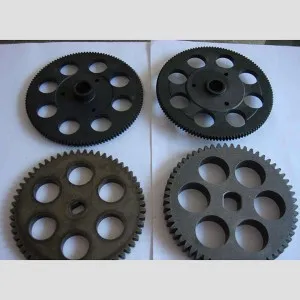
Spur gears, helical gears, bevel gears, and worm gears represent the most commonly used gears types across industries. Each type addresses unique operational requirements, such as reducing noise, increasing torque, or enabling smooth angular movement. Powder metallurgy allows for the precise manufacturing of these gear designs by compressing metal powders into defined shapes and sintering them at high temperatures. This process not only ensures excellent material utilization but also provides gears with superior mechanical strength and dimensional accuracy.
The advantages of using powder metallurgy in producing gears types are evident in both performance and production efficiency. The process minimizes the need for secondary machining, shortens manufacturing cycles, and allows for the production of complex geometries that traditional methods struggle to achieve. This results in gears with consistent quality, reduced friction, and improved lifespan, making them suitable for demanding applications in automotive systems, industrial machinery, and high-precision electronic devices.
Gear Box Types for Power Transmission Solutions
The effective transmission of power within machines depends heavily on the type and quality of the gearbox utilized. Gear box types vary according to the specific needs of the application, from reducing rotational speed to adjusting the torque or changing the direction of movement. Powder metallurgy plays a significant role in advancing the design and manufacturing of gear box types, particularly by enhancing the properties of internal gears and structural components.
Planetary gearboxes, helical gearboxes, bevel gearboxes, and worm gearboxes are among the most prominent gear box types used in industrial settings. Each type features a different configuration of gears tailored to its intended mechanical function. With powder metallurgy, manufacturers can produce the intricate gear shapes required for these gearboxes with remarkable precision and repeatability. This leads to a more compact and durable gearbox capable of handling complex operational demands.
The strength, thermal stability, and wear resistance of powder metallurgy components greatly benefit the overall performance of gear box types. These parts demonstrate consistent behavior under fluctuating loads and harsh operating conditions, ensuring long-term reliability. Furthermore, the production process offers the flexibility to incorporate customized design features that would be cost-prohibitive using conventional machining. As industries continue to demand high-efficiency mechanical systems, powder metallurgy has become a trusted method for delivering dependable gearbox solutions.
Different Types of Gears for Specialized Applications
The development and selection of different types of gears are vital for tailoring machinery to meet specific engineering objectives. From precision tools to large-scale industrial equipment, each application benefits from gear types designed to perform distinct roles. Powder metallurgy enables the creation of these diverse gear forms with high mechanical integrity, dimensional accuracy, and optimized cost-efficiency.
Spur gears are commonly used in straightforward torque applications, while helical gears offer smoother operation and greater load capacity due to their angled teeth. Bevel gears are ideal for transmitting power between intersecting shafts, and worm gears provide high-ratio speed reduction. Manufacturing these different types of gears through powder metallurgy ensures a uniform microstructure and dense composition, contributing to improved operational reliability and durability.
The sintering process not only strengthens the gears but also reduces porosity, enhancing resistance to fatigue and environmental corrosion. Powder metallurgy permits the production of complex and customized gear profiles without the need for extensive post-processing. This adaptability makes it particularly valuable in fields requiring specialized gear designs, such as aerospace, medical devices, and robotics. Ultimately, the process empowers engineers to innovate without being constrained by the limitations of traditional manufacturing.
Industrial Gearbox Types for Heavy-Duty Performance
In sectors such as construction, mining, and manufacturing, the performance of machinery is often dictated by the capability and reliability of its industrial gearbox types. These systems must endure prolonged exposure to high torque, heavy loads, and extreme environmental conditions. Powder metallurgy provides a robust solution for the production of internal gears and components that meet these demanding standards.
Common industrial gearbox types include parallel shaft gearboxes, right-angle gearboxes, and coaxial gearboxes. Each serves a specific function based on the alignment of shafts and the mechanical advantage required. Powder metallurgy supports the creation of highly durable gears that can withstand the mechanical stress and thermal strain inherent in industrial environments. The precise control over material composition and porosity results in components that offer superior performance and extended service life.
Powder metallurgy also contributes to better efficiency in these gearboxes by producing gears with smoother surfaces and tighter tolerances, which reduces friction and operational noise. Furthermore, the ability to embed self-lubricating properties into the gear materials enhances long-term performance and decreases maintenance frequency. As the need for energy-efficient and high-output machinery grows, powder metallurgy remains at the forefront of innovation in manufacturing industrial gearbox types that deliver strength, stability, and cost efficiency.
Prototype Gear Manufacturing for Design Validation
The process of developing high-quality gears often begins with prototype gear manufacturing, a phase critical to evaluating and refining design concepts before committing to full-scale production. Powder metallurgy is particularly advantageous in this stage due to its ability to produce accurate, functional prototypes quickly and economically.
In prototype gear manufacturing, engineers can assess gear geometry, tooth profiles, and material performance under simulated operating conditions. Powder metallurgy replicates the final product's characteristics closely, providing a realistic preview of how the gear will perform in actual applications. This approach reduces the risk of design flaws and shortens the time required for testing and validation.
One of the key benefits of using powder metallurgy for prototype gear manufacturing is the ease of transitioning from prototyping to mass production. The same tooling and process parameters can often be applied with minimal adjustments, ensuring consistency and efficiency. In addition, the ability to experiment with different alloy compositions during the prototyping phase enables engineers to fine-tune mechanical properties to meet specific performance requirements. This level of flexibility and precision is instrumental in bringing high-performance gear systems to market faster and more reliably.
Gear Box Types FAQs
What are the most common gears types used in mechanical systems?
The most common gears types include spur gears, helical gears, bevel gears, and worm gears. Each serves a unique function—spur gears for direct torque transfer, helical gears for smoother engagement, bevel gears for angular motion, and worm gears for high-reduction ratios. Powder metallurgy enables these types to be made efficiently with excellent mechanical properties.
How do different gear box types affect performance?
Gear box types determine how torque, speed, and direction are managed. Planetary gearboxes offer high torque density in compact spaces, while helical gearboxes are known for quiet operation. Powder metallurgy improves the internal components' strength and wear resistance, boosting overall gearbox performance and reliability.
Why is manufacturing different types of gears with powder metallurgy advantageous?
Powder metallurgy allows for cost-effective and precise production of different types of gears. This method supports high volume, low waste, and excellent surface finish, enabling the production of gears with fine details and tight tolerances—ideal for complex mechanical applications.
What makes industrial gearbox types more reliable when made with powder metallurgy?
Industrial gearbox types made with powder metallurgy benefit from uniform density, enhanced strength, and excellent wear resistance. These attributes are crucial for heavy-duty applications, ensuring long-term performance with minimal maintenance. Powder metallurgy also allows self-lubricating gear designs, improving operational efficiency.
How does powder metallurgy support prototype gear manufacturing?
Powder metallurgy allows rapid production of prototype gears that closely match the final product's properties and geometry. This makes prototype gear manufacturing faster and more cost-effective, allowing engineers to validate designs quickly before committing to large-scale production.









