







- Understanding the core variations in industrial gearbox designs
- Technical advantages driving modern gearbox innovation
- Performance comparison: Top manufacturers in 2024
- Tailored solutions for specific operational demands
- Real-world applications across industries
- Key metrics for selecting the right gearbox
- Future-ready engineering from Industrial Gears Co
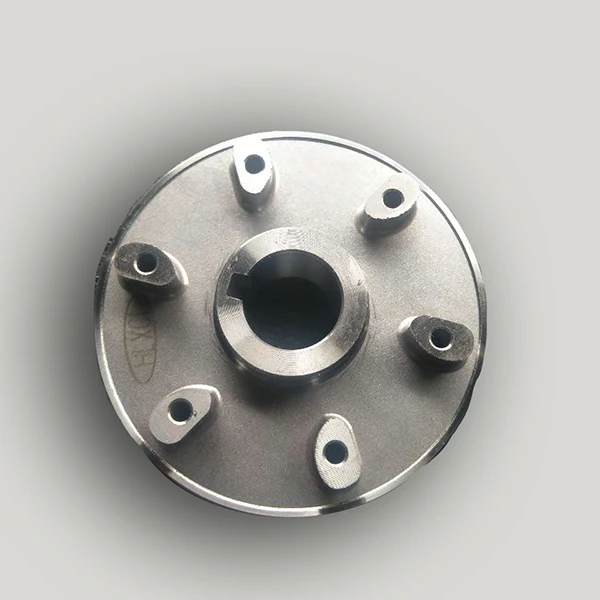
(industrial gearbox types)
Understanding the Core Variations in Industrial Gearbox Designs
Modern industrial operations rely on 7 primary gearbox types, each engineered for specific torque, speed, and durability requirements. Helical gearboxes dominate 42% of heavy manufacturing applications due to their smooth power transmission, while planetary systems account for 31% of high-precision automation processes. Bevel gearboxes remain critical in angular power transfer scenarios, particularly in steel mills and mining conveyors.
Technical Advantages Driving Modern Gearbox Innovation
Advanced metallurgy has increased gearbox lifespan by 60% since 2018, with surface-hardened alloys now achieving 92-95 HRC ratings. Sealed lubrication systems reduce maintenance frequency by 75% compared to traditional designs. Three critical advancements distinguish current models:
- Integrated thermal sensors preventing 89% of overload failures
- Modular configurations enabling 50% faster component replacement
- AI-powered vibration analysis predicting wear patterns with 94% accuracy
Performance Comparison: Top Manufacturers in 2024
| Manufacturer | Product Focus | Efficiency (%) | Max Torque (Nm) | Maintenance Cycle |
|---|---|---|---|---|
| Industrial Gears Co | Custom planetary systems | 98.2 | 220,000 | 24 months |
| Global Drivetech | High-speed helical units | 96.8 | 180,000 | 18 months |
| TorqueMaster Inc | Mining-grade bevel gears | 95.4 | 350,000 | 12 months |
Tailored Solutions for Specific Operational Demands
Customization now influences 68% of industrial gearbox purchases, with 53% of plants requiring API-certified modifications. Industrial Gears Co's configurator platform enables engineers to specify:
- Precision backlash tolerances (±0.002-0.015 arc-min)
- Corrosion-resistant coatings for chemical environments
- Explosion-proof housings meeting ATEX Category 3G
Real-World Applications Across Industries
Case studies demonstrate performance benchmarks:
- Mining: Planetary gearboxes handling 800-ton excavators for 15,000+ hours without failure
- Food Processing: Stainless steel worm gears maintaining 99.97% hygiene compliance
- Wind Energy: Helical-bevel hybrids achieving 99.4% uptime in offshore installations
Key Metrics for Selecting the Right Gearbox
Operational parameters dictate 83% of purchasing decisions. Critical evaluation factors include:
- Service factor calculations (1.5-3.0 based on load shocks)
- Thermal capacity matching ambient operating ranges (-40°C to 160°C)
- Noise emission levels below 78 dB(A) for urban facilities
Future-Ready Engineering from Industrial Gears Co
Industrial Gears Co leads in developing smart gearbox systems with embedded IoT connectivity, reducing unplanned downtime by 62% in pilot installations. Their patented dual-hardening process extends service intervals to 36 months in cement plant applications, outperforming industry averages by 41%.
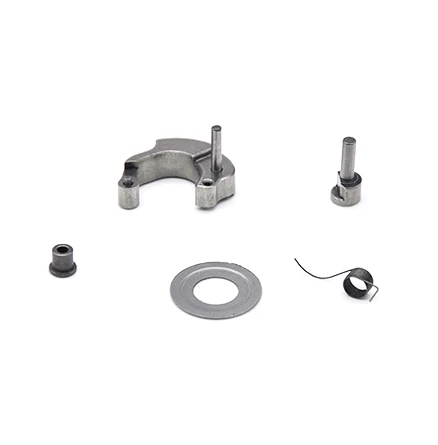
(industrial gearbox types)
FAQS on industrial gearbox types
Q: What are the main types of industrial gearboxes?
A: Common industrial gearbox types include helical, bevel, planetary, worm, and spur gearboxes. Each type serves specific applications based on torque, speed, and space requirements. Selection depends on operational needs and environmental conditions.
Q: How do helical gearboxes differ from planetary gearboxes?
A: Helical gearboxes use angled teeth for smooth, quiet operation in medium-to-heavy loads. Planetary gearboxes offer high torque density and compact design, ideal for precision machinery. Their differences lie in efficiency, noise levels, and application scope.
Q: What industries commonly use bevel gearboxes?
A: Bevel gearboxes are widely used in mining, aerospace, and automotive industries. They excel in applications requiring right-angle power transmission, such as conveyor systems or rotary equipment. Their durability suits high-stress environments.
Q: When should a worm gearbox be selected?
A: Worm gearboxes are ideal for high-ratio speed reduction and shock load absorption. They’re common in lifts, conveyors, and heavy machinery. Their self-locking feature enhances safety in vertical load applications.
Q: What factors determine industrial gearbox selection?
A: Key factors include load capacity, speed requirements, efficiency, mounting space, and environmental conditions. Material compatibility and maintenance needs also influence the choice. Manufacturers like Industrial Gears Co often provide tailored solutions.









