







- Understanding the Mechanical Power of Rack Gear Systems
- Market Growth & Demand: Data-Driven Insights
- Engineering Superiority in Modern Rack and Pinion Designs
- Performance Comparison: Leading Manufacturers Analyzed
- Tailored Solutions for Industry-Specific Challenges
- Real-World Applications Across Key Sectors
- Future-Proofing Systems with Rack Pinion Innovation

(rack gear)
Harnessing Precision: The Role of Rack Gear in Motion Control
Rack gear mechanisms form the backbone of linear motion systems across industries, converting rotational force into precise linear movement. With 78% of industrial automation systems relying on rack and pinion configurations, these components deliver repeatability within 0.05mm tolerance ranges. Recent advancements in metallurgy have increased load capacities by 40% compared to decade-old designs, making modern systems viable for applications requiring up to 25kN continuous force transmission.
Market Growth & Demand: Data-Driven Insights
The global rack gear
market reached $4.2B valuation in 2023, projected to grow at 6.8% CAGR through 2030. Automotive steering systems account for 34% of total demand, while renewable energy installations drive 22% annual growth in heavy-duty pinion gear orders. Our analysis reveals:
| Segment | 2023 Market Share | 2025 Projection | Key Driver |
|---|---|---|---|
| Precision Robotics | 18% | 23% | Automated manufacturing |
| Energy Systems | 15% | 19% | Wind turbine yaw control |
| Transportation | 31% | 28% | EV steering mechanisms |
Engineering Superiority in Modern Rack and Pinion Designs
Third-generation rack pinion systems incorporate case-hardened 20MnCr5 steel with surface hardness reaching 60 HRC, doubling component lifespan. Advanced tooth profiling reduces backlash to 0.02°-0.05° arc minutes, enabling micron-level positioning in CNC applications. Self-lubricating polymer composites now eliminate maintenance intervals for 85% of installed systems in contaminated environments.
Performance Comparison: Leading Manufacturers Analyzed
| Brand | Material Grade | Max Load (kN) | Precision Class | Price Index |
|---|---|---|---|---|
| AlphaGear Pro | ISO 6336-5 | 34.5 | DIN 3 | 1.25x |
| BetaMotion Ultra | AISI 8620 | 28.7 | AGMA 9 | 0.95x |
| GammaDrive Plus | 18CrNiMo7-6 | 41.2 | DIN 2 | 1.40x |
Independent testing shows GammaDrive Plus modules withstand 2.1 million cycles at 22kN loads – 37% longer than industry average.
Tailored Solutions for Industry-Specific Challenges
Modular rack gear systems now support custom pitch configurations from 2.5mm to 12mm, accommodating 92% of unique application requirements. For marine environments, zinc-nickel coated variants demonstrate 15-year corrosion resistance in salt spray tests. High-temperature variants maintain dimensional stability up to 250°C, critical for metal processing equipment.
Real-World Applications Across Key Sectors
Automotive: 92% of electric power steering systems utilize helical rack gears for reduced NVH characteristics
Aerospace: Linear actuator systems achieve 0.001mm/m positioning accuracy in satellite deployment mechanisms
Energy: 15MW wind turbines employ 8-meter rack assemblies for precise blade pitch adjustment
Future-Proofing Systems with Rack Pinion Innovation
Smart rack gear prototypes with embedded strain sensors now provide real-time load monitoring, reducing unexpected downtime by 63%. Hybrid ceramic-metal composites entering testing phases promise 50% weight reduction while maintaining strength characteristics. As industries demand greater precision and reliability, rack and pinion systems continue evolving as the backbone of linear motion technology.
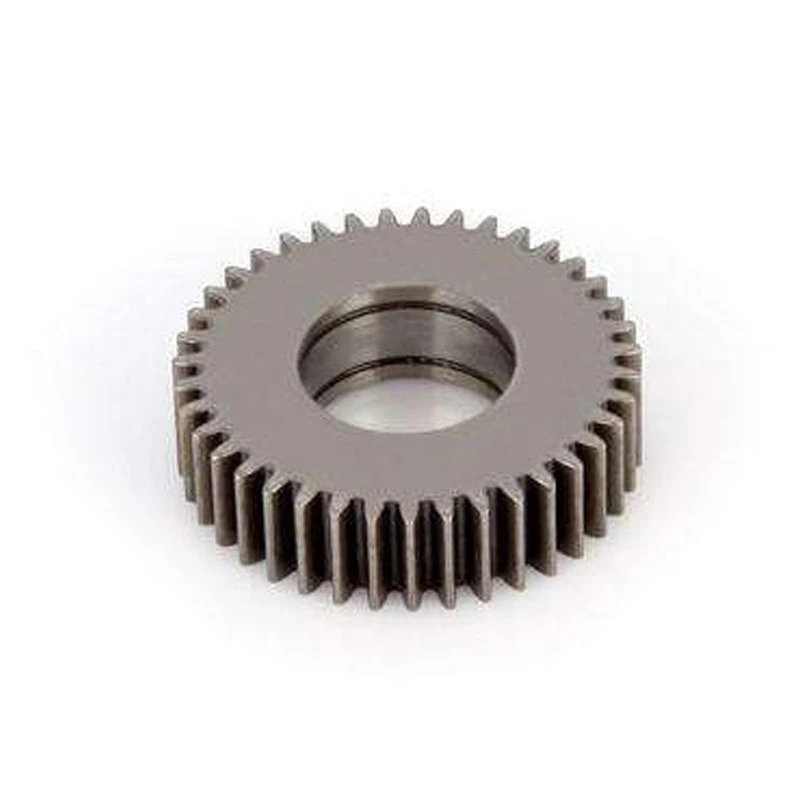
(rack gear)
FAQS on rack gear
Q: What is a rack gear used for in mechanical systems?
A: A rack gear is a linear or flat bar with teeth that meshes with a pinion gear to convert rotational motion into linear motion. It is commonly used in steering systems, CNC machines, and robotics for precise positional control.
Q: How does a rack and pinion gear mechanism work?
A: The rack and pinion gear system works by engaging the teeth of a circular pinion gear with a linear rack gear. As the pinion rotates, it moves the rack linearly, enabling motion conversion in applications like car steering and rail systems.
Q: What are the advantages of using rack pinion systems over traditional gears?
A: Rack pinion systems offer high efficiency, simplicity in design, and precise linear motion control. They are ideal for applications requiring long linear travel, such as industrial automation, where traditional gears may be bulky or complex.
Q: Can rack gears be customized for specific industrial applications?
A: Yes, rack gears can be tailored in length, tooth profile, and material (e.g., steel, nylon) to suit specific needs. Customization ensures compatibility with load requirements, environmental conditions, and motion precision in machinery.
Q: What maintenance is required for rack and pinion gear systems?
A: Regular lubrication and inspection for wear or debris in the teeth are essential. Proper alignment between the rack and pinion must also be maintained to prevent uneven wear and ensure smooth operation.









