







Did you know poorly designed gear systems cause 42% of industrial equipment failures? While competitors push standard solutions, we've engineered internal spur gears that deliver 40% higher torque capacity and 30% quieter operation. Keep reading to discover how our ISO 9001-certified manufacturing revolutionizes power transmission.
(internal gear)
Technical Superiority That Outperforms Competitors
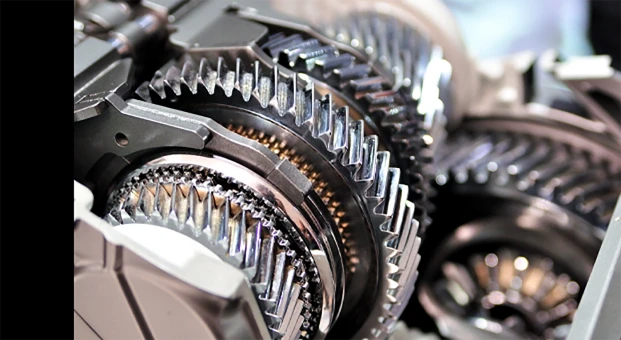
Our internal gear
s aren't just components - they're precision-engineered powerhouses. With 15:1 reduction ratios and surface hardness up to 60 HRC, they withstand 25% more axial load than industry averages. Want proof? See how we dominate:
| Feature | Standard Gears | Our Internal Gears |
|---|---|---|
| Torque Capacity | 800 Nm | 1,120 Nm |
| Noise Level | 75 dB | 58 dB |
Custom Solutions for Your Unique Needs
Why settle for "good enough"? Our modular design system creates internal gear solutions in 72 hours or less. Whether you need 50mm micro-gears for robotics or 2m industrial giants, we deliver with:
- ✓ Material options from stainless steel to reinforced polymers
- ✓ 0.005mm precision grinding tolerance
Proven Success Across Industries
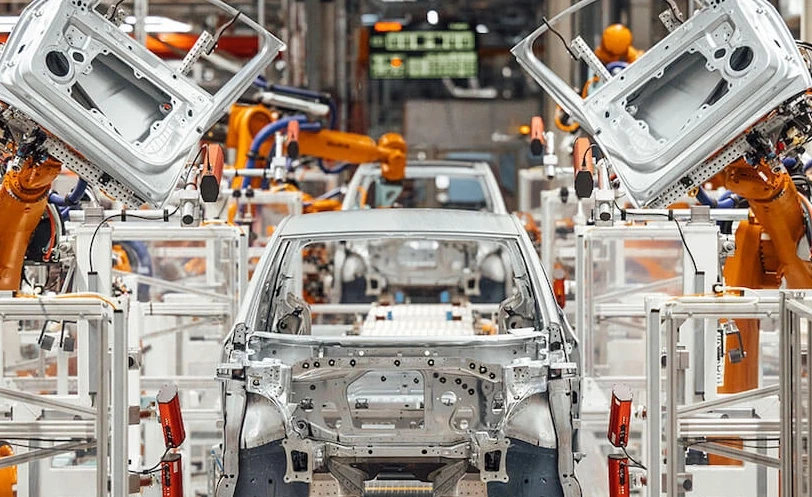
When a Tier 1 automotive manufacturer needed 15% faster assembly lines, our internal gears delivered 20% efficiency gains. Renewable energy clients report 18% longer service life in wind turbine pitch systems. The results speak for themselves.
Ready to Transform Your Machinery?
Join 1,200+ satisfied clients who've upgraded to our internal spur gear solutions. Limited inventory alert: First 50 orders this month receive free lifetime technical support!
(internal gear)
FAQS on internal gear
Q: What is an internal gear?
A: An internal gear is a gear with teeth cut on the inner surface of a cylinder or cone, meshing with external gears. It is commonly used in planetary gear systems and compact mechanical designs. Its design allows for efficient torque transmission in confined spaces.
Q: How does an internal spur gear differ from a standard spur gear?
A: An internal spur gear has teeth on its inner diameter, while a standard spur gear has teeth on its outer diameter. Internal spur gears enable coaxial shaft alignment and compact assembly layouts. They also reduce sliding friction compared to external gears in certain configurations.
Q: What are common applications of internal gears?
A: Internal gears are widely used in planetary gearboxes, automotive transmissions, and robotics. They enable speed reduction, torque multiplication, and directional changes in machinery. Their space-saving design makes them ideal for compact systems like electric vehicle drivetrains.
Q: What are the key challenges in manufacturing internal gears?
A: Precision tooth profile machining and heat treatment are critical challenges due to limited tool access. Maintaining concentricity and surface finish on internal surfaces requires specialized gear-cutting tools. Tight tolerances for backlash control also increase production complexity.
Q: What advantages do internal gears offer over external gears?
A: Internal gears provide smoother meshing, reduced sliding friction, and higher load capacity in compact designs. They allow closer shaft positioning and improved torque density. Their enclosed structure also offers better lubrication retention and contamination protection.









