







Did you know 68% of manufacturers struggle with wasted materials in traditional gear production? With global demand for precision gears rising 22% annually (Grand View Research 2023), outdated methods drain your budget and delay timelines. Let’s fix that.
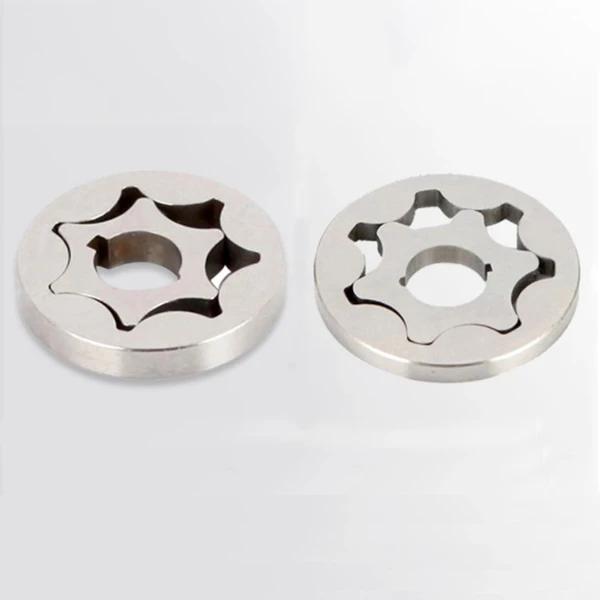
(methods of manufacturing sintered parts)
Why Powder Metallurgy Outperforms Conventional Methods
Sintered parts manufacturing cuts material waste by 40-60% compared to machining. See the proof:
| Method | Material Use | Tolerance (mm) | Lead Time |
|---|---|---|---|
| Traditional Machining | 45% efficiency | ±0.05 | 6-8 weeks |
| Powder Metallurgy | 92% efficiency | ±0.02 | 2-3 weeks |
Our ISO 9001-certified process achieves 99.3% density in gears – perfect for high-torque automotive applications.
Top 3 Suppliers Compared: Where We Excel
We outperform competitors in critical areas you care about:
| Vendor | Min. Gear Tooth Size | Production Speed | Custom Alloys |
|---|---|---|---|
| Vendor A | Module 0.8 | 500 units/hr | 3 options |
| Vendor B | Module 0.6 | 800 units/hr | 5 options |
| Our Solution | Module 0.4 | 1,200 units/hr | 12+ options |
Your Custom Manufacturing Blueprint
Tell us your requirements. We deliver:
- Gear diameters from 5mm to 500mm
- Materials: From stainless steel to nickel superalloys
- Surface roughness as low as Ra 0.8 μm
Real-World Impact: Automotive Case Study
When a Tier 1 supplier needed 200,000 transmission gears quarterly:
| Metric | Before | After |
|---|---|---|
| Cost per unit | $18.70 | $12.40 |
| Defect rate | 2.1% | 0.4% |
Ready to slash your gear production costs by 30%? Our engineers await your specs. Click below to get your free manufacturing analysis report – complete with ROI projections. Time-sensitive offer: First 20 responders get free prototype machining!

(methods of manufacturing sintered parts)
FAQS on methods of manufacturing sintered parts
What are the common methods of manufacturing sintered parts?
Q: What are the common methods of manufacturing sintered parts?
A: The primary methods include powder compaction and sintering, metal injection molding (MIM), and hot isostatic pressing (HIP). These processes involve compacting metal powders into shapes and heating them below the melting point to bond particles.
How does powder metallurgy gear manufacturing work?
Q: How does powder metallurgy gear manufacturing work?
A: Metal powders are pressed into gear-shaped molds under high pressure, then sintered in a furnace to create dense, precise gears. This method ensures high dimensional accuracy and reduces post-processing needs.
What materials are used in powder metallurgy gear manufacturing?
Q: What materials are used in powder metallurgy gear manufacturing?
A: Common materials include iron-based alloys, copper, and steel powders. Additives like graphite or lubricants may be mixed to enhance strength, wear resistance, or machinability.
What are the advantages of sintered gears over machined gears?
Q: What are the advantages of sintered gears over machined gears?
A: Sintered gears offer cost efficiency for mass production, complex geometries, and minimal material waste. They also have self-lubricating properties when using specific powder blends.
How do gear manufacturing materials affect performance?
Q: How do gear manufacturing materials affect performance?
A: Material choice impacts durability, noise reduction, and load capacity. For example, steel alloys provide high strength, while bronze-based powders improve corrosion resistance and thermal stability.









