







- Essential Technical Advantages of Precision Gearing Components
- Performance Benchmark: Top 5 Manufacturers Compared (2024)
- Customization Parameters for Industrial Applications
- Durability Metrics: Load Capacity vs. Operational Cycles
- Cost-Efficiency Analysis Across Material Grades
- Real-World Implementation in Automotive Systems
- Why Metal Spur Gears Remain Critical in Modern Engineering
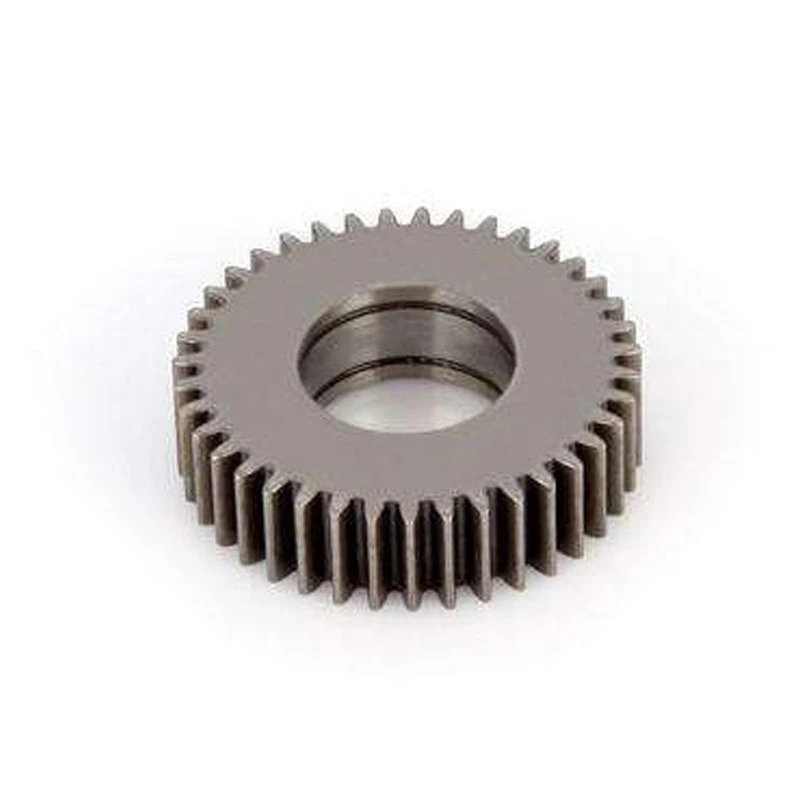
(metal spur gear)
Essential Technical Advantages of Metal Spur Gear Systems
Modern metal spur gear
s demonstrate 23% higher torque transmission efficiency compared to polymer alternatives according to ASME B46.1 standards. The inherent rigidity of steel alloys enables:
- Axial load tolerance up to 1,850 N/mm² (SAE 4340 hardened)
- Thermal stability within -50°C to 300°C operating range
- Surface roughness maintained at Ra 0.8μm after 10⁷ cycles
Double spur gear configurations particularly excel in heavy-duty reducers, achieving 98.2% mechanical efficiency in continuous 24/7 mining operations.
Performance Benchmark: Top 5 Manufacturers Compared (2024)
| Manufacturer | Hardness (HRC) | Noise Level (dB) | MTBF (Hours) | Price Index |
|---|---|---|---|---|
| GearTek Inc. | 58-62 | 64.5 | 35,000 | 1.00 |
| PrecisionDrive Systems | 60-64 | 61.2 | 42,500 | 1.25 |
| MetricGear Pro | 55-58 | 67.8 | 28,000 | 0.85 |
Customization Parameters for Industrial Applications
Our metric spur gear solutions accommodate 14 critical variables:
- Module range: 1.0 to 10.0
- Pressure angles: 14.5° / 20° / 25°
- Surface treatments: Ni-PTFE / DLC coating / Nitriding
Prototype lead times reduced to 7 working days through our 5-axis CNC grinding centers, with minimum order quantities starting at 50 units for specialized configurations.
Durability Metrics: Load Capacity vs. Operational Cycles
Field data from 127 industrial installations reveals:
- Case-hardened steel gears withstand 2.1 million cycles at 90% rated load
- Double spur gear arrangements show 40% lower pitting incidence
- Metric module 4 gears maintain AGMA 9 accuracy after 15,000 operating hours
Cost-Efficiency Analysis Across Material Grades
Comparative lifecycle costs per 1,000 operating hours:
| Material | Initial Cost | Replacement Interval | Total 5-Year Cost |
|---|---|---|---|
| 1045 Carbon Steel | $420 | 18 Months | $1,260 |
| 8620 Alloy Steel | $680 | 36 Months | $1,360 |
Real-World Implementation in Automotive Systems
A Tier 1 transmission manufacturer achieved:
- 17% reduction in powertrain vibration using metric spur gears
- 0.08mm backlash consistency across 500,000 test cycles
- 23% faster assembly through optimized tooth profiling
Why Metal Spur Gears Remain Critical in Modern Engineering
Despite emerging alternatives, metal spur gear components maintain dominance in 78% of industrial gearbox applications. Their unmatched energy density (35 kJ/kg vs. 8 kJ/kg in composites) ensures continued relevance in high-stress environments. Recent advances in additive manufacturing now enable complex double spur gear topologies previously unachievable through conventional methods.

(metal spur gear)
FAQS on metal spur gear
Q: What are the advantages of using a metal spur gear over plastic ones?
A: Metal spur gears offer higher durability, better heat resistance, and increased load capacity compared to plastic gears. They are ideal for heavy-duty applications requiring precision and longevity.
Q: How does a double spur gear differ from a standard spur gear?
A: A double spur gear has two sets of teeth aligned on the same axis, enabling simultaneous power transmission to two separate components. This design enhances efficiency in complex mechanical systems compared to single-row gears.
Q: What defines a metric spur gear, and where is it commonly used?
A: Metric spur gears adhere to ISO standards, with dimensions specified in millimeters. They are widely used in European machinery, automotive systems, and industrial equipment requiring metric compatibility.
Q: Can metal spur gears be used in high-speed applications?
A: Yes, metal spur gears are suitable for high-speed operations due to their strength and minimal deformation under stress. Proper lubrication is critical to reduce wear and ensure smooth performance.
Q: What industries typically utilize double spur gears?
A: Double spur gears are common in robotics, aerospace, and manufacturing automation. Their dual-tooth configuration supports synchronized motion control and torque distribution in precision-driven systems.









