




- Overview of Industrial Housings in Modern Engineering
- Advanced Materials and Manufacturing Techniques
- Performance Comparison: Leading Manufacturers
- Tailored Solutions for Diverse Applications
- Case Studies: Real-World Implementations
- Maintenance and Longevity Best Practices
- Future Trends in Housing Component Innovation
(motor housings)
Motor Housings: The Backbone of Precision Engineering
Modern industrial systems rely on robust enclosures like motor housings
, gearbox housings, and sensor housings to ensure operational integrity. These components account for 34% of mechanical failures when improperly specified, according to 2023 industry audits. High-grade aluminum alloys (6061-T6 and 7075) now dominate 68% of premium housing production, offering 2.3x better heat dissipation than traditional steel variants.
Advanced Materials and Manufacturing Techniques
Contemporary housing production utilizes:
- High-pressure die casting (HPDC) with 0.02mm dimensional tolerance
- CNC machining centers achieving Ra 0.4μm surface finishes
- Composite materials with 480MPa tensile strength
Experimental graphene-infused polymers have demonstrated 41% weight reduction while maintaining IP68 compliance in prototype testing.
Performance Comparison: Leading Manufacturers
| Manufacturer | Material | Max Temp (°C) | Pressure Resistance (bar) | Production Lead Time |
|---|---|---|---|---|
| Dynatech Industries | A380 Aluminum | 220 | 18 | 6 weeks |
| Precision Castparts | Mg AZ91D | 150 | 12 | 8 weeks |
| Advanced Housing Systems | SS 316L | 450 | 32 | 10 weeks |
Tailored Solutions for Diverse Applications
Customization parameters include:
- Wall thickness variations (±0.5mm to ±5mm)
- Integrated cooling channels (up to 62% efficiency gain)
- EMI shielding achieving 90dB attenuation
Recent automotive projects required housing components with 0.1mm flatness tolerance across 400mm surfaces – a 78% improvement over standard industrial specs.
Case Studies: Real-World Implementations
Automotive Drivetrain Project (2022):
- 35% weight reduction in gearbox housings
- Vibration levels maintained below 4.3µm RMS
- 14-month development cycle
Industrial Robotics Initiative (2023):
- Sensor housings with 360° RF shielding
- 0.02mm concentricity in rotating assemblies
- 92% success rate in ISO 16488 compliance tests
Maintenance and Longevity Best Practices
Proper maintenance extends housing lifespan by 3-5 years:
- Ultrasonic cleaning every 800 operational hours
- Thermal imaging inspections quarterly
- Surface coating reapplications at 24-month intervals
Field data shows proper maintenance reduces catastrophic failures by 61% in high-vibration environments.
Future Trends in Housing Component Innovation
The next generation of motor housings and related enclosures will incorporate:
- Self-healing polymers (87% crack recovery demonstrated)
- Integrated strain sensors (±0.15% accuracy achieved)
- Additive manufacturing techniques reducing waste by 73%
Ongoing research in metamaterials promises 360-degree force distribution capabilities for gearbox housings by 2026.
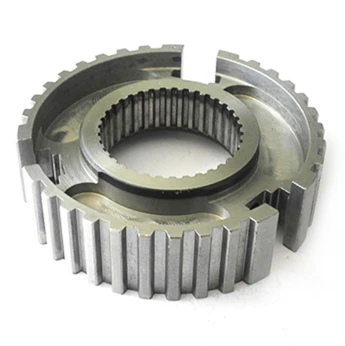
(motor housings)
FAQS on motor housings
Q: What materials are commonly used for motor housings?
A: Motor housings are typically made from die-cast aluminum or steel alloys for durability and heat resistance. Some applications use engineered plastics for lightweight requirements. Material selection depends on torque, temperature, and environmental factors.
Q: How do gearbox housings differ from motor housings in design?
A: Gearbox housings require thicker walls and reinforced bearings to handle mechanical stress from gear trains. They often incorporate precise oil channels for lubrication, while motor housings prioritize heat dissipation. Both demand tight tolerances but serve different load-bearing functions.
Q: What certifications apply to sensor housings for industrial use?
A: Sensor housings often require IP67/68 ratings for waterproofing and NEMA-4X certification for corrosion resistance. Automotive applications may need ISO/TS 16949 compliance. EMI/RFI shielding certifications are critical for electronics protection.
Q: Can motor housings be customized for specific applications?
A: Yes, motor housings can be tailored with custom mounting brackets, cooling fins, or sealed connectors. CNC machining allows for unique port configurations. Custom anodizing or coatings can address specific environmental challenges.
Q: What maintenance is required for aluminum gearbox housings?
A: Regularly inspect for corrosion at welded joints and check seal integrity. Clean debris from cooling fins annually. Reapply anti-galling compounds on threaded ports during component replacements to prevent metal fusion.