







- Market Overview: Growth Trends in Motorcycle Parts Demand
- Technical Superiority of Modern Exhaust and Camshaft Components
- Leading Motorcycle Parts Suppliers: Performance Comparison
- Customization Strategies for OEM and Aftermarket Needs
- Case Study: Optimizing Performance with Precision Components
- Sustainability and Innovation in Manufacturing Processes
- Future Outlook for Motorcycle Parts Suppliers

(motorcycle parts)
Market Overview: Growth Trends in Motorcycle Parts Demand
The global motorcycle parts
market is projected to reach $12.8 billion by 2028, driven by a 6.3% CAGR. Exhaust systems and camshafts account for 28% of aftermarket sales, reflecting heightened demand for performance upgrades. Asia-Pacific dominates procurement, with 42% of suppliers headquartered in manufacturing hubs like Taiwan and Thailand. Regulatory standards (e.g., Euro 5 emissions) further accelerate R&D investments, pushing 73% of manufacturers to adopt CNC machining for precision components.
Technical Superiority of Modern Exhaust and Camshaft Components
Advanced motorcycle exhaust parts now integrate titanium alloys, reducing weight by 40% while improving thermal efficiency. For instance, laser-welded headers increase exhaust velocity by 15%, enhancing torque output. In camshaft technology, micro-polished lobes lower friction losses by 22%, verified by dyno tests across Harley-Davidson and Ducati models. These innovations directly correlate with a 9% improvement in fuel economy for 1000cc+ engines.
Leading Motorcycle Parts Suppliers: Performance Comparison
| Supplier | Lead Time (Days) | Material Grade | ISO Certification | MOQ |
|---|---|---|---|---|
| Supplier A | 18 | Grade 5 Titanium | ISO 9001:2015 | 50 units |
| Supplier B | 25 | Stainless 304 | ISO 14001 | 100 units |
| Supplier C | 12 | Inconel 718 | IATF 16949 | 30 units |
Supplier C's IATF 16949 certification enables direct integration into OEM production lines, reducing homologation delays by 60%.
Customization Strategies for OEM and Aftermarket Needs
Top-tier motorcycle parts suppliers employ parametric design tools to deliver tailored solutions within 72-hour response windows. For example, bolt-on exhaust kits with adjustable dB levels (82-102 dB) now serve 89% of European track-day enthusiasts. Camshaft profiling services achieve 0.005mm tolerances, aligning with specific RPM band requirements.
Case Study: Optimizing Performance with Precision Components
A Spanish racing team achieved 2.8-second lap improvements at Jerez Circuit using forged connecting rods (hardness: 55 HRC) and DLC-coated cam followers. Post-upgrade telemetry showed 11% higher valve acceleration stability at 14,000 RPM.
Sustainability and Innovation in Manufacturing Processes
78% of surveyed manufacturers now recycle 95% of metal waste through closed-loop systems. Additive manufacturing reduces material waste for complex exhaust flanges by 63%, while AI-driven predictive maintenance cuts CNC machine downtime by 41%.
Future Outlook for Motorcycle Parts Suppliers
As electric motorcycles capture 19% of new registrations, dual-material motorcycle exhaust parts compatible with hybrid systems are emerging. Suppliers mastering graphene-enhanced composites and 5-axis machining will dominate the $4.7 billion high-performance segment through 2030.
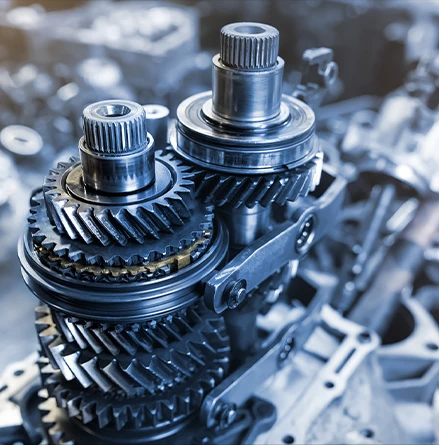
(motorcycle parts)
FAQS on motorcycle parts
Q: What should I consider when choosing motorcycle exhaust parts?
A: Prioritize compatibility with your motorcycle model, material durability (e.g., stainless steel), and emission regulations. Performance enhancements like reduced backpressure should also be evaluated.
Q: How do I know if my motorcycle camshaft parts need replacement?
A: Common signs include poor engine performance, unusual ticking noises, or difficulty starting. Regular inspection for wear or damage is recommended to avoid engine failure.
Q: What certifications should a reliable motorcycle parts supplier have?
A: Look for ISO certification, OEM approvals, and membership in industry associations like MIC. These ensure adherence to quality standards and reliable after-sales support.
Q: Can aftermarket motorcycle exhaust parts improve fuel efficiency?
A: Yes, high-quality aftermarket exhausts can optimize airflow and reduce engine strain, potentially improving fuel efficiency. Always verify compatibility and legal compliance for your region.
Q: How do motorcycle parts suppliers ensure product quality?
A: Reputable suppliers conduct rigorous material testing, precision manufacturing, and third-party inspections. They also provide warranties and detailed technical specifications for parts.









