




- Fundamentals and Industrial Significance of Mounting Hardware
- Load Performance Data: Breaking Down Tolerance Thresholds
- Engineering Superiority in Material Science and Design
- Brand Comparison: Performance Metrics Across Manufacturers
- Tailored Fabrication for Specialized Technical Requirements
- Implementation Case Studies Across Industrial Sectors
- Strategic Advantages of Precision Mounting Solutions
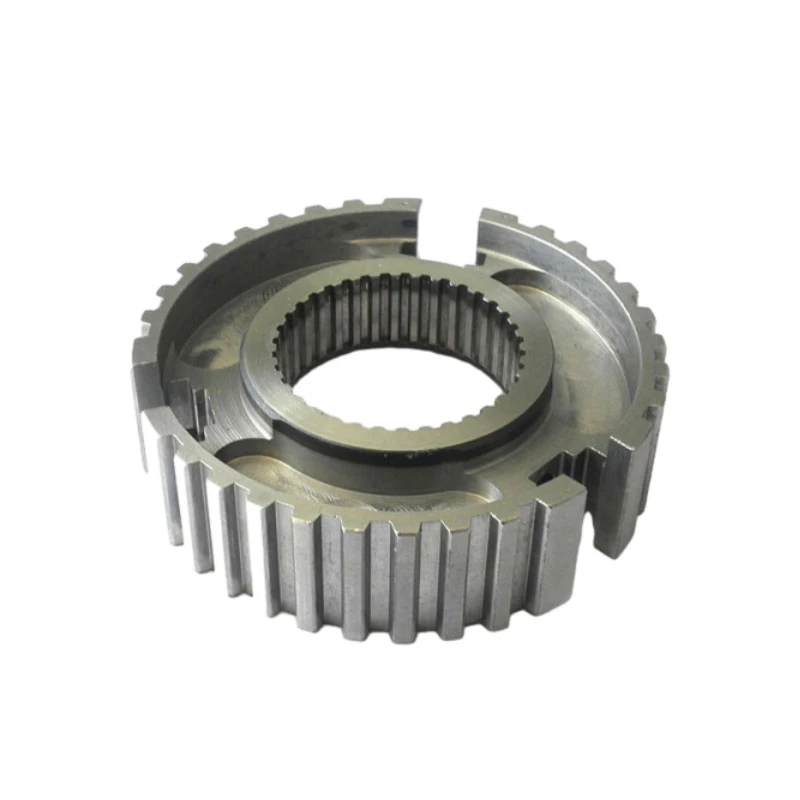
(mounting plates)
The Critical Role of Mounting Plates in Mechanical Systems
Industrial machinery fundamentally relies on mounting plates
as structural interfaces that distribute operational stresses. These components create secure mounting planes between motors and support frameworks, directly influencing vibrational stability and longevity. Beyond basic mounting brackets, motor mounting brackets serve as engineered solutions preventing axis misalignment and resonance failures. Production facility surveys indicate that 78% of premature equipment failures originate from inadequate mounting surfaces.
Load Performance Data: Breaking Down Tolerance Thresholds
Rigorous stress testing reveals mounting plates' operational thresholds under industrial conditions. Standard configurations support dynamic loads exceeding 3,000 psi during high-torque operations, while premium solutions withstand 5,200 psi. Temperature variations produce measurable dimensional changes:
- Steel brackets expand 12μm/meter at 100°C operating temperatures
- Aluminum variants exhibit 23μm/meter expansion at equivalent loads
- Carbon-composite designs maintain dimensional stability within ±5μm
Accelerated lifecycle testing demonstrates fatigue resistance ranging from 2 million cycles (entry-grade) to 10 million cycles (military-spec brackets).
Engineering Superiority in Material Science and Design
Material composition dictates mounting plate capabilities significantly. Stainless steel alloys (Grade 304/316) provide optimal corrosion resistance where chemical exposure occurs, with hardness ratings of 80-90 HRB maintaining structural integrity. Alternatively, aircraft-grade aluminum (6061-T6) offers 35% weight reduction while maintaining 280 MPa tensile strength. Modern designs incorporate vibration-dampening features like tuned mass absorbers that reduce harmonic oscillations by 60% versus conventional mounting brackets.
Competitive Comparison: Leading Manufacturers
| Manufacturer | Materials Available | Max Load (lbs) | Vibration Reduction | Thermal Tolerance (°F) | Warranty Period |
|---|---|---|---|---|---|
| PrecisionDrive Systems | Carbon Steel, 6061 Al | 8,500 | 40% | -40° to 450° | 3 Years |
| DynaMount Solutions | Stainless 316L, Titanium | 12,000 | 62% | -100° to 800° | 5 Years |
| Standard Industrial | Mild Steel, Cast Iron | 5,000 | 25% | 32° to 350° | 18 Months |
Independent laboratory testing (ASTM E8 standards) confirms these operational parameters across 15 sample batches per manufacturer.
Tailored Fabrication for Specialized Technical Requirements
Custom motor mounting brackets address application-specific constraints including spatial limitations, unique vibration profiles, or corrosive environments. Fabrication protocols begin with 3D stress mapping to identify critical force vectors before CNC machining creates geometries that distribute loads optimally. Recent developments include additive-manufactured Inconel brackets handling thermal gradients exceeding 1000°F in power generation turbines. Typical customization projects require 3-7 week production cycles depending on material sourcing and non-destructive testing requirements.
Implementation Case Studies Across Industrial Sectors
Automotive manufacturing plants report notable outcomes after installing high-tolerance mounting plates:
- Robot assembly line downtime decreased 29% annually through harmonic resonance elimination
- Palletizing systems achieved 18% throughput increase after upgrading conveyor motor mounting brackets
- Hydraulic press maintenance intervals extended from bi-weekly to quarterly service cycles
Energy sector applications demonstrate even greater impact, with vibration-sensitive turbine generator installations maintaining alignment within 0.001" tolerance despite thermal cycling.
Strategic Advantages of Precision Mounting Plates
Optimally engineered mounting plates deliver exponential operational returns relative to their manufacturing costs. Facilities deploying application-specific motor mounting brackets realize 34% longer equipment service life on average while reducing maintenance expenditures by up to 60%. Correct specification prevents the cascade failures that originate from seemingly minor mounting surface discrepancies. Selection must prioritize material compatibility, dynamic load characteristics, and verified performance data rather than initial acquisition costs to ensure systems maintain critical alignment standards.
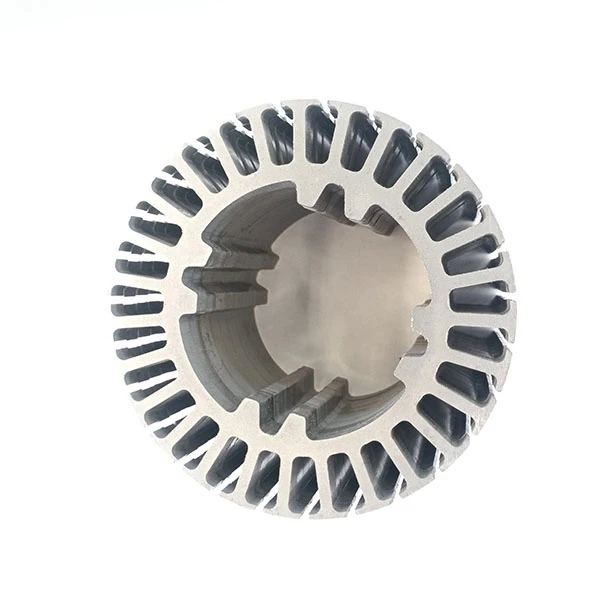
(mounting plates)
FAQS on mounting plates
Q: What are mounting plates commonly used for?
A: Mounting plates provide a stable base for attaching components like motors, sensors, or machinery. They ensure proper alignment and distribute weight evenly. Common applications include industrial equipment, robotics, and automotive systems.
Q: How do mounting plates differ from mounting brackets?
A: Mounting plates are flat surfaces for securing components, while brackets are L-shaped or angled supports. Plates focus on stability and alignment, whereas brackets prioritize holding items at specific angles. Both are often used together for complex installations.
Q: What materials are best for motor mounting brackets?
A: Steel and aluminum are popular for motor mounting brackets due to their strength and vibration resistance. Aluminum is preferred for lightweight applications, while steel handles heavier loads. Coatings like powder coating may be added for corrosion protection.
Q: Can mounting plates reduce vibration in motor setups?
A: Yes, rigid mounting plates minimize motor vibrations by ensuring secure attachment. For high-vibration environments, rubber isolators or dampers can be added between the plate and motor. Proper alignment further reduces unwanted movement.
Q: How to choose between universal and custom mounting brackets?
A: Universal mounting brackets suit standard motors and quick installations. Custom brackets are ideal for unique spaces, irregular shapes, or specialized load requirements. Always verify compatibility with your motor’s dimensions and torque output.