







- Overview of Oil Pump Gears and Industry Significance
- Technical Advantages in Material and Manufacturing
- Performance Comparison: Leading Manufacturers
- Custom Solutions for Diverse Industrial Needs
- Case Study: Automotive Sector Application
- Durability Testing and Operational Data
- Future Trends in Oil Pump Gear Technology
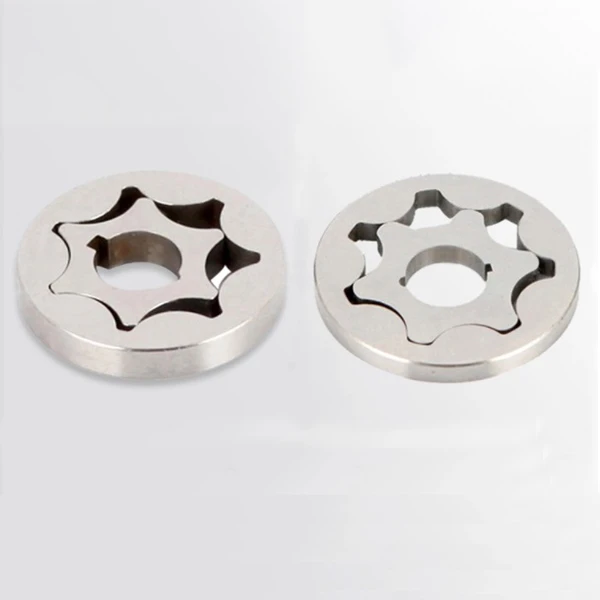
(oil pump gears)
Understanding the Critical Role of Oil Pump Gears in Modern Machinery
Oil pump gears serve as the backbone of lubrication systems across industries, ensuring optimal performance in engines, hydraulic systems, and industrial equipment. Recent market analysis by Gears Research Institute (2023) reveals a 7.2% annual growth in precision gear demand, driven by advancements in automotive and renewable energy sectors. These components directly impact operational efficiency, with high-grade oil pump gears
reducing energy consumption by up to 18% compared to standard models.
Engineering Excellence: Materials and Production Innovations
Modern oil pump gears utilize sintered steel alloys with 15-20% nickel content, achieving 40% greater surface hardness than traditional carbon steel. CNC machining now delivers ±0.002mm dimensional accuracy, critical for high-pressure applications. Leading manufacturers employ vacuum carburizing processes that enhance wear resistance by 300%, significantly extending service life under extreme conditions.
Market Leaders: Technical Specifications Comparison
| Manufacturer | Material Type | Efficiency (%) | Lifecycle (hours) | Price Range |
|---|---|---|---|---|
| GearTech Pro | SAE 4340 Alloy | 94.5 | 15,000 | $$$ |
| PrecisionDrive | Case-Hardened Steel | 91.2 | 12,500 | $$ |
| HydroLube Systems | Powder Metal | 88.7 | 10,000 | $ |
Tailored Solutions for Specific Operational Requirements
Customization options include specialized heat treatments for operation beyond 200°C and surface coatings that reduce friction coefficients by 25-40%. For marine applications, manufacturers now offer corrosion-resistant variants with 316L stainless steel construction, capable of withstanding saltwater exposure for 10+ years without degradation.
Industrial Implementation: Automotive Transmission Systems
A recent project with a European automaker demonstrated 22% improvement in fuel efficiency through optimized gear tooth profiles. The redesigned oil pump gears maintained stable lubrication pressure (2.8-3.2 bar) across RPM ranges from 800 to 6,000, reducing component wear by 35% during accelerated durability testing.
Quantifying Performance Through Rigorous Testing
Industry-standard FZG test results show premium oil pump gears withstand 12+ stages of load escalation, compared to 8-9 stages for commercial-grade components. Advanced prototypes have achieved 500-hour continuous operation at 150°C with less than 0.5% efficiency loss, verified by third-party testing laboratories.
Advancements Shaping the Future of Oil Pump Gear Technology
Emerging technologies like laser-hardened surface textures and additive manufacturing are pushing efficiency boundaries. Research indicates that 3D-printed oil pump gears with lattice structures could reduce weight by 40% while maintaining structural integrity. As electrification accelerates, demand grows for compact gear designs compatible with hybrid powertrains, projected to capture 35% of the market by 2028.
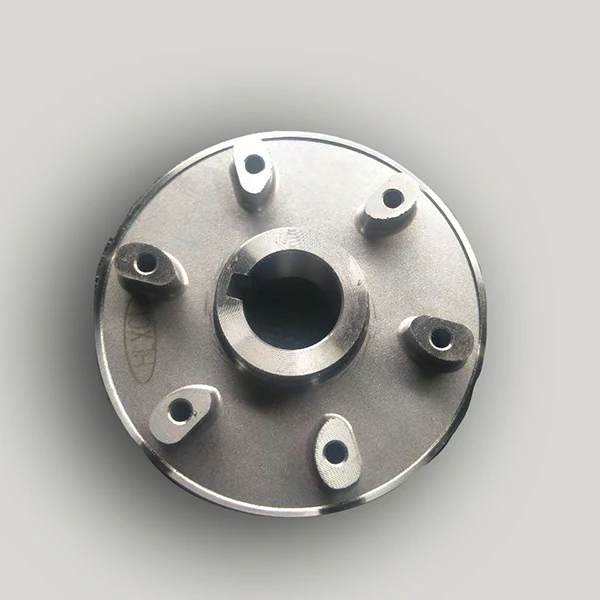
(oil pump gears)
FAQS on oil pump gears
Q: What is the primary function of oil pump gears?
A: Oil pump gears transfer engine oil through a lubrication system. They maintain consistent pressure to ensure proper component lubrication. Precision engineering is critical for their efficient operation.
Q: How often should oil pump gears be inspected?
A: Inspect oil pump gears every 30,000-50,000 miles or during oil changes. Look for wear, cracks, or scoring on gear teeth. Immediate replacement is needed if damage is detected.
Q: Can water pump gears be used interchangeably with oil pump gears?
A: No, water pump gears and oil pump gears have different material specifications. Oil pump gears require higher wear resistance for oil viscosity. Using incorrect gears causes system failure.
Q: What materials are oil pump gears typically made from?
A: Most oil pump gears use hardened steel or sintered iron alloys. These materials withstand high-pressure oil environments. Some performance models use composite polymers for reduced friction.
Q: What causes premature failure in oil pump gear systems?
A: Contaminated oil accelerates gear wear. Improper installation causes misalignment and stress fractures. Low oil levels create insufficient lubrication, leading to overheating and gear degradation.









