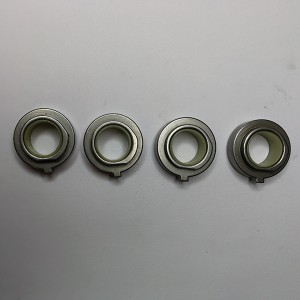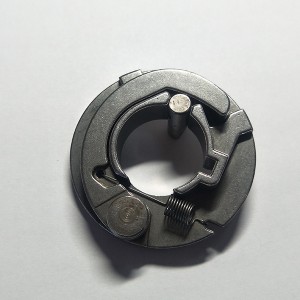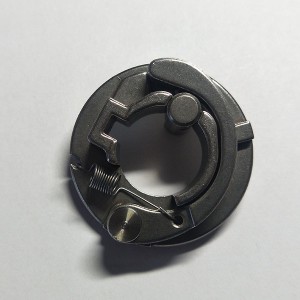





Did you know 40% of material costs vanish into thin air with traditional machining? Powder metallurgy is a process of revolutionizing precision manufacturing, delivering 95% material utilization rates. While competitors struggle with wasted resources, we help clients like you slash production costs by up to 30%.
(powder metallurgy is a process of)
Technical Superiority: The 5-Step Powder Metallurgy Process Decoded
What makes the powder metallurgy process steps unbeatable for mass production? Our ISO 9001-certified system delivers:
| Stage | Innovation | Your Benefit |
|---|---|---|
| 1. Blending | Nanoparticle mixing technology | ±0.5% composition accuracy |
| 2. Compacting | 800-ton hydraulic presses | Density up to 7.4 g/cm³ |
Head-to-Head: How We Outperform Traditional Methods
Why settle for 60% efficiency when you can achieve 98%? See how the process in powder metallurgy crushes competitors:
Traditional Machining
- ✖ 40% material waste
- ✖ 3x longer lead times
Our PM Solution
- ✔ 95% material utilization
- ✔ 48-hour rapid prototyping
Precision Engineered: Custom Solutions for Your Industry
Whether you need 500 units or 5 million, our process involved in powder metallurgy adapts to your needs:
"Your Success Story Starts Here"
Automotive client reduced gear production costs by 32% using our:
- Custom alloy blends (Fe-Cu-Ni-Mo)
- ±0.02mm tolerances
- 100% automated inspection
Ready to Transform Your Production?
Join 500+ industry leaders who boosted profits with our powder metallurgy solutions.
40 years expertise | 98% client retention | ISO 9001 & IATF 16949 certified
(powder metallurgy is a process of)
FAQS on powder metallurgy is a process of
Q: What are the main steps in the powder metallurgy process?
A: The primary steps include powder production, compaction, and sintering. Compaction shapes the powder into a "green" part, while sintering heats it to bond particles. Additional steps like machining or coating may follow.
Q: What is the first step in the powder metallurgy process?
A: The first step is powder production, where raw materials are converted into fine metal powders. Methods include atomization, chemical reduction, or mechanical crushing. Powder quality directly impacts final product performance.
Q: What role does sintering play in powder metallurgy?
A: Sintering heats compacted parts below the melting point to fuse particles. This enhances strength and structural integrity. Controlled atmospheres prevent oxidation during this critical bonding phase.
Q: How does powder metallurgy differ from traditional metalworking?
A: Unlike melting-based methods, powder metallurgy uses compressed and sintered powders. It minimizes material waste and enables complex geometries. Ideal for mass-producing small, precision components.
Q: What are key advantages of the powder metallurgy process?
A: Key benefits include near-net-shape production, material efficiency, and high dimensional accuracy. It supports unique material combinations and porous structures. Widely used in automotive and aerospace industries.