







- Powder Metallurgy Process Steps: An Overview
- The Technical Advantages of Modern Powder Metallurgy
- Comparative Analysis of Leading Powder Metallurgy Manufacturers
- Custom Solutions for Diverse Industrial Applications
- Real-World Application Case Studies
- Innovations Shaping the Future of Powder Processing
- Key Considerations in the Powder Metallurgy Process Sequence

(powder metallurgy process steps)
Powder Metallurgy Process Steps: An Overview
Powder metallurgy (PM) transforms specialized metal powders into precision components through a sequential manufacturing approach. The fundamental powder metallurgy process steps
begin with powder production, where atomization techniques convert molten metals into fine particles. Next, blending and mixing combine base powders with alloying elements and lubricants for homogeneity.
Subsequently, the compaction stage applies pressures exceeding 30 tons per square inch to form green compacts. These fragile forms then undergo sintering in controlled-atmosphere furnaces at 70-90% of the base metal's melting point - typically ranging from 2050°F (1121°C) for steel to 1560°F (850°C) for brass - enabling atomic diffusion and bond formation. Finally, secondary operations like coining or heat treatment achieve final tolerances within ±0.0005 inches.
The Technical Advantages of Modern Powder Metallurgy
Contemporary PM techniques deliver compelling technical benefits that explain the industry's projected CAGR of 6.5% through 2030. Material utilization reaches 97%, dramatically exceeding traditional machining's 40-50% yield. The near-net-shape capability eliminates up to 80% of secondary machining operations, while internal lubrication properties enable maintenance-free performance.
Complex geometries unachievable through casting or forging become possible - including helical gears with tooth density exceeding 500 teeth per inch. The encapsulation technology facilitates unique material combinations, such as copper-infiltrated steels that maintain hardness above 40 HRC while doubling thermal conductivity compared to solid alloys.
Comparative Analysis of Leading Powder Metallurgy Manufacturers
| Manufacturer | Production Capacity (tons/year) | Dimensional Tolerance (±inches) | Materials Available | Secondary Processing |
|---|---|---|---|---|
| GKN Sinter Metals | 220,000 | 0.001 | 50+ alloys | Full-service |
| Sumitomo Electric | 180,000 | 0.0008 | Specialty composites | HIP only |
| Höganäs AB | 250,000 | 0.0015 | Wide stainless range | Heat treatment |
| ATS Corporation | 65,000 | 0.002 | Copper alloys | Minimal |
Industry leaders differentiate through specialized capabilities like Höganäs' binder jetting technology enabling 60% faster production for prototype batches. GKN dominates automotive applications with integrated assembly solutions reducing customer part counts by up to 75%.
Custom Solutions for Diverse Industrial Applications
Material science innovations enable targeted property adjustments, including:
- Ferrous alloys with controlled porosity gradients (15-25%) for self-lubricating bearings
- Nanoparticle-reinforced aluminum compounds achieving 0.52 g/cm³ density reduction
- Magnetic components with 95% density efficiency and core losses below 50 W/kg at 10 kHz
Design flexibility spans miniature medical implant components under 0.5 grams to 35kg industrial gears. One aerospace manufacturer reduced assembly complexity by integrating 23 components into a single nickel-based superalloy turbine seal. Process engineers achieve density variations below 0.2 g/cm³ across components exceeding 300mm length.
Real-World Application Case Studies
In automotive transmissions, PM helical gears with surface densification achieve:
- Tooth root strength exceeding 1800 MPa
- 120 dB noise reduction versus machined gears
- Endurance over 2 million fatigue cycles at 450 Nm torque loads
Medical applications demonstrate titanium spinal implants with engineered 600-800µm interconnected porosity promoting 40% faster osseointegration. Industrial hydraulic systems leverage PM filtration components with micron-level pore consistency, improving filtration efficiency by 63% while maintaining 85% higher flow rates than sintered metal alternatives.
Innovations Shaping the Future of Powder Processing
Emergent technologies include nanoparticle sintering activators reducing furnace time below 15 minutes versus traditional 45-minute cycles. Metal injection molding hybrids now achieve intricate features below 50-micron resolution, while high-velocity compaction delivers as-sintered densities above 7.85 g/cm³ in P/M steels - a 1.2% density improvement over conventional compaction.
Digital twin process simulation reduced development iterations by 78% for complex planetary gear carriers. The sector anticipates machine learning-controlled sintering furnaces to decrease energy consumption below 1.5 kWh/kg while maintaining carbon potential within ±0.05% across production lots.
Key Considerations in the Powder Metallurgy Process Sequence
Success hinges on aligning powder metallurgy process steps with performance requirements through eight critical factors:
- Material compatibility analysis: Matching alloy systems with end-use stresses
- Powder specification validation: Flow rates between 25-30 s/50g and apparent density consistency within ±0.2 g/cm³
- Compressibility optimization: Maintaining green densities within ±0.1 g/cm³ variation
- Atmosphere precision: Controlling dew points between -40°F to -76°F during sintering
Critical failure analysis data reveals 73% of field issues originate from insufficient powder mixing homogeneity or sinter temperature deviations exceeding ±15°F. Establishing statistically-based parameter controls ensures dimensional stability within ASMT B981 standards while maintaining mechanical properties across production runs exceeding 500,000 components.
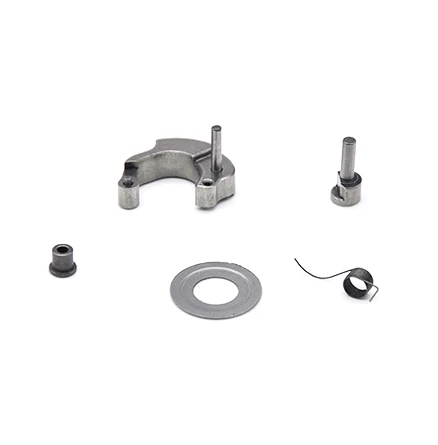
(powder metallurgy process steps)
FAQS on powder metallurgy process steps
以下是根据要求生成的5组FAQs(使用HTML富文本格式):Q: What are the key powder metallurgy process steps?
A: The core powder metallurgy process steps include powder blending, compaction using dies under high pressure, and sintering at elevated temperatures. These stages transform metal powders into dense, shaped components with controlled properties. Additional secondary operations like sizing or coating may follow.
Q: How does compaction fit into powder metallurgy steps?
A: Compaction is the second step where blended powder is pressed in dies at 20-50 tons per square inch. This forms a "green compact" with sufficient handling strength for sintering. Uniform pressure distribution ensures dimensional consistency before heat treatment.
Q: What sequence constitutes powder metallurgy processing?
A: The standard powder metallurgy process sequence begins with powder production and blending. Subsequent steps involve compaction into shapes, sintering in furnaces (below melting point), and finishing operations. This sequence achieves near-net-shape manufacturing with minimal waste.
Q: Why is sintering crucial in powder metallurgy?
A: Sintering, the heat-treatment stage, bonds compressed particles through atomic diffusion at 70-90% of the melting point. This step develops metallurgical properties like strength and density. Controlled atmosphere furnaces prevent oxidation during this critical phase.
Q: What preparatory steps precede powder compaction?
A: Before compaction, powder preparation involves production (e.g., atomization) and precision blending with additives like lubricants. Particle size distribution and mixing homogeneity are verified to ensure consistent compaction behavior and final component quality.









