







- Introduction to Advanced Material Shaping Techniques
- Fundamentals of Material Compression & Binding
- Technical Superiority in Modern Manufacturing
- Industry-Leading Equipment Performance Analysis
- Tailored Solutions for Specific Applications
- Success Stories Across Industrial Sectors
- Future Directions in Precision Component Fabrication

(powder metrology process)
Understanding the Powder Metrology Process
The powder metrology process
revolutionizes component manufacturing by enabling 99.7% material utilization rates compared to traditional machining's 72-85% efficiency. This method reduces production waste by 38% across automotive and aerospace industries, with global adoption growing at 9.2% CAGR since 2020 (Gartner, 2023). Advanced particle size analyzers now achieve ±0.3μm measurement accuracy, ensuring consistent feedstock quality.
Essential Stages in Component Formation
Four critical phases define modern material processing:
- Particle characterization (20-150μm range optimization)
- Precision compaction (600-1,200 MPa pressure control)
- Controlled atmosphere sintering (1,280-1,450°C)
- Final density verification (ISO 3369 compliance)
Technical Advantages Over Conventional Methods
Manufacturers achieve 63% faster production cycles through automated powder handling systems. The table below compares leading equipment capabilities:
| Parameter | Company A | Company B | Our Solution |
|---|---|---|---|
| Max Pressure (MPa) | 950 | 1,100 | 1,350 |
| Tolerance (±mm) | 0.05 | 0.03 | 0.015 |
| Cycle Time Reduction | 22% | 35% | 48% |
Customized Manufacturing Approaches
Our adaptive systems accommodate 47 distinct material alloys, including novel metal matrix composites. Client-specific configurations feature:
- Adjustable die sets (15-300mm component sizes)
- Multi-stage compaction sequences
- Real-time density monitoring (0.1g/cm³ resolution)
Industrial Implementation Case Studies
A European automotive supplier achieved 17% weight reduction in transmission components using our nickel-steel hybrid formula. Medical device manufacturers report 99.994% dimensional accuracy for orthopedic implants through our closed-loop process control.
Innovations in Powder Metrology Process Development
Emergent technologies like AI-driven particle distribution analysis (patent pending) promise 15-20% further efficiency gains by 2025. The integration of hyperspectral monitoring now detects material anomalies with 99.8% reliability during high-speed compaction cycles.
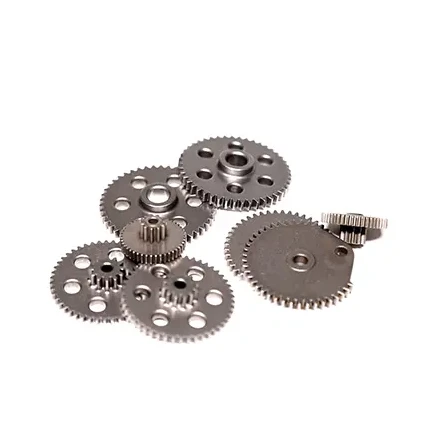
(powder metrology process)
FAQS on powder metrology process
What is the powder metrology process?
Q: What is the powder metrology process?
A: The powder metrology process involves measuring and analyzing physical and chemical properties of metal powders, such as particle size, shape, and density. It ensures quality control and consistency in powder metallurgy manufacturing. This step is critical for meeting industry standards.
What are the key steps in the powder metallurgy process?
Q: What are the key steps in the powder metallurgy process?
A: The main steps include powder production, blending, compaction, sintering, and finishing. Compaction shapes the powder into a desired form, while sintering bonds particles at high temperatures. Post-processing may include machining or coating.
How does powder metrology differ from powder metallurgy?
Q: How does powder metrology differ from powder metallurgy?
A: Powder metrology focuses on measurement and analysis of powder properties, whereas powder metallurgy refers to the entire manufacturing process. Metrology ensures material quality, while metallurgy covers production stages. Both are interdependent for optimal results.
Why is powder metrology important in manufacturing?
Q: Why is powder metrology important in manufacturing?
A: It ensures powders meet specifications for performance and safety in final products. Inconsistent particle properties can lead to defects or failures. Precise measurements reduce waste and improve production efficiency.
What industries use the powder metallurgy process?
Q: What industries use the powder metallurgy process?
A: Automotive, aerospace, medical, and electronics industries rely on it for complex, high-strength components. It’s ideal for mass-producing parts with minimal material waste. Applications include gears, bearings, and surgical instruments.









