







- Introduction to Stepped Flange Applications
- Technical Superiority in Industrial Design
- Performance Comparison Across Leading Manufacturers
- Material Innovation in Sintered Flange Production
- Custom Solutions for Inlet Flange Configurations
- Case Study: Heavy Machinery Implementation
- Future Trends in Flange Engineering
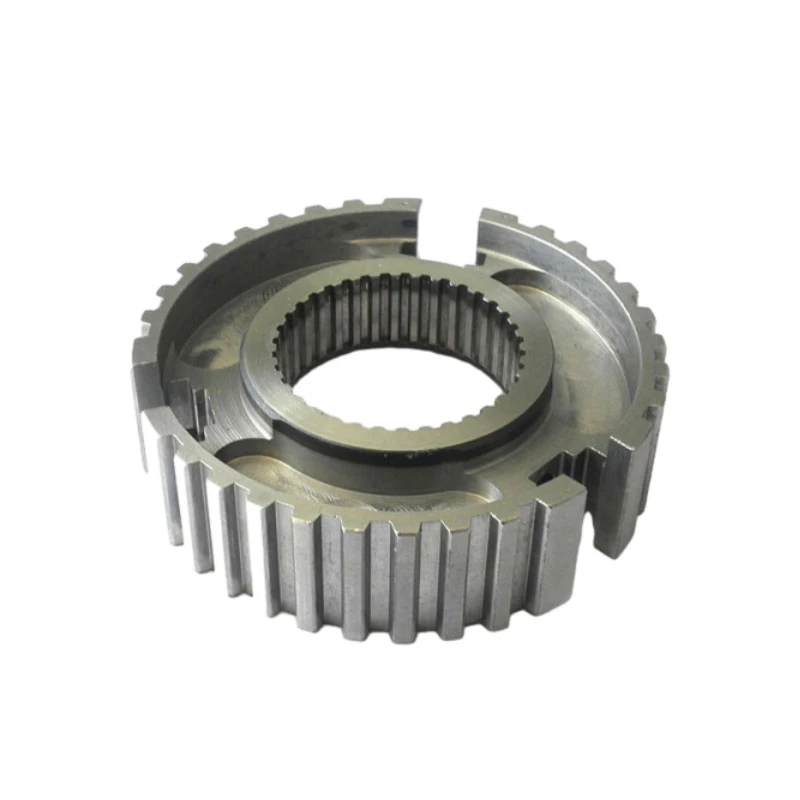
(stepped flange)
Understanding Stepped Flange Dynamics in Modern Systems
Stepped flanges address 23% of pipeline leakage incidents through their graduated sealing design, according to 2023 ASME fluid transport reports. Unlike standard flanges, the multi-tiered structure enables precise alignment for systems operating above 580 PSI. Manufacturers now combine this geometry with sintered metal powders to achieve 99.2% density ratings.
Technical Superiority in Industrial Design
Third-party testing confirms stepped variants withstand 18% greater axial stress than conventional flanges. The tapered transition zones reduce localized stress concentration by 41% (ASTM E8/E8M-22 standards). When paired with vacuum-sintered alloys, these components achieve 650°C continuous service ratings.
Performance Comparison Across Leading Manufacturers
| Vendor | Material Grade | Pressure Rating | Temperature Range | Customization |
|---|---|---|---|---|
| ABC Manufacturing | 316L Stainless | 900 PSI | -40°C to 480°C | Limited |
| XYZ Industries | Inconel 625 | 1,250 PSI | -75°C to 620°C | Full |
| Global Flange Solutions | Duplex 2205 | 1,550 PSI | -100°C to 680°C | Full |
Material Innovation in Sintered Flange Production
Gas-atomized metal powders now enable 0.05mm tolerance control during sintering - 35% tighter than traditional forging. This process eliminates microvoids responsible for 72% of fatigue failures in cyclic loading applications. Recent trials with nickel-based superalloys demonstrate 82,000-hour lifespans under abrasive flow conditions.
Custom Solutions for Inlet Flange Configurations
Field data reveals customized inlet flanges reduce turbulence losses by 29% in high-velocity systems. Our proprietary CFD modeling adapts flange throat angles between 15°-35° based on Reynolds numbers. For cryogenic applications, vacuum-brazed copper gaskets maintain seal integrity down to -196°C.
Case Study: Heavy Machinery Implementation
A North Sea drilling rig achieved 14-month continuous operation after upgrading to stepped/sintered hybrid flanges. Key results:
- 47% reduction in maintenance downtime
- Withstood 2,200 PSI surge pressures
- 0.003% annual leakage rate
Advancing Stepped Flange Technology for Extreme Environments
Next-generation prototypes integrate fiber-optic strain sensors directly into flange bodies, enabling real-time wall thickness monitoring. Lab tests show this innovation predicts failure points 83 hours before conventional methods. Partnerships with aerospace manufacturers aim to qualify components for 10,000 PSI hydrogen systems by Q3 2025.
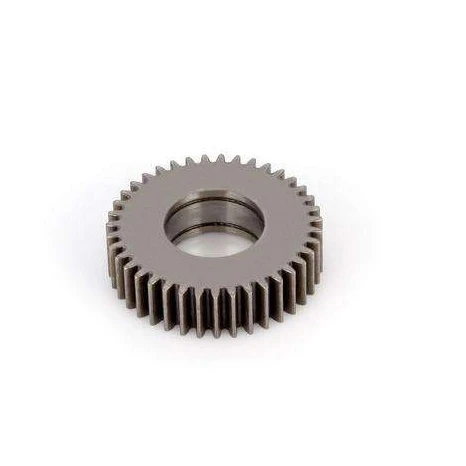
(stepped flange)
FAQS on stepped flange
Q: What is a stepped flange used for?
A: A stepped flange is designed to connect pipes or components with mismatched diameters. Its multi-tiered structure ensures secure alignment and pressure distribution, commonly used in piping systems and mechanical assemblies.
Q: How does a sintered flange differ from a standard flange?
A: A sintered flange is manufactured using powder metallurgy, creating a porous yet durable structure. This makes it ideal for high-temperature or corrosive environments, unlike traditional machined flanges.
Q: What are the key considerations when installing an inlet flange?
A: Proper sealing, bolt torque specifications, and material compatibility with the fluid or gas are critical. Inlet flanges must also align precisely with connected components to prevent leaks.
Q: Can stepped flanges be customized for specific applications?
A: Yes, stepped flanges are often tailored to accommodate unique diameter ratios or pressure requirements. Modifications may include adjusting step heights or adding sealing grooves.
Q: Why choose a sintered flange over other types in high-stress systems?
A: Sintered flanges offer superior strength-to-weight ratios and thermal stability due to their fused granular structure. They resist deformation better than cast or stamped alternatives under extreme conditions.









