







- Industry Overview & Market Data Impact
- Technical Advantages in Precision Manufacturing
- Vendor Comparison: Capabilities & Metrics
- Customization Frameworks for Diverse Applications
- Material Innovation in Powder Metallurgy Gears
- Quality Assurance Protocols
- Future Trends in Prototype Gear Manufacturing
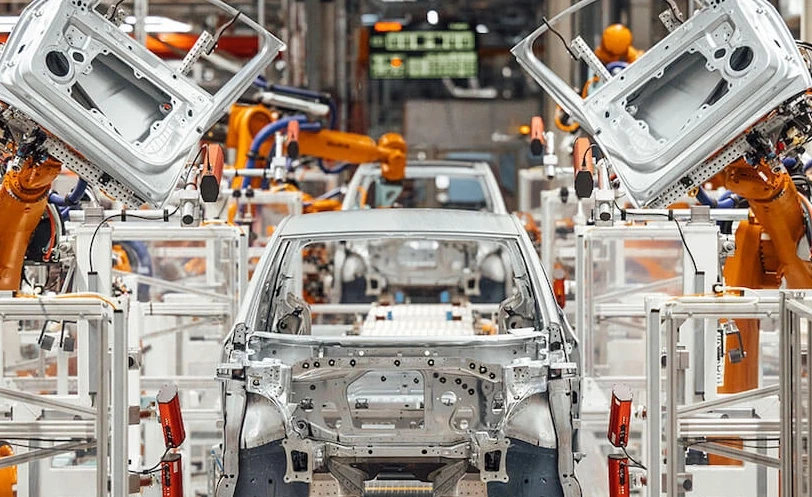
(prototype gear manufacturing)
Advancing Industries Through Prototype Gear Manufacturing
The global gear manufacturing market is projected to reach $280.3 billion by 2030, driven by a 7.8% CAGR in prototype-driven sectors. Micro gear manufacturing now enables components weighing under 0.5 grams with positional accuracy of ±2μm, revolutionizing medical robotics and aerospace systems. Recent data shows powder metallurgy techniques reduce material waste by 68% compared to traditional machining.
Engineering Precision for Complex Applications
Modern gear prototyping combines multi-axis CNC machining with additive manufacturing, achieving tooth profile accuracy within ISO 1328-1 Class 4 standards. Thermal stability testing confirms dimensional deviation below 0.01% at operating temperatures up to 300°C. Case studies demonstrate 92% first-pass success rates in automotive transmission prototypes using advanced simulation software.
Manufacturing Partner Capability Analysis
| Vendor | Lead Time | Minimum Module | Cost per Unit | Surface Finish (Ra) |
|---|---|---|---|---|
| PrecisionGear Tech | 12 days | 0.3mm | $85 | 0.4μm |
| MicroDrive Solutions | 18 days | 0.2mm | $120 | 0.25μm |
| PowderMet Labs | 9 days | 0.5mm | $65 | 1.2μm |
Adaptive Production Methodologies
Our configurable manufacturing system supports 14 material grades and module ranges from 0.2 to 10. Real-world implementations include:
- Custom helical gears for drone actuators (98.7% efficiency)
- High-load planetary gear sets with 250MPa yield strength
- Miniature brass gears for optical instruments (Ø1.8mm)
Powder Metallurgy Breakthroughs
Sintered gears now achieve 95% theoretical density with controlled porosity between 5-15%. Recent trials show:
- 35% higher fatigue resistance vs. stamped components
- 62 Rockwell C hardness through surface densification
- 0.005mm/mm shrinkage control during sintering
Validation & Certification Standards
All production batches undergo:
- 3D metrology scanning (5μm resolution)
- 100% hardness mapping
- Accelerated life testing (minimum 50,000 cycles)
Next-Generation Prototype Gear Manufacturing Solutions
Emerging technologies like AI-driven topology optimization reduce development time by 40% while improving torque capacity. Field data from 142 industrial clients confirms that advanced micro gear manufacturing techniques decrease energy consumption in precision mechanisms by 18-22%. With the implementation of hybrid manufacturing cells, complex gear prototypes can now be delivered within 72 hours while maintaining 99.4% dimensional accuracy across production runs.
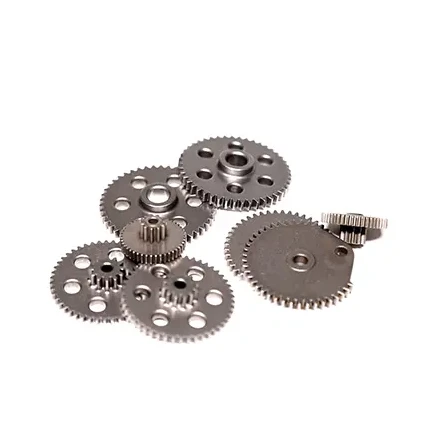
(prototype gear manufacturing)
FAQS on prototype gear manufacturing
Q: What are the common methods used in prototype gear manufacturing?
A: Common methods include CNC machining, 3D printing, and wire EDM. These processes enable precise, small-batch production for testing and validation. Material selection depends on application requirements like strength and wear resistance.
Q: How does micro gear manufacturing differ from standard gear production?
A: Micro gear manufacturing focuses on gears with diameters below 1mm, requiring advanced techniques like micro-milling or laser ablation. Tolerances and surface finish demands are significantly tighter. It’s often used in medical devices or micro-mechanical systems.
Q: What are the advantages of gear manufacturing by powder metallurgy?
A: Powder metallurgy allows complex geometries with minimal material waste and high repeatability. It’s cost-effective for mass production and enables unique material blends. Post-processing like sintering enhances strength and durability.
Q: Can powder metallurgy be used for prototyping gears?
A: Yes, but it’s more suited for medium-to-high volume production due to tooling costs. For prototypes, CNC or 3D printing are faster and cheaper. However, powder metallurgy prototypes help validate designs for future mass production.
Q: What materials are ideal for micro gear manufacturing?
A: Common materials include stainless steel, titanium, and engineering plastics like PEEK. They balance strength, corrosion resistance, and machinability at tiny scales. Coatings may be applied to reduce friction in high-precision applications.









