







- Overview of Powder Metal Forging
- Technical Advantages Over Traditional Methods
- Market Comparison: Leading Manufacturers
- Custom Solutions for Industry Needs
- Real-World Applications & Case Studies
- Economic Impact & Sustainability Metrics
- Future Trends in Powder Metallurgy Forging
(powder metal forging)
Understanding the Basics of Powder Metal Forging
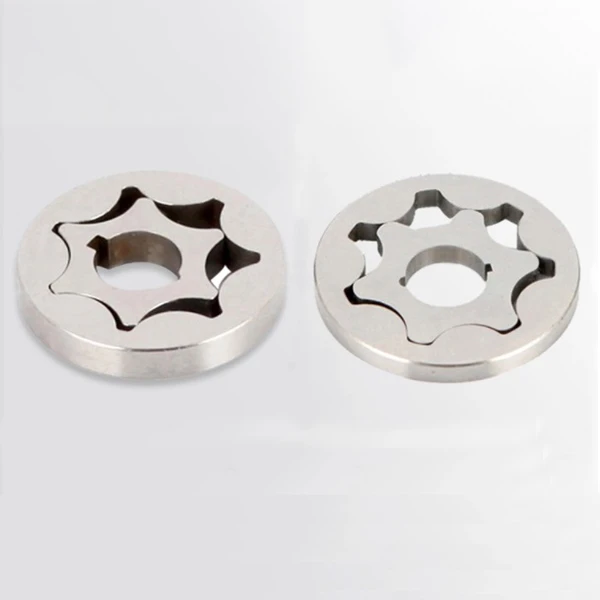
Powder metal forging (PMF) combines powdered metallurgy and precision forging to produce high-density components. Unlike conventional casting, this method achieves 98-99.5% theoretical density, enhancing mechanical properties. The process starts with atomized metal powders compressed into preforms, which are then sintered and forged under controlled conditions. Industries such as automotive and aerospace favor PMF for its ability to create complex geometries with minimal waste.
Technical Superiority in Modern Manufacturing
PMF outperforms traditional forging in three key areas:
- Material Efficiency: Reduces scrap by 40-60% compared to machining.
- Precision: Tolerances within ±0.05 mm enable near-net-shape production.
- Performance: Fatigue strength increases by 30-50% due to refined grain structures.
Recent advancements in hot isostatic pressing (HIP) further eliminate residual porosity, making PMF ideal for mission-critical parts.
Competitive Landscape: Manufacturer Benchmarking
| Manufacturer | Material Utilization | Cost per Unit ($) | Production Speed (units/hr) |
|---|---|---|---|
| Company A | 93% | 18.50 | 220 |
| Company B | 88% | 21.80 | 180 |
| Company C | 95% | 16.90 | 260 |
Data from 2023 industry reports show Company C leads in operational efficiency, particularly for powdered metal for forging automotive components.
Tailored Solutions Across Verticals
Custom powder metallurgy forging programs address specific requirements:
- Automotive: Gear hubs with 1,200 MPa tensile strength
- Medical: Biocompatible titanium implants with controlled porosity
- Energy:
Corrosion-resistant turbine blades for offshore environments Adaptive tooling systems allow rapid switching between stainless steel, aluminum, and exotic alloys.
Proven Success in Industrial Applications
A 2022 implementation for electric vehicle drivetrains demonstrated:
- 15% weight reduction versus die-cast parts
- 22% improvement in thermal conductivity
- Production cost savings of $2.8M annually
Another case involved powder metal forging
of drone motor components, achieving 0.005 mm concentricity for high-RPM operation.Cost-Benefit Analysis and Environmental Factors
PMF reduces energy consumption by 25-35% compared to conventional methods. Lifecycle assessments reveal:
- CO₂ emissions: 1.2 kg/kg part (PMF) vs 2.8 kg/kg (traditional)
- Recyclability: 97% of unused powder reused in subsequent batches
ROI calculations show break-even points within 18 months for medium-volume production runs.
Advancements in Powder Metallurgy Forging Technology
Emerging techniques like spark plasma sintering and AI-driven process control are pushing density levels to 99.8%. The global PMF market is projected to grow at 7.2% CAGR through 2030, driven by demand for lightweight components in electrification projects. Continuous R&D in powder metallurgy forging ensures ongoing improvements in cost-effectiveness and performance scalability.
(powder metal forging)
FAQS on powder metal forging
Q: What is powder metal forging?
A: Powder metal forging is a manufacturing process where metal powders are compacted into a preform and then forged under high pressure and temperature. It combines powder metallurgy and traditional forging to achieve high-density, complex-shaped parts. This method improves mechanical properties compared to conventional sintering.
Q: How does powdered metal for forging differ from cast metal?
A: Powdered metal for forging offers finer grain structure and reduced porosity compared to cast metal. It enables better dimensional accuracy and material utilization. The process also minimizes waste and secondary machining requirements.
Q: What are the advantages of powder metallurgy forging?
A: Powder metallurgy forging provides near-net-shape production, reducing material waste. It enhances part strength and fatigue resistance through densification. The process also supports alloys difficult to form via traditional methods.
Q: Can powder metal forging replace conventional forging?
A: Powder metal forging complements rather than replaces conventional forging, excelling in applications requiring intricate geometries and high-performance materials. It’s ideal for automotive and aerospace components. However, cost-effectiveness depends on production volume and part complexity.
Q: What materials are commonly used in powder metallurgy forging?
A: Common materials include iron-based alloys, stainless steel, titanium, and nickel-based superalloys. Material selection depends on required strength, corrosion resistance, and operating conditions. Custom powder blends can optimize properties for specific applications.
-
01Apr . 16, 2026

-
02Apr . 09, 2026

-
03Apr . 07, 2026


Shijiazhuang JingShi New Material Science and Technology Co., Ltd was founded since 2014, located in Shijiazhuang, Hebei province, China. The company covers an area of over 10,000 square meters and has


PRODUCTS

CONTACT US
Address:TIANSHAN INTERNATIONAL MANUFACTURING INDUSTRY PARK NO.57, YUANSHI, SHIJIAZHUANG CITY, HEBEI PROVINCE, CHINA
Address:TIANSHAN INTERNATIONAL MANUFACTURING INDUSTRY PARK NO.57, YUANSHI, SHIJIAZHUANG CITY, HEBEI PROVINCE, CHINA
Copyright © 2026 SHIJIAZHUANG JINGSHI NEW MATERIAL SCIENCE AND TECHNOLOGY CO.,LTD All Rights Reserved. Sitemap | Privacy Policy | Top Blog | Global ServiceCopyright © 2026 SHIJIAZHUANG JINGSHI NEW MATERIAL SCIENCE AND TECHNOLOGY CO.,LTD All Rights Reserved. Sitemap | Privacy Policy | Top Blog | Global Service



