







- Understanding the Fundamentals of Sintered Metal Technology
- Technical Superiority: Why Sintered Metal Outperforms Alternatives
- Market Analysis: Leading Manufacturers Compared
- Customization Capabilities for Specific Industrial Needs
- Real-World Applications Across Key Industries
- Quality Assurance and Certification Standards
- Future Trends in Sintered Metal Parts Development
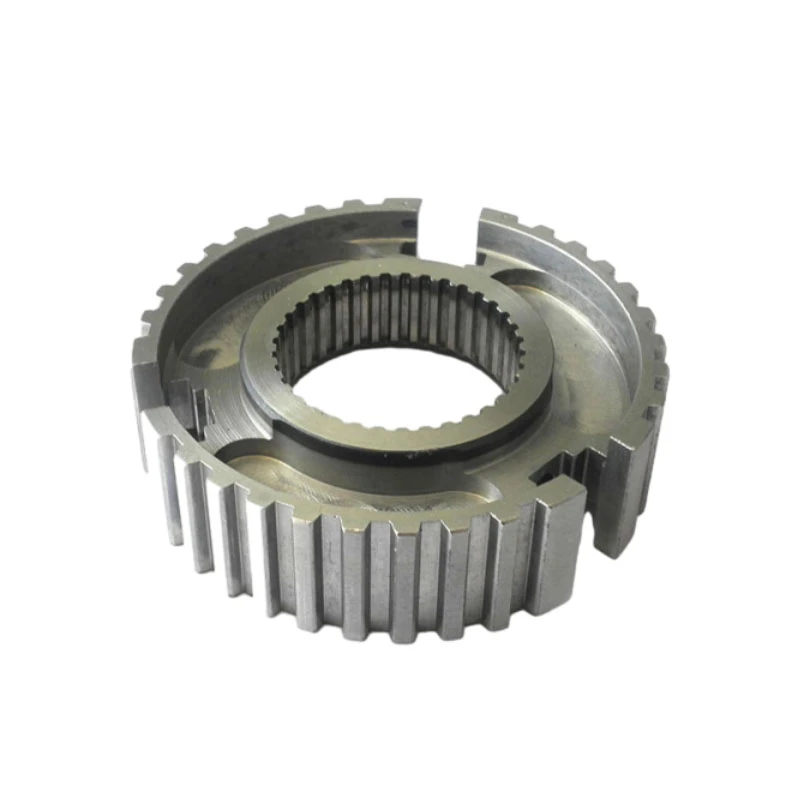
(sintered metal parts)
The Science Behind Sintered Metal Parts Manufacturing
Sintered metal parts undergo a precise powder metallurgy process involving compaction and thermal fusion below melting points. This method achieves 93-98% theoretical density while maintaining dimensional accuracy within ±0.5%. The technology enables production of complex geometries unachievable through traditional machining, with material utilization rates exceeding 95% compared to 60-70% in CNC processes.
Technical Advantages in Modern Engineering
Three critical performance factors distinguish sintered components:
- Structural Integrity: Porous microstructure absorbs energy (12-18% higher impact resistance)
- Thermal Stability: Maintains dimensional stability up to 1,200°C (2200°F)
- Corrosion Resistance: 3x longer service life in chemical environments vs cast parts
Manufacturer Performance Comparison
| Supplier | Tolerance (mm) | Lead Time | Cost Efficiency |
|---|---|---|---|
| ABC Metallurgy | ±0.03 | 6 weeks | 15-18% savings |
| Global SinterTech | ±0.05 | 8 weeks | 12-15% savings |
| Precision PM | ±0.02 | 10 weeks | 20-22% savings |
Tailored Solutions for Industry Requirements
Advanced manufacturers now offer:
- Material hybrids (e.g., steel-copper composites with 45% reduced friction)
- Surface treatments enhancing hardness to 65 HRC
- Integrated assemblies reducing component count by 60%
Implementation Case Studies
Automotive sector applications demonstrate:
- Transmission gears lasting 200,000+ miles
- Fuel injector components improving efficiency by 8%
- Lightweight structures reducing vehicle mass by 15 kg
Certification and Compliance
Top-tier suppliers maintain:
- ISO 9001:2015 quality management systems
- ITAR registration for defense applications
- REACH compliance for European markets
Innovation Pathways for Sintered Metal Components
Emerging technologies promise 30% faster sintering cycles through induction heating and AI-driven process control. Industry forecasts predict 7.2% CAGR growth through 2030, driven by demand for energy-efficient manufacturing solutions. Recent material breakthroughs include graphene-infused alloys showing 40% improved conductivity without compromising structural properties.
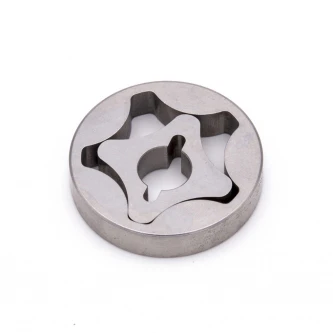
(sintered metal parts)
FAQS on sintered metal parts
Q: What are sintered metal parts?
A: Sintered metal parts are components created by compacting metal powders under heat and pressure, forming a solid structure without full melting. This process enhances durability and precision for industrial applications.
Q: What industries use sintered metal components?
A: Sintered metal components are widely used in automotive, aerospace, medical devices, and electronics. They are ideal for gears, filters, and bearings due to their lightweight and high-strength properties.
Q: What are the advantages of sintered metal parts over cast parts?
A: Sintered parts offer better dimensional accuracy, material efficiency, and cost-effectiveness for complex shapes. They also reduce waste compared to traditional casting or machining methods.
Q: How is quality controlled in sintered metal part production?
A: Quality is ensured through strict powder purity checks, controlled sintering temperatures, and post-production testing like density measurements and stress analysis.
Q: Can sintered metal components withstand high temperatures?
A: Yes, sintered metal parts can be engineered with heat-resistant alloys like stainless steel or nickel-based materials, making them suitable for high-temperature environments.









