




- Performance Data & Technical Superiority
- Comparative Analysis: Manufacturer Showdown
- Customization Capabilities for Specific Applications
- Bushing Solutions for High-Temperature Environments
- Real-World Implementation Case Studies
- Handling Protocols & Operational Safety
- Sustainability in Rare Earth Magnet Production
(sintered ndfeb)
Sintered NdFeB: Revolutionizing Magnetic Performance
Engineered through advanced powder metallurgy techniques, sintered neodymium-iron-boron (NdFeB) magnets represent the pinnacle of permanent magnetic materials. By compacting NdFeB alloy powder under intense pressure followed by high-temperature sintering, manufacturers achieve unmatched magnetic properties. The resulting sintered structure delivers energy products up to 52 MGOe, significantly surpassing alternative magnetic materials like ferrites and alnico. Industrial applications demand this power density, from precision motors to aerospace navigation systems, where space constraints require maximum magnetic output from minimal volumes.
Key magnetic characteristics quantified:
- Remanence (Br): 1.25-1.47 T (12,500-14,700 Gauss)
- Coercivity (Hcb): ≥11.5 kOe
- Operating temperatures: -50°C to +230°C with specialized grades
- Corrosion resistance: Ni-Cu-Ni or epoxy plating options
Performance Benchmarking Across Manufacturers
Quality variation exists across global producers, significantly impacting application reliability. Performance differences become apparent under extreme conditions - magnetic decay rates diverge by over 15% between premium and standard grades at 200°C. Custom surface coating applications add further distinction in corrosive environments like marine propulsion systems.
| Parameter | Grade N52 | Grade N45SH | Grade N42EH | Ferrite C8 |
|---|---|---|---|---|
| Energy Product (BHmax) | 52 MGOe | 45 MGOe | 42 MGOe | 3.5 MGOe |
| Intrinsic Coercivity | 12 kOe | 20 kOe | 25 kOe | 4.5 kOe |
| Temp. Coefficient (Br) | -0.12%/°C | -0.11%/°C | -0.10%/°C | -0.18%/°C |
| Max Operating Temp | 80°C | 150°C | 200°C | 250°C |
Tailored Magnetic Solutions
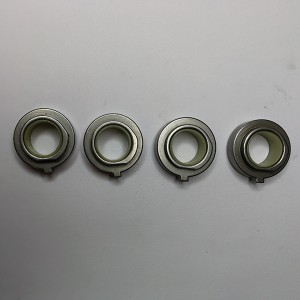
Specialized applications require customized geometries beyond standard blocks and discs. Manufacturers now deploy multi-axis pressing techniques that yield radial orientations in ring magnets - critical for sensor accuracy in automotive torque systems. Sintered bushing designs incorporate complex cooling channels directly within the magnetic structure, enabling operation in 15,000 RPM dental drills where air friction generates 180°C surface temperatures.
Prototyping capabilities include:
- Segmented arc designs for BLDC motors (±0.05° angular tolerance)
- Multi-pole magnetization patterns (up to 48 poles)
- Hybrid assemblies with non-magnetic structural components
- Precision-ground mating surfaces for bearing applications
High-Temperature Bushing Applications
Sintered NdFeB bushings uniquely withstand extreme environments that demagnetize conventional magnets. Turbine monitoring systems utilize these components at 200°C ambient temperatures with intermittent peaks to 260°C. The grain structure stability from precision sintering prevents micro-fractures during thermal cycling - a critical failure point in bonded alternatives.
Specialized processing techniques enable this performance:
- Dysprosium diffusion treatment increases Hcj by 3-5 kOe
- Isostatic pressing achieves >99.5% density
- Surface cryogenic treatment enhances mechanical strength
Industrial Application Case Studies
1) Wind Turbine Generators: Vestas V164 turbines incorporate 2.3 tons of sintered NdFeB per MW. Customized wedge-shaped magnets generate 97.5% efficiency - a 14% improvement over previous ferrite-based systems. Continuous operation exceeds 180,000 hours with <1% magnetic flux degradation.
2) Medical Imaging: Siemens Magnetom Terra 7T MRI systems use precision-sintered NdFeB to establish homogeneous 7 Tesla fields within ±0.5 ppm variation across imaging volume. The design reduces helium consumption by 40% compared to predecessor models.
Handling and Operational Protocols
Installation safety requires strict adherence to technical guidelines. Field measurements show uncased magnets exceeding 30mm thickness generate 150kg+ attraction forces at 10cm separation. Specialized tooling prevents workplace injuries during assembly operations. Anti-corrosion treatments must withstand salt spray testing per ASTM B117 standards.
Critical operational considerations:
- Demagnetization rates increase exponentially above rated temperatures
- Impact resistance: 3-5 Joules for standard grades (ASTM D256)
- Magnetic shielding requires MuMetal® enclosures (>80% flux reduction)
Sintered NdFeB Magnets: Sustainable Innovation Trajectory
Material science advancements continually redefine sintered NdFeB capabilities. Emerging grain boundary diffusion processes enable 25% reduction in heavy rare earth usage while maintaining 200°C operational stability. Major manufacturers now implement closed-loop recycling systems reclaiming >95% of production swarf. BMW's latest e-drive platform demonstrates these advances: 20% increased power density with 13% reduced magnet volume. Continued innovation positions sintered NdFeB magnets and specialized components like sintered bushings as fundamental enablers for high-efficiency industrial systems globally.
The horizon includes advanced coatings extending maintenance intervals in harsh environments and AI-optimized magnetic circuit designs that will further expand application possibilities while strengthening the industrial ecosystem's technological foundation.
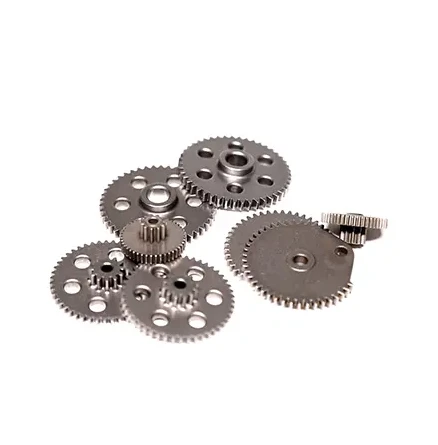
(sintered ndfeb)
FAQS on sintered ndfeb
Q: What is sintered NdFeB?
A: Sintered NdFeB refers to neodymium-iron-boron magnets created through powder metallurgy and high-temperature sintering. This process enhances magnetic properties like high coercivity and resistance to demagnetization. It is widely used in high-performance applications due to its strength and efficiency.
Q: Where are sintered NdFeB magnets commonly used?
A: Sintered NdFeB magnets are essential in electric motors, wind turbines, and hard disk drives for their superior magnetic force. They enable miniaturization in devices like headphones and medical equipment. Their high remanence makes them ideal for energy-intensive industries.
Q: What applications involve sintered bushings?
A: Sintered bushings, often made from sintered NdFeB, serve as durable bearings in machinery like automotive systems or industrial motors. They provide low friction and magnetic properties for precision movement. This extends lifespan in high-wear environments such as aerospace components.
Q: How do sintered NdFeB magnets compare to other magnet types?
A: Sintered NdFeB magnets outperform ferrite or alnico magnets with higher energy product and efficiency. They offer exceptional strength-to-weight ratios, making them lighter and more powerful. However, they require coatings for corrosion resistance in humid applications.
Q: Can sintered NdFeB be customized for specific needs?
A: Yes, sintered NdFeB magnets and bushings can be tailored in shape, size, and magnetization direction during production. Alloys can be adjusted for enhanced thermal stability or mechanical strength. This flexibility supports custom engineering solutions in robotics and renewable energy sectors.