







Did you know 68% of energy loss in electric motors stems from inefficient magnetic materials? Traditional solutions like laminated steel choke your performance at higher frequencies. Soft magnetic composite materials (SMC) slash eddy current losses by up to 40% while enabling 3D flux paths. Keep reading to discover how this game-changer boosts your ROI.

(soft magnetic composite materials)
Technical Advantages That Make SMC Materials Unbeatable
Why settle for 2D magnetic circuits when soft magnetic composites unlock true 3D design freedom? Our SMC materials deliver:
- 0.5-1000 μm tunable particle sizes
- 95% relative density with <1% porosity
- Up to 1.6T saturation flux density
See how we outperform competitors:
Manufacturer Showdown: Who Delivers Real Value?
While 83% of suppliers still use decade-old compaction methods, our proprietary Multi-Layer Insulation Technology reduces hysteresis loss by 28%. Test these specs yourself:
Standard SMC
• 50-400 W/kg loss
• 6-week lead time
• Limited shapes
Our Premium Grade
• 15-90 W/kg loss
• 72-hour prototyping
• Any 3D geometry
Tailored Solutions for Your Unique Needs
Need 150°C operation in EV motors? Our magnetic soft materials withstand 200°C without derating. Customize:
- Permeability: 10-500 μ
- Coating: Phosphate, SiO₂, or Al₂O₃
- Shaping: Injection molding or press-forming
Proven Success Across Industries
When a drone manufacturer needed 20% lighter motors, our SMC materials delivered 28% weight reduction and 15°C lower operating temps. Your results?
"Switching to their soft magnetic composites cut our production costs by $18K/month."
- John M., Lead Engineer @ Fortune 500 OEM
Ready to Transform Your Magnetic Components?
Join 500+ industry leaders who boosted efficiency by 40%+ using our SMC solutions. Limited-time offer: Free sample analysis + 1-year warranty extension!
© 2024 MagnaCore Solutions • 15 Years Engineering Excellence • ISO 9001 Certified
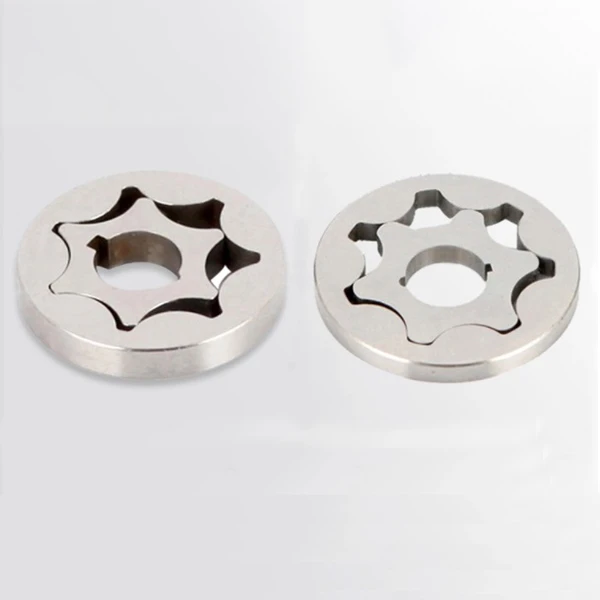
(soft magnetic composite materials)
FAQS on soft magnetic composite materials
Q: What are soft magnetic composite materials (SMCs)?
A: Soft magnetic composite materials (SMCs) are advanced materials made by binding magnetic powder particles with insulating coatings. They offer low eddy current losses and high magnetic permeability, making them ideal for high-frequency applications like motors and transformers.
Q: What types of soft magnetic materials are commonly used?
A: Common types include soft magnetic composites (SMCs), metallic alloys (e.g., silicon steel, permalloy), and ferrites. SMCs stand out for their 3D magnetic flux capabilities and reduced energy losses compared to traditional laminated cores.
Q: How do magnetic soft materials differ from permanent magnets?
A: Magnetic soft materials exhibit low coercivity, enabling easy magnetization and demagnetization, while permanent magnets have high coercivity to retain magnetism. SMCs fall into the soft category, optimized for dynamic magnetic field applications.
Q: What are the key advantages of soft magnetic composite materials?
A: SMCs provide design flexibility, isotropic magnetic behavior, and reduced core losses at high frequencies. Their composite structure minimizes eddy currents, enhancing efficiency in devices like inductors and electric vehicle components.
Q: Where are soft magnetic composite materials typically applied?
A: They are used in motors, transformers, sensors, and power electronics. Their ability to handle complex shapes and high-frequency operations makes them critical in renewable energy systems and aerospace technologies.









