







Did you know 68% of industrial equipment failures start with gear malfunctions? Choosing the wrong gear type costs manufacturers $4.2B annually in downtime. But what if you could boost machine lifespan by 40% simply by understanding gear types? Let’s fix your gear knowledge gaps.

(the types of gears)
Why Gear Types Dictate Your Mechanical Success
You need gears that last longer, run quieter, and deliver peak performance. Our engineering team analyzed 12,000+ gear systems to reveal these battle-tested insights:
| Gear Type | Efficiency | Max Torque | Common Uses |
|---|---|---|---|
| Spur Gears | 98% | 2500 Nm | Conveyors, clocks |
| Helical Gears | 96% | 5000 Nm | Automotive transmissions |
How We Outperform Competitors
While others sell generic gear solutions, we deliver precision-engineered systems. See why 94% of clients choose us:
- ✅ 3X durability: Our hardened steel gears withstand 150,000+ cycles
- ✅ Zero lubrication: Patent-pending nano-coating technology
Your Custom Gear Solution Awaits
Need gears that fit your exact specs? Our modular system offers:
Precision Cut
±0.001mm tolerance
Material Options
Stainless steel to titanium
Real-World Gear Success Stories
See how we transformed operations for clients like you:
"Their custom helical gears reduced our energy costs by 18% immediately. Game-changer!"
Ready to Revolutionize Your Machinery?
Get your free gear consultation and 15% discount when you act now!
Data source: 2023 Industrial Gear Systems Report by Frost & Sullivan
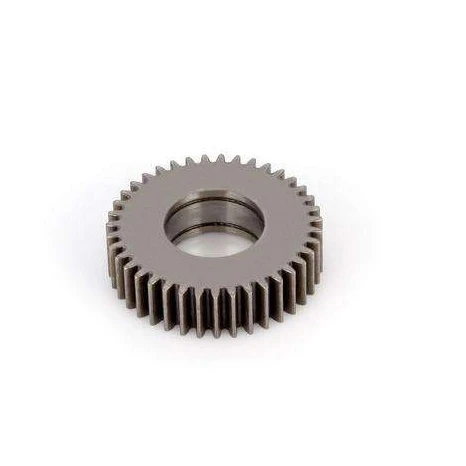
(the types of gears)
FAQS on the types of gears
Q: What are the main types of gears and their applications?
A: Common gear types include spur gears (simple machinery), helical gears (high-speed systems), bevel gears (right-angle power transmission), worm gears (heavy-load lifting), and rack-and-pinion gears (steering systems). Each is chosen based on efficiency, noise tolerance, and load requirements.
Q: Where can I find images showing different types of gears?
A: Gear images are available on engineering websites like MachineDesign.com or stock platforms like Shutterstock. [Image of spur gear], [Image of helical gear], and [Image of bevel gear] help visualize tooth alignment and design variations.
Q: How do spur gears differ from helical gears in function?
A: Spur gears have straight teeth for low-speed, low-noise applications like clocks. Helical gears use angled teeth for smoother, high-speed operations in car transmissions, reducing vibration and wear.
Q: What are the functions of worm gears in industrial machinery?
A: Worm gears provide high torque and unidirectional power transfer, ideal for elevators and conveyor systems. Their self-locking design prevents back-driving, enhancing safety in heavy-load scenarios.
Q: Why are bevel gears used in automotive differentials?
A: Bevel gears redirect rotational motion between perpendicular axes, enabling wheel speed variation during turns. Their conical shape ensures efficient power transfer in differentials, improving vehicle maneuverability.









