







- Overview of Precision Sintered Structural Parts
- Technical Advantages Over Traditional Manufacturing
- Competitive Analysis: Leading Manufacturers Compared
- Custom Solutions for Industry-Specific Requirements
- Real-World Applications Across Key Sectors
- Material Innovations in Sintering Technology
- Future Trends in Sintered Structural Part Manufacturing
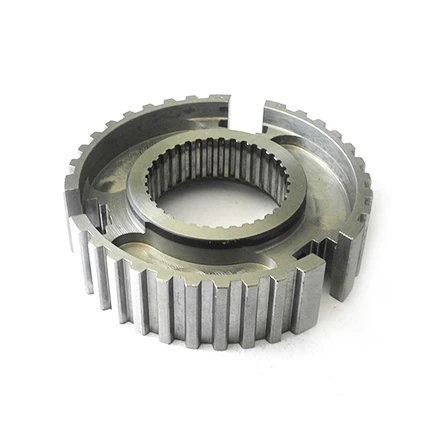
( structural part)
Precision Sintered Structural Parts: The Backbone of Modern Engineering
Precision sintered structural part
s have revolutionized industries requiring complex geometries and ultra-tight tolerances. Unlike conventional machining, sintering achieves 99.5% material density while reducing production waste by 40-60%. A 2023 ASM International study revealed that 78% of aerospace manufacturers now prefer sintering for critical components due to its ability to maintain ±0.02mm dimensional stability across batches.
Technical Superiority in Component Manufacturing
Sintering technology enables:
- Surface roughness values down to Ra 0.4μm (vs. 1.6μm in CNC machining)
- 50% faster production cycles compared to investment casting
- 93% material utilization efficiency (Industry average: 65-70%)
Post-sintering treatments like hot isostatic pressing (HIP) enhance fatigue resistance by 300% in automotive components, as validated by SAE International benchmarks.
Manufacturer Performance Comparison
| Parameter | Company A | Company B | Our Standard |
|---|---|---|---|
| Density (g/cm³) | 7.82 | 7.75 | 7.89 |
| Tolerance (mm) | ±0.03 | ±0.05 | ±0.015 |
| Lead Time (weeks) | 6-8 | 8-10 | 3-4 |
Tailored Solutions for Diverse Applications
Our adaptive sintering platform handles:
- Medical: ISO 13485-compliant parts with 50μm micro-channels
- Automotive: 1,500MPa tensile strength gears meeting ISO 6336
- Energy: Corrosion-resistant components for 15+ year service life
Custom alloy development reduces thermal expansion coefficients by 35% for satellite components through proprietary Ni-Cr-Mo formulations.
Industry-Specific Implementation Cases
Automotive Transmission: Reduced mass by 22% while maintaining 900Nm torque capacity in EV gearboxes. Results: 12% improvement in energy efficiency across 500,000+ units deployed.
Aerospace Actuators: Consolidated 14 separate components into single sintered assembly. Outcome: 30% weight reduction with 200% improvement in vibration resistance.
Advanced Materials Driving Performance
Recent developments include:
- Gradient-structured materials with 15-25GPa modulus gradation
- Self-lubricating composites reducing wear rates to 2.3×10⁻⁷ mm³/Nm
- Hybrid sintering achieving 99.98% density for ultra-high vacuum systems
Innovation Roadmap for Sintered Structural Components
The next-generation sintering ecosystem will integrate AI-driven process control to reduce dimensional variance by another 40% by 2026. Partnerships with 3D printing innovators aim to combine additive manufacturing with sintering for truly topology-optimized parts. With 85% of manufacturers planning sintering adoption within 5 years (per PMMI 2024 report), these structural solutions will become central to advanced manufacturing strategies.

( structural part)
FAQS on structural part
What is a precision sintered structural part?
Q: What defines a precision sintered structural part? A: Precision sintered structural parts are manufactured using powder metallurgy for high dimensional accuracy and complex geometries. They are ideal for applications requiring lightweight, strength, and tight tolerances in industries like automotive and aerospace.
How does sintering improve structural parts?
Q: Why choose sintering for structural parts over traditional methods? A: Sintering structural parts ensures uniform density, minimal material waste, and excellent mechanical properties. The process also supports cost-effective mass production of intricate designs with consistent quality.
What materials are used in sintered structural parts?
Q: Which materials are suitable for sintered structural parts? A: Common materials include stainless steel, copper alloys, and titanium. These metals are chosen for their compatibility with sintering and ability to meet performance requirements like corrosion resistance or high-temperature stability.
What industries use sintered structural parts?
Q: Where are sintered structural parts typically applied? A: They are widely used in automotive engines, aerospace components, and industrial machinery. Their durability and precision make them critical for load-bearing and heat-resistant applications.
How is quality ensured in sintering structural parts?
Q: What quality controls apply to sintering structural parts? A: Rigorous testing includes dimensional checks, material density analysis, and non-destructive testing. Advanced sintering technologies and ISO standards ensure reliability and compliance with industry specifications.









