







In today’s fast-evolving manufacturing landscape, the demand for precision and durability has never been greater. Structural parts are the backbone of countless industries, from automotive and aerospace to heavy machinery and electronics. These components provide the essential support and integrity needed to withstand mechanical stresses and environmental factors.
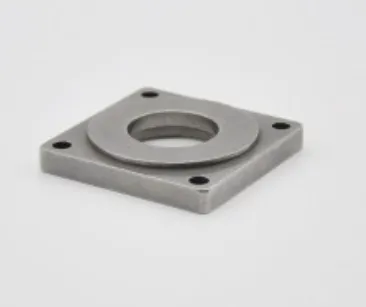
Choosing the right structural part is crucial for ensuring the safety, longevity, and performance of a finished product. Manufacturers rely on advanced materials and production techniques to deliver components that meet stringent quality standards. Traditional machining methods have been complemented—and in many cases replaced—by innovative processes such as powder metallurgy and sintering, which enable the creation of complex shapes with superior material properties.
The combination of robust materials and optimized design results in structural parts that not only meet the mechanical demands but also contribute to weight reduction and cost efficiency. This balance is essential for industries where performance and sustainability go hand in hand.
Advantages of Using OEM Sintered Parts in Your Product Line
OEM sintered parts have revolutionized component manufacturing by offering unparalleled precision, repeatability, and efficiency. These parts are produced through powder metallurgy processes where metal powders are compacted and then sintered—heated below melting point to bond particles—creating a dense, durable product.
The benefits of sourcing OEM sintered parts are manifold. Firstly, manufacturers gain access to components that maintain tight tolerances and consistent quality, critical for high-performance applications. Secondly, the sintering process reduces material waste significantly compared to subtractive manufacturing, promoting cost savings and environmental responsibility.
OEMs value sintered parts for their ability to achieve complex geometries and intricate internal structures that would be challenging or impossible with traditional machining. This capability enables innovative product designs with enhanced functionality and lightweight characteristics.
Moreover, OEM sintered parts are known for excellent mechanical properties such as wear resistance, strength, and fatigue life. This makes them ideal for applications in automotive engines, transmissions, medical devices, and electronic assemblies, where reliability is paramount.
How Sintered Metal Components Are Manufactured and Why Quality Matters
Understanding the manufacturing process of sintered metal components helps appreciate their unique advantages and applications. Powder metallurgy involves blending fine metal powders, compacting them into a desired shape under high pressure, and then sintering at controlled temperatures to bond the particles.
This process allows manufacturers to tailor properties by adjusting powder composition, particle size, and sintering parameters. The result is a dense, near-net-shape part with consistent microstructure and mechanical characteristics.
Quality control throughout the production stages is essential. Suppliers of sintered metal components implement rigorous inspection protocols, including dimensional checks, density measurements, and mechanical testing. Ensuring uniform density and microstructure avoids defects such as porosity or cracks that could compromise component performance.
High-quality sintered metal components exhibit excellent dimensional accuracy, surface finish, and strength-to-weight ratios, enabling their use in precision assemblies. Additionally, the ability to integrate secondary operations such as heat treatment, machining, or coating further enhances the parts’ functional value.
Applications of Structural Parts and Sintered Metal Components Across Industries
The versatility of structural parts and sintered metal components spans numerous sectors. In automotive manufacturing, sintered parts serve as gears, bushings, valve seats, and cam followers, contributing to improved engine efficiency and reduced emissions.
Aerospace applications demand lightweight yet strong structural parts that can withstand extreme conditions. Sintered metal components fulfill these requirements by offering customized solutions for structural supports, fasteners, and heat exchangers.
Industrial machinery benefits from the durability and wear resistance of sintered parts in components such as bearings, sprockets, and structural brackets. These components endure heavy loads and harsh environments, reducing maintenance needs and downtime.
Medical device manufacturing also leverages the precision and biocompatibility of sintered metal components for surgical instruments and implantable devices. The ability to produce small, complex parts with tight tolerances is critical in this field.
Overall, the wide-ranging applications highlight how structural parts and sintered metal components continue to enable innovation and performance improvements in modern manufacturing.
Choosing the Right Supplier for Your OEM Sintered Parts and Structural Parts Needs
Selecting a reliable supplier for OEM sintered parts and structural parts is key to ensuring product quality and timely delivery. Look for manufacturers with extensive experience in powder metallurgy and proven expertise in producing sintered metal components tailored to your specifications.
A trustworthy supplier offers comprehensive services from design consultation to prototyping, mass production, and quality assurance. They employ advanced equipment and maintain certifications such as ISO 9001 to guarantee consistent manufacturing standards.
Communication and technical support are vital. A good partner will help optimize designs for manufacturability, advise on material selection, and provide post-production services including heat treatment and surface finishing.
Additionally, the supplier’s capability to meet volume demands, adhere to delivery schedules, and maintain competitive pricing should align with your business goals. This collaboration fosters innovation, reduces costs, and accelerates time-to-market for your products.
Sintered metal components FAQs
What are the main benefits of using sintered metal components over traditional machined parts?
Sintered metal components offer advantages such as material efficiency with minimal waste, the ability to form complex shapes with high precision, and excellent mechanical properties like wear resistance and strength. They often reduce machining time and cost and allow for near-net-shape manufacturing.
How do I know if my application is suitable for OEM sintered parts?
Applications that require complex geometries, high-volume production, and consistent quality are ideal for OEM sintered parts. Industries like automotive, aerospace, medical, and industrial equipment frequently benefit. Consulting with your supplier can help assess feasibility and optimize design.
Can structural parts made from sintered metals handle heavy loads?
Yes, high-quality sintered structural parts are engineered to meet demanding load requirements. Through precise control of powder composition and sintering conditions, parts achieve excellent density and mechanical strength suitable for heavy-duty applications.
What materials are commonly used for manufacturing sintered metal components?
Common materials include iron, steel alloys, stainless steel, copper, bronze, and nickel-based powders. The choice depends on desired mechanical properties, corrosion resistance, and application environment.
How can I ensure the quality of OEM sintered parts I order?
Ensure your supplier follows strict quality control processes, including inspection of powder quality, dimensional accuracy, mechanical testing, and surface finish. Certifications like ISO 9001 and customer references provide additional assurance of reliability.









