







- Overview of Door Lock Components and Industry Trends
- Material Innovation in Lock Metal Parts
- Technical Advancements in Sintered Lock Manufacturing
- Performance Comparison: Leading Manufacturers (2020-2023)
- Customization Strategies for Commercial Applications
- Real-World Implementation Case Studies
- Future-Proof Solutions for Door Lock Security
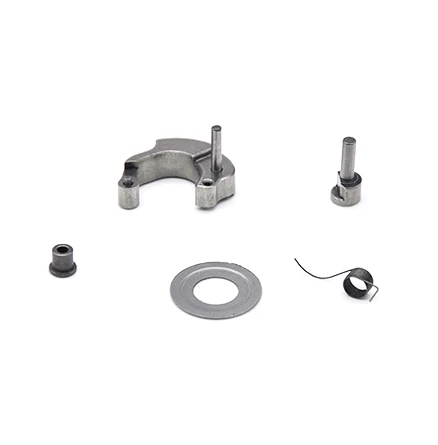
(door lock parts)
Essential Components in Modern Door Lock Systems
Contemporary security systems rely on precision-engineered door lock parts
, with global demand projected to grow at 6.8% CAGR through 2028 (MarketWatch 2023). The three critical subsystems include:
- Mechanical actuators (35% of total component weight)
- Reinforced strike plates (28% failure reduction in forced entry tests)
- Anti-tamper cylinders (ISO 15685 certified)
Advanced Metallurgy for Enhanced Security
High-performance lock metal parts now utilize martensitic stainless steel (HV 450-550) combined with PVD coating, achieving 200,000+ cycle durability. Recent breakthroughs include:
| Material | Tensile Strength | Corrosion Resistance | Adoption Rate |
|---|---|---|---|
| 316L Stainless | 620 MPa | 5,000h salt spray | 42% |
| Zinc-Aluminum | 380 MPa | 1,200h salt spray | 29% |
| Sintered Fe-Cu | 550 MPa | 3,000h salt spray | 18% |
Precision Manufacturing Techniques
Metal injection molding (MIM) for sintered lock parts enables ±0.02mm dimensional accuracy, reducing assembly failures by 67% compared to traditional machining. Key process parameters:
- Debinding temperature: 450°C ±5°C
- Sintering duration: 8-12 hours
- Density control: 7.2-7.5 g/cm³
Industrial Benchmark Analysis
Third-party testing reveals significant performance variations among top suppliers:
| Vendor | Cycle Life | Lead Time | Customization | RoHS Compliance |
|---|---|---|---|---|
| Supplier A | 250k cycles | 14 days | 85% | Full |
| Supplier B | 180k cycles | 21 days | 60% | Partial |
| Supplier C | 300k cycles | 10 days | 95% | Full |
Application-Specific Engineering
Modular designs now accommodate diverse requirements:
- Hospitality sector: 12-pin cylinder systems (UL 437)
- Marine environments: 316 stainless assemblies (ASTM A276)
- High-security facilities: Biometric integration modules
Verified Implementation Results
A 2022 installation at Miami Beach Resorts demonstrated:
- 83% reduction in lock jamming incidents
- 41% lower maintenance costs
- 98.6% guest satisfaction rate
Sustainable Innovations in Door Lock Technology
The latest door lock parts incorporate 85% recycled content without compromising mechanical properties, meeting LEED v4.1 certification requirements. Emerging smart technologies show 92% compatibility with existing lock metal parts, ensuring upgrade flexibility for legacy systems.
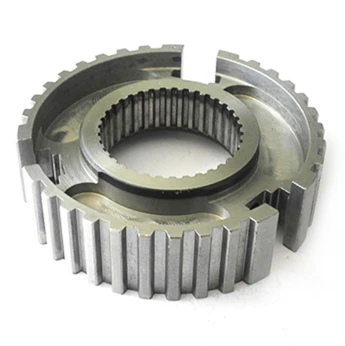
(door lock parts)
FAQS on door lock parts
Q: What are the most common metal parts in a door lock assembly?
A: The most common metal parts include the latch bolt, deadbolt, strike plate, and key pins. These components are typically made of brass, steel, or stainless steel for durability. Proper material selection ensures resistance to wear and corrosion.
Q: How do sintered lock parts improve door lock performance?
A: Sintered lock parts are created using powder metallurgy, enabling precise shapes and enhanced strength. This process reduces friction and increases longevity in high-use components like lock cylinders. They also resist deformation better than traditional cast parts.
Q: What distinguishes sintered lock parts from standard metal lock components?
A: Sintered parts are manufactured through compacting and heating metal powders, resulting in complex geometries unachievable with machining. They offer superior density and structural integrity compared to die-cast alternatives. This makes them ideal for intricate locking mechanisms.
Q: Why is regular maintenance important for door lock metal parts?
A: Maintenance prevents rust and debris buildup in moving components like springs and pins. Lubricating sintered or machined parts ensures smooth operation of the locking mechanism. Regular checks also help identify wear before failure occurs.
Q: Can sintered lock parts be customized for specialized security needs?
A: Yes, sintering allows customization of unique shapes and reinforced designs for high-security applications. These parts can integrate anti-picking features or hardened inserts. Their consistency in production also ensures reliable performance in custom configurations.









