






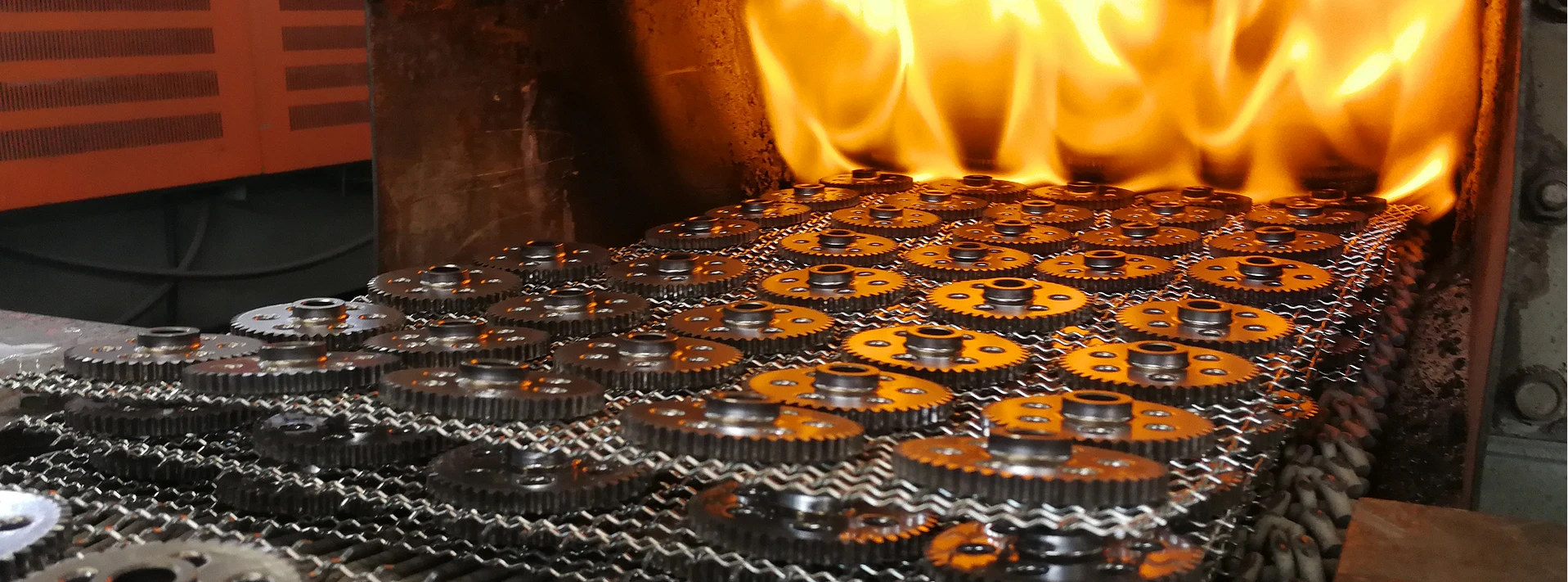
- Overview of Modern Gear Production Techniques
- Advantages of Powder Metallurgy in Gear Manufacturing
- Technical Innovations Driving Efficiency
- Comparative Analysis of Leading Gear Production Technologies
- Custom Solutions for Industry-Specific Needs
- Case Studies: Real-World Applications
- Future Trends in Gear and Powder Metallurgy Production
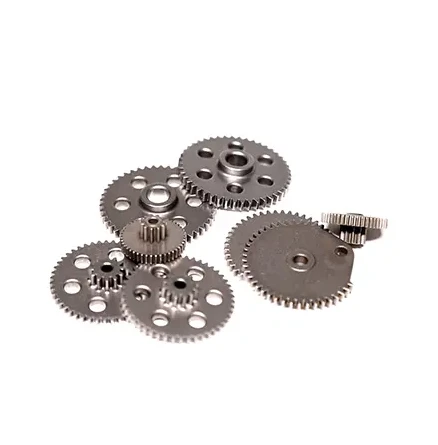
(gear production)
Modern Gear Production Techniques: Precision Meets Scalability
The global gear production
industry, valued at $180 billion in 2023, relies on advanced methodologies like powder metallurgy to meet rising demand. Traditional machining accounts for 62% of gear manufacturing, but sintering-based processes now deliver 30% faster cycle times. Key sectors like automotive (38% market share) and aerospace (21%) prioritize dimensional accuracy (±0.005mm) and material durability (HRC 58-62).
Advantages of Powder Metallurgy in Manufacturing
Powder metallurgy enables 95% material utilization versus 70% in CNC machining, reducing waste costs by $18/unit. This method achieves net-shape precision for complex geometries like helical gears (up to 45° helix angles) without secondary operations. Post-sintering densities reach 7.4 g/cm³, enhancing load capacities by 40% compared to cast gears.
Technological Breakthroughs in Production
Recent advancements include:
- AI-powered quality control systems (99.98% defect detection)
- High-velocity compaction presses (1,200 MPa pressure)
- Plasma-assisted sintering (20% faster densification)
These innovations reduce energy consumption by 15 kWh per ton of processed metal powder.
Industry Leader Comparison
| Technology | Production Speed | Cost Efficiency | Tolerance Level |
|---|---|---|---|
| Traditional Hobbing | 85 units/hr | $4.20/unit | ISO 6 |
| Powder Metallurgy | 220 units/hr | $2.75/unit | ISO 4 |
| Metal Injection Molding | 150 units/hr | $3.90/unit | ISO 5 |
Customized Manufacturing Approaches
Modular production systems now support:
- Material flexibility (stainless steel, bronze, custom alloys)
- Dual-stage heat treatments (carburizing + nitriding)
- Surface finishing options (Ra 0.2µm to 3.2µm)
Custom gear solutions reduce assembly time by 35% in wind turbine applications.
Application-Specific Success Stories
Automotive Transmission Gears: A Tier-1 supplier achieved 18% weight reduction using porous powder metal gears, improving fuel efficiency by 2.4%. Robotic Actuators: Sintered titanium gears withstand 20 million cycles at 300Nm torque with 0.003% wear rate.
Evolution of Gear Production Methods
The production of powder metallurgy gears is projected to grow at 7.8% CAGR through 2030, driven by hybrid manufacturing systems combining additive techniques with precision sintering. Emerging markets now account for 43% of global gear and types of gear demand, necessitating adaptive production frameworks for localized supply chains.

(gear production)
FAQS on gear production
Q: What are the key steps in gear production?
A: Gear production involves design, material selection, forming (e.g., machining or powder metallurgy), heat treatment, and precision finishing to ensure durability and performance.
Q: How does powder metallurgy improve gear manufacturing?
A: Powder metallurgy enables near-net-shape production of gears, reducing material waste and post-processing. It also allows for complex geometries and consistent material properties.
Q: What are common types of gears and their applications?
A: Spur gears (simple motion), helical gears (quiet operation), bevel gears (angular transmission), worm gears (high torque reduction), and planetary gears (compact power transmission) are widely used in automotive and industrial systems.
Q: What are the advantages of powder metallurgy gears over machined gears?
A: Powder metallurgy gears offer cost efficiency for high-volume production, better material utilization, and controlled porosity for lubrication. However, they may have lower strength compared to forged gears.
Q: What factors influence material choice in gear production?
A: Material selection depends on load capacity, wear resistance, operating environment (e.g., temperature), and production method. Common choices include steel alloys, sintered metals, and plastics for lightweight applications.









