




- Overview of Soft Magnetic Powder and Its Core Advantages
- Technical Innovations Driving Performance
- Comparative Analysis of Leading Manufacturers
- Customized Solutions for Diverse Applications
- Real-World Application Case Studies
- Future Trends in Soft Magnetic Composites
- Why Soft Magnetic Powder Remains Indispensable

(soft magnetic powder)
Unlocking Efficiency with Soft Magnetic Powder
Soft magnetic powder has emerged as a cornerstone in modern electromagnetic systems, offering unparalleled magnetic permeability and low energy loss. Composed primarily of iron-based alloys or ferrites, this material achieves a unique balance between high saturation flux density (up to 1.8 T) and minimal eddy current losses. Industries ranging from automotive to renewable energy rely on soft magnetic composites (SMCs) to achieve compact designs, with recent studies showing a 22% reduction in core losses compared to traditional laminated steels.
Technical Innovations Driving Performance
Advanced particle coating technologies, such as phosphate or silica insulation layers, have elevated soft magnetic powder
performance. These innovations reduce inter-particle eddy currents by 40–60%, enabling operation at frequencies exceeding 100 kHz. Key metrics include:
- Thermal Stability: Operational range extended to -50°C to 200°C.
- Density Control: Adjustable from 6.8 g/cm³ to 7.4 g/cm³ via compaction pressure.
- Frequency Response: Core losses as low as 250 kW/m³ at 50 kHz.
Comparative Analysis of Leading Manufacturers
| Manufacturer | Core Loss (kW/m³ @ 100 kHz) | Permeability (µ) | Price per kg (USD) | Customization Options |
|---|---|---|---|---|
| Material Solutions Co. | 320 | 220 | 45 | High |
| Global Magnetics | 290 | 180 | 52 | Medium |
| Advanced SMC Ltd. | 265 | 240 | 60 | High |
Customized Solutions for Diverse Applications
Tailored soft magnetic composites address sector-specific demands. For EV traction motors, manufacturers deploy high-density variants (7.2 g/cm³) to withstand 300°C operating temperatures. Conversely, IoT sensor producers prioritize ultra-low hysteresis losses (<120 kW/m³) for micro-current detection. Hybrid formulations combining Fe-Si and Fe-Ni powders now enable permeability tuning between 150–500 µ, catering to aerospace and medical imaging requirements.
Real-World Application Case Studies
Case 1: A European automaker integrated soft magnetic powder into onboard chargers, achieving 94% efficiency (3% improvement over silicon steel) and 15% weight reduction. Case 2: Wind turbine manufacturers reported a 19% decrease in generator core temperatures by adopting anisotropic SMCs, extending maintenance intervals by 8,000 hours.
Future Trends in Soft Magnetic Composites
Research focuses on nano-crystalline coatings to push operating frequencies beyond 1 MHz while maintaining <500 kW/m³ core losses. Additive manufacturing compatibility is being enhanced through optimized particle size distributions (10–150 µm). Market projections indicate a 7.8% CAGR through 2030, driven by 5G infrastructure and EV adoption.
Why Soft Magnetic Powder Remains Indispensable
As industries demand higher power densities and miniaturization, soft magnetic powder provides the only commercially viable path to achieve >95% efficiency in sub-100W to multi-MW systems. Its adaptability across frequencies (50 Hz–2 MHz) and temperatures ensures dominance in next-generation power electronics, making soft magnetic composites a permanent fixture in technological advancement.
(soft magnetic powder)
FAQS on soft magnetic powder
Q: What are soft magnetic powders and their key properties?
A: Soft magnetic powders are finely milled materials with high magnetic permeability and low coercivity. They enable efficient energy transfer in alternating magnetic fields and are widely used in components like inductors and transformers.
Q: What applications utilize soft magnetic composite materials?
A: Soft magnetic composite materials (SMCs) are used in electric motors, transformers, and electromagnetic shielding. Their 3D magnetic flux capabilities and reduced eddy current losses make them ideal for high-frequency applications.
Q: What advantages do soft magnetic composites offer over traditional magnetic materials?
A: SMCs provide design flexibility, lower energy loss at high frequencies, and isotropic magnetic behavior. They also reduce manufacturing costs by enabling complex geometries through powder metallurgy processes.
Q: How are soft magnetic composites manufactured using soft magnetic powder?
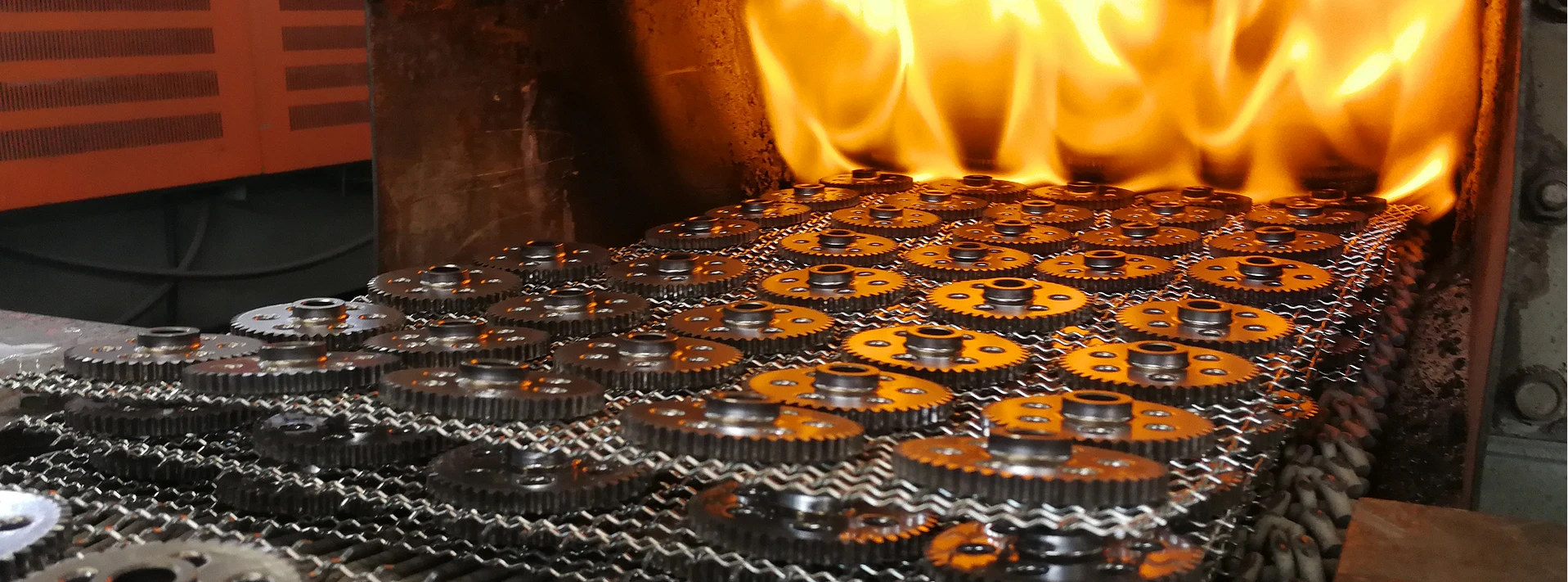
A: Soft magnetic powders are coated with insulation layers, compacted into desired shapes, and heat-treated. This process minimizes eddy currents and ensures uniform magnetic properties in the final composite component.
Q: How do soft magnetic composites differ from ferrites or laminated steel?
A: Unlike ferrites or laminated steel, SMCs operate efficiently at higher frequencies with minimal core loss. Their powder-based structure allows 3D magnetic flux paths, enabling compact and lightweight designs for modern electronics and EVs.