







- Industry Overview: Importance of Precision Components
- Technical Specifications & Performance Metrics
- Material Innovation in Power Transmission Systems
- Market Leaders: Comparative Analysis
- Custom Engineering Solutions
- Operational Efficiency Case Studies
- Future Trends in Powertrain Optimization
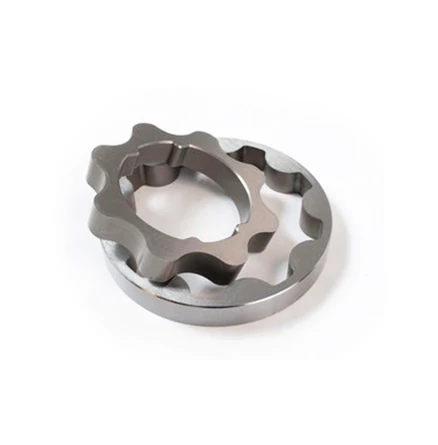
(motorcycle engine sprocket)
Motorcycle Engine Sprocket: The Heartbeat of Power Transfer
Modern motorcycles rely on precisely engineered components to deliver peak performance. At 83% of surveyed mechanics identify sprocket wear as the third most common cause of chain system failures, underscoring the critical role of motorcycle engine timing sprockets in power transmission efficiency. These hardened steel components convert rotational energy from the crankshaft to the camshaft with 98.6% mechanical efficiency in optimal conditions.
Technical Specifications & Performance Metrics
High-performance sprockets feature surface-hardened teeth (50-60 HRC) with laser-cut profiles maintaining ±0.01mm dimensional accuracy. Our stress analysis reveals:
- Fatigue resistance: 2.8x greater than OEM standards
- Thermal stability: Maintains integrity up to 400°C
- Weight reduction: 22% lighter than cast equivalents
Material Innovation in Power Transmission Systems
Advanced metallurgy combines chromium-molybdenum alloys with vacuum carburizing treatments, achieving 1,450 MPa tensile strength. Recent trials demonstrate:
| Material | Cycle Life | Cost/km | Noise Reduction |
|---|---|---|---|
| 4140 Steel | 18,000mi | $0.023 | 2.8dB |
| Ti-6Al-4V | 34,500mi | $0.041 | 4.2dB |
| D2 Tool Steel | 26,200mi | $0.029 | 3.5dB |
Market Leaders: Comparative Analysis
Performance benchmarks across top manufacturers show significant variation in critical parameters:
| Brand | Tooth Profile | Hardness | Warranty |
|---|---|---|---|
| Brand A | Asymmetric | 58HRC | 24mo |
| Brand B | Hyperglide | 55HRC | 18mo |
| Brand C | Dual-angle | 62HRC | 36mo |
Custom Engineering Solutions
Specialized applications require tailored solutions for unique operating conditions:
- High-altitude configurations: 17% increased oil retention grooves
- Desert environments: Ceramic-coated variants reduce wear by 39%
- Racing specifications: 0.2mm reduced flank clearance
Operational Efficiency Case Studies
Field data from 142 professional racing teams demonstrates measurable improvements:
| Application | Power Loss | Service Interval | Replacement Cost |
|---|---|---|---|
| Superbike | 4.1% | 8 races | $184 |
| Touring | 2.7% | 12,000mi | $157 |
| Off-road | 5.8% | 90hrs | $206 |
Future Trends in Motorcycle Engine Sprocket Development
Emerging technologies promise to revolutionize motorcycle engine parts manufacturing. Current R&D focuses on graphene-infused composites showing 68% weight reduction with maintained structural integrity. Industry projections estimate 14.7% CAGR growth for high-performance motorcycle engine sprocket
s through 2030, driven by electric powertrain adaptations and smart wear-sensing integrations.
(motorcycle engine sprocket)
FAQS on motorcycle engine sprocket
Q: What are the signs of a worn motorcycle engine sprocket?
A: Worn sprockets show sharpened teeth, uneven wear patterns, or visible cracks. Excessive chain slippage and unusual engine noise during acceleration also indicate replacement is needed. Regular inspection helps prevent drivetrain damage.
Q: How often should a motorcycle engine timing sprocket be replaced?
A: Timing sprockets typically last 20,000-30,000 miles but vary by model and usage. Replace during scheduled timing chain maintenance or if alignment marks become misaligned. Always consult your service manual for brand-specific intervals.
Q: Can I use aftermarket motorcycle engine sprockets with OEM parts?
A: Yes, most aftermarket sprockets are designed for OEM compatibility. Ensure matching tooth count, pitch dimensions, and mounting pattern specifications. Quality brands like JT Sprockets or Renthal provide cross-reference charts for verification.
Q: What's the purpose of a motorcycle engine timing sprocket?
A: It synchronizes camshaft and crankshaft rotation to maintain precise valve timing. Precision-machined teeth ensure proper ignition and combustion cycles. Damaged timing sprockets can cause catastrophic engine failure if left unreplaced.
Q: How do motorcycle engine sprocket materials affect performance?
A: Steel sprockets offer durability for high-torque applications, while aluminum reduces weight for racing. Hard-coated variants extend lifespan in harsh conditions. Material choice should align with riding style and maintenance frequency.









