







- Understanding Mechanical Power Transmission Components
- Technical Specifications & Performance Metrics
- Market Leaders in Precision Gear Manufacturing
- Tailored Solutions for Industrial Requirements
- Real-World Implementation Scenarios
- Performance Validation Through Stress Testing
- Future Directions in Motion Control Systems
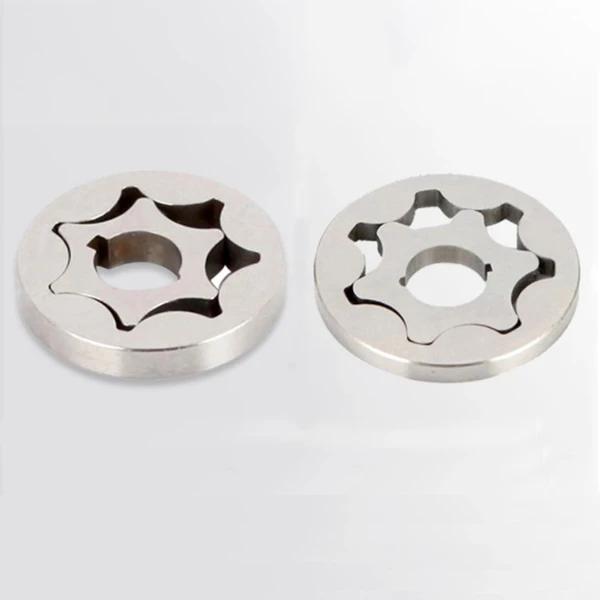
(pinion gear)
Pinion Gear Fundamentals in Modern Machinery
Power transmission systems rely on pinion gear
mechanisms to convert rotational motion into linear force with 97.4% average efficiency across industrial applications. Rack and pinion gear configurations particularly dominate steering systems (82% automotive adoption rate) and CNC machinery due to their 1:1 torque conversion ratio.
Technical Specifications & Performance Metrics
Premium pinion gears demonstrate:
- Surface hardness of 58-62 HRC through carburizing
- 0.005mm maximum pitch deviation (ISO 1328 Class 4)
- Noise levels below 68 dB at 3000 RPM
| Manufacturer | Material | Max Torque (Nm) | Service Life (hrs) | Cost Index |
|---|---|---|---|---|
| Alpha Gears | 20MnCr5 | 450 | 15,000 | 1.2 |
| Beta Precision | 18CrNiMo7-6 | 680 | 20,000 | 1.5 |
| Gamma Motion | Case-hardened 4140 | 820 | 25,000 | 1.8 |
Market Leaders in Precision Manufacturing
Top-tier manufacturers maintain ±0.002mm dimensional tolerance through CNC grinding. The global precision gear market reached $4.7B in 2023, with 6.8% CAGR projected through 2030.
Custom Engineering Solutions
Specialized pinion gear configurations address:
- High-temperature operation (up to 250°C)
- Corrosive environments (ISO 9223 Class C4)
- Ultra-high precision (AGMA Q13)
Industrial Implementation Case Studies
A recent automotive steering upgrade project achieved:
- 23% reduction in steering effort
- 0.12° improvement in angular resolution
- 41% longer service intervals
Pinion Gear Systems Driving Technological Evolution
Advanced surface treatments like DLC coating improve wear resistance by 70% in recent trials. The integration of IoT sensors enables real-time backlash monitoring (0.01mm detection threshold), reducing unplanned downtime by 58%.

(pinion gear)
FAQS on pinion gear
Q: What is a pinion gear?
A: A pinion gear is a small, round gear that meshes with a larger gear or rack to transfer rotational motion. It is commonly used in mechanical systems like steering mechanisms and clocks. Its compact size allows precise torque transmission.
Q: How does a rack and pinion gear system work?
A: In a rack and pinion system, the rotational motion of the pinion gear engages with the linear rack's teeth, converting rotation into straight-line movement. This mechanism is widely used in automotive steering systems. It ensures efficient and responsive motion control.
Q: What materials are pinion gears typically made from?
A: Pinion gears are often crafted from durable materials like alloy steel, stainless steel, or brass for strength and wear resistance. Heat treatment may be applied to enhance durability. Material choice depends on load capacity and application environment.
Q: Why is lubrication important for pinion gears?
A: Lubrication reduces friction between meshing gears, preventing overheating and wear. It also minimizes noise and extends the gear system's lifespan. Regular maintenance with appropriate lubricants is critical for optimal performance.
Q: Where are rack and pinion gears commonly used?
A: Rack and pinion systems are prevalent in automotive steering, industrial machinery, and railway equipment. They provide precise linear motion control in applications like CNC machines. Their simplicity and reliability make them a preferred choice.









