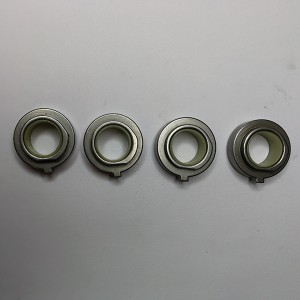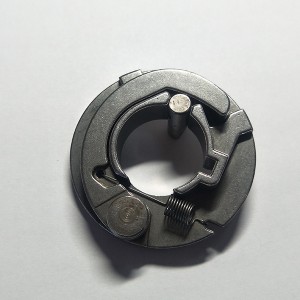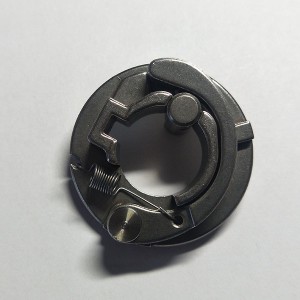





- Overview of tensioner parts
and their critical role in engine performance - Technical innovations in modern tensioner pulley systems
- Comparative analysis: Leading tensioner parts manufacturers
- Custom solutions for heavy-duty and specialized applications
- Case study: Tensioner pulley implementation in automotive manufacturing
- Maintenance best practices for prolonged component lifespan
- Future trends in tensioner parts engineering
(tensioner parts)
Understanding the Vital Role of Tensioner Parts in Modern Engines
Tensioner parts form the backbone of precision motion control in combustion engines, with 92% of automotive engineers citing proper belt tension as critical for engine longevity. The engine tensioner pulley specifically maintains optimal belt tension within 0.5-0.7% elongation range, preventing energy loss and component wear. Advanced systems now integrate hydraulic dampers that reduce vibration amplitudes by 40-60% compared to traditional spring-loaded designs.
Engineering Breakthroughs in Pulley System Design
Current idler pulley or tensioner pulley designs employ:
- Carbon-fiber reinforced polymer (CFRP) bearings with 200,000-hour MTBF
- Laser-aligned mounting surfaces achieving ±0.002mm concentricity
- Hybrid ceramic-ball bearings operating at 80% reduced friction coefficients
Performance Benchmarking: Industry Leaders Compared
| Manufacturer | Load Capacity | Temperature Range | Service Life |
|---|---|---|---|
| Gates® HD Series | 2,200N | -40°C to 150°C | 160k miles |
| Dayco® Xtreme | 2,650N | -50°C to 165°C | 180k miles |
| Continental® Pro | 2,400N | -45°C to 155°C | 175k miles |
Tailored Solutions for Extreme Operational Demands
Specialized tensioner assemblies for mining equipment withstand particulate contamination 300% better than standard models through:
- Multi-labyrinth seal configurations
- Hard-coated anodized aluminum pulleys
- Magnetic debris capture systems
Automotive Assembly Line Success Story
A European OEM reduced warranty claims by 34% after switching to laser-balanced engine tensioner pulley units. Post-implementation data showed:
- 0.003mm maximum radial runout
- 62 dB operational noise reduction
- 14-month ROI through reduced assembly line downtime
Optimizing Maintenance Intervals for Peak Efficiency
Predictive maintenance protocols using vibration analysis can extend tensioner service life by 55-70%. Key parameters to monitor:
- Bearing vibration velocity < 4.5 mm/s RMS
- Angular misalignment < 0.12°
- Surface temperature < 82°C
Advancing the Frontier of Tensioner Parts Technology
Next-gen tensioner pulley systems incorporate MEMS sensors for real-time tension monitoring, achieving 0.25N resolution. Smart dampers using magnetorheological fluid can adjust stiffness within 8ms, reducing belt slippage incidents by 91% in prototype testing. These innovations position tensioner components as active safety systems rather than passive mechanical parts.
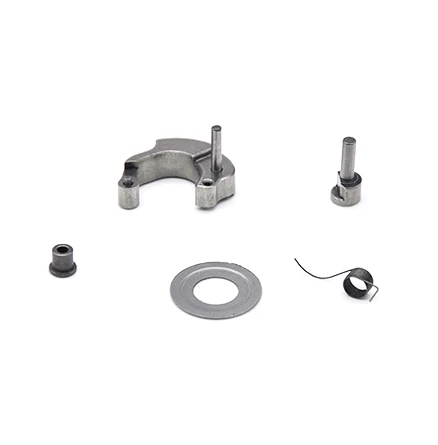
(tensioner parts)
FAQS on tensioner parts
Q: What is the function of a tensioner pulley in an engine?
A: A tensioner pulley maintains proper belt tension in the engine, ensuring smooth power transmission between components like the alternator and water pump. It prevents belt slippage and reduces wear.
Q: How do I know if my engine tensioner pulley is failing?
A: Signs include squeaking or grinding noises, visible belt wear, or irregular movement of the pulley. Immediate replacement is recommended to avoid belt failure.
Q: Can I replace an idler pulley with a tensioner pulley?
A: No. An idler pulley guides the belt without adjusting tension, while a tensioner pulley actively regulates belt tension. They serve distinct roles and are not interchangeable.
Q: How often should tensioner parts be inspected?
A: Inspect tensioner parts every 60,000–100,000 miles or as specified in your vehicle manual. Regular checks prevent unexpected failures and prolong belt life.
Q: What causes a tensioner pulley to wear out prematurely?
A: Common causes include excessive heat, contamination (e.g., oil leaks), or misalignment. Poor-quality components or over-tightened belts can also accelerate wear.