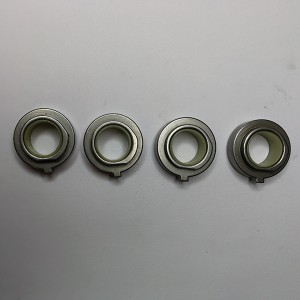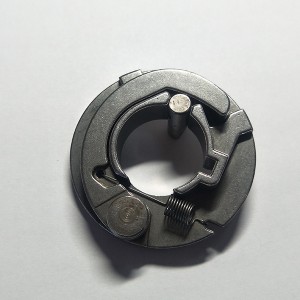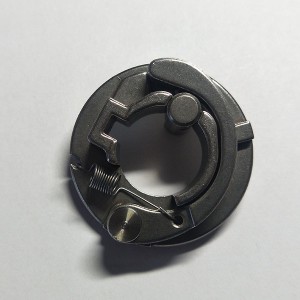





Precision Sintered Parts: The Backbone of Modern Manufacturing
In today’s fast-paced industrial world, the term precision sintered parts might not grab immediate headlines outside engineering circles, but make no mistake—they’re silently powering countless innovations. From automotive engines to aerospace components and even medical devices, these tiny, intricately crafted parts carry immense importance. Globally, understanding their role helps industries optimize performance, save costs, and push sustainable manufacturing forward.
Whether you’re an engineer, procurement specialist, or just someone curious about manufacturing’s unsung heroes, getting familiar with precision sintered parts offers valuable insight into how raw materials transform into high-performance components. Plus, the environmental and economic benefits they bring are no small deal.
Global Importance and Industry Context
The global powder metallurgy market, which forms the backbone for producing precision sintered parts, is expected to grow at a steady 7% annually, reaching upwards of $15 billion by 2026, according to industry projections. Why? Because sintering offers a way to manufacture near-net-shape parts with minimal waste—critical as industries respond to tightening environmental regulations (ISO 14001) and increasing demand for lightweight, durable materials.
One key challenge precision sintered parts address is the balance between material performance and cost efficiency. Manufacturing traditionally involves machining from solid billets, leading to significant material loss. Sintering, conversely, compresses and fuses powdered metals under heat and pressure to create complex parts without excess scrap. This process supports manufacturers worldwide striving for leaner production methods and lower carbon footprints.
What Exactly Are Precision Sintered Parts?
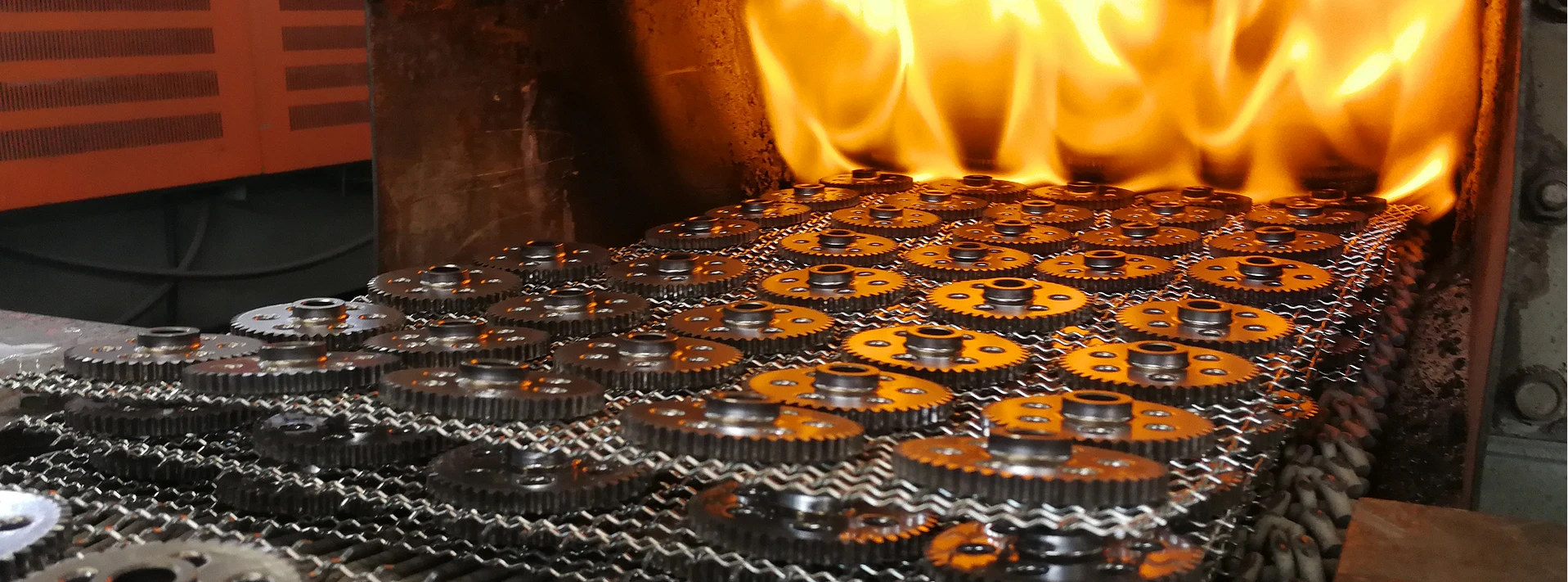
Simply put, precision sintered parts are components made by compacting metal powders into desired shapes and heating them (but not melting) to bond particles on a microscopic level. This technique yields high-strength, wear-resistant parts with tight dimensional tolerances—essential in modern machinery where every millimeter matters.
Beyond industrial use, these parts are vital in humanitarian and global development contexts too. For example, components in water purification systems or agricultural machinery designed for remote communities often rely on sintered parts for durability and reliability.
Core Components: What Makes Them Tick?
1. Dimensional Accuracy
Since these parts often fit into intricate assemblies, precision is critical. Advances in tooling and powder uniformity have pushed tolerances to ±0.01 mm in many cases, reducing the need for costly post-processing.
2. Material Diversity
From iron and copper to exotic alloys like stainless steel and tungsten carbide, sintering caters to a broad spectrum of applications. This flexibility allows manufacturers to tailor properties such as magnetic permeability or corrosion resistance.
3. Cost Efficiency
Because sintering forms near-net-shape parts, material waste drops dramatically compared to subtractive methods. This translates directly into savings in both raw materials and machining time.
4. Mechanical Performance
Well-sintered parts achieve impressive strength and hardness, often comparable to forged components, supporting heavy-duty applications across sectors.
5. Scalability
The process adapts well from prototype runs to mass production, making it appealing for industries that need rapid turnaround times and consistent quality.
Mini Takeaway:
Precision sintered parts blend accuracy, versatility, and efficiency, setting the stage for lightweight, high-performance components in diverse fields.
Specifications of Typical Precision Sintered Parts
| Parameter | Typical Range | Remarks |
|---|---|---|
| Dimensional Tolerance | ±0.01 to ±0.05 mm | Depends on powder & tooling precision |
| Material Composition | Iron, Copper, Stainless Steel, Alloys | Custom blends possible |
| Hardness (Brinell) | 150-350 HB | Application-specific treatment |
| Porosity | 3-15% | Influences lubrication & wear |
| Production Volume | Prototypes to Millions/year | Highly scalable process |
Worldwide Applications: Who’s Using Precision Sintered Parts?
Precision sintered parts show up all over the map—literally and figuratively. In Asia, automotive giants use them extensively due to their reliability and cost savings. Europe’s aerospace sector demands the tight tolerances and material performance sintering offers. Even the medical field, with its need for micro-components in implants and surgical tools, leans heavily on this technology.
On a humanitarian angle, organizations equipping disaster zones have found sintered parts instrumental in building reliable, repairable machinery that can function under harsh conditions. For example, companies producing water filtration units for remote African villages rely on sintered components resistant to corrosion and wear, ensuring long life without complex maintenance.
Mini Takeaway:
The versatility of precision sintered parts makes them invaluable, from mass transit systems in Europe to life-saving devices in developing regions.
Comparing Top Vendors of Precision Sintered Parts
| Vendor | Material Range | Production Volume | Customization Options | Lead Times |
|---|---|---|---|---|
| JSS Intermetal | Iron, Copper, Stainless Steel | Up to 50,000 pcs/month | High customization & alloy design | 4-6 weeks |
| Metallix Solutions | Wide alloy library including specialty carbides | 100,000+ pcs/month | Standard & semi-custom only | 6-8 weeks |
| SinterTech Corp. | Primarily iron and steel grades | Low to mid volumes | Prototype to small batch focus | 2-4 weeks |
Advantages & Long-Term Value
- Cost Savings: Reduced material losses and machining cuts expenses — a boon for budget-conscious manufacturers.
- Sustainability: Less waste and energy usage during production supports environmental goals aligned with global standards.
- Reliability: High-strength parts with predictable wear rates enhance machine longevity and user safety.
- Innovation: Flexibility in material blends and geometries enables creative engineering solutions.
On a personal level, engineers I’ve spoken with underscore the “peace of mind” quality brings—a component that won’t fail mid-operation can literally be a lifesaver in critical systems.
Future Trends & Innovations
The future looks bright for precision sintered parts. Researchers are exploring additive manufacturing hybrid processes combining sintering with 3D printing, unlocking even more complex geometries and material gradients. Environmentally, companies are investing in greener powder production methods and recyclable alloys, marrying digital transformation with sustainability.
Additionally, the rise of Industry 4.0 means smarter sintering machines equipped with AI-driven process control will improve repeatability and reduce defects, ultimately accelerating delivery times.
Challenges & How Experts Address Them
Of course, no technology is without hurdles. Common complaints include porosity control difficulties that affect strength, and limitations in producing very large parts due to furnace size constraints. To tackle these, many vendors now combine heat treatment post-sintering or use infiltrated powders to fill pores.
Moreover, emerging research focuses on developing low-temperature sintering techniques to save energy and expand material possibilities.
FAQ: Practical Questions About Precision Sintered Parts
- Q: Can precision sintered parts replace machined components in high-stress applications?
- A: Yes, in many cases sintered parts meet or exceed the strength of machined equivalents, especially when heat-treated or infiltrated, making them suitable for automotive and aerospace applications.
- Q: Are precision sintered parts customizable for small batch runs?
- A: Absolutely. Many manufacturers offer prototyping and short-run capabilities, allowing companies to develop tailor-made parts without committing to large volumes.
- Q: What industries benefit most from precision sintered parts?
- A: Automotive, aerospace, medical devices, electronics, and even humanitarian technologies like water treatment systems typically use these parts for their durability and precision.
- Q: How do environmental factors influence sintered parts’ performance?
- A: Exposure to corrosive environments can be mitigated through alloy choice and coatings, both standard practices in design stages to ensure longevity.
- Q: Where can I source reliable precision sintered parts internationally?
- A: Vendors like JSS Intermetal provide global distribution with customization and quality certifications, making them a strong choice for diverse needs.
Conclusion & Call to Action
All in all, precision sintered parts represent an elegant, practical answer to modern manufacturing’s call for efficiency, precision, and sustainability. Whether powering high-tech machines or supporting infrastructure in remote areas, their influence is significant and growing.
Curious to see how precision sintered parts can transform your projects or supply chain? Visit https://www.jssintering.com to explore expert solutions tailored to your industry’s needs.
It feels a bit like holding a tiny marvel of materials science in your hand—and that’s no exaggeration.