




- Understanding the Core Properties of Sintered NdFeB
- Performance Advantages Over Alternative Materials
- Competitive Analysis: Leading Manufacturers Compared
- Customization Capabilities for Specific Applications
- Real-World Implementation Across Industries
- Technical Specifications and Quality Assurance
- Future Prospects for Sintered NdFeB Solutions
(sintered ndfeb)
Understanding the Core Properties of Sintered NdFeB
Sintered NdFeB (Neodymium Iron Boron) represents the pinnacle of permanent magnet technology, achieving energy densities up to 52 MGOe. This advanced material combines neodymium's magnetic strength with precise sintering techniques, resulting in:
- Remanence (Br): 1.4 T ±0.05
- Coercivity (HcJ): 12 kOe minimum
- Maximum operating temperatures: 150°C~200°C
Recent studies show sintered NdFeB magnets deliver 35% higher flux density than bonded alternatives, making them essential for high-performance applications.
Performance Advantages Over Alternative Materials
When compared to samarium-cobalt or ferrite magnets, sintered NdFeB demonstrates superior characteristics:
| Material | Energy Product (MGOe) | Cost Efficiency | Corrosion Resistance |
|---|---|---|---|
| Sintered NdFeB | 35-52 | High | Requires coating |
| SmCo | 25-32 | Medium | Inherent |
Competitive Analysis: Leading Manufacturers Compared
The global market features three primary producers of sintered NdFeB bushing solutions:
| Manufacturer | Production Capacity (tons/yr) | Customization Lead Time | ISO Certification |
|---|---|---|---|
| Company A | 8,000 | 6-8 weeks | 9001:2015 |
| Company B | 12,000 | 4-5 weeks | 14001:2015 |
Customization Capabilities for Specific Applications
Advanced manufacturers now offer:
- Radial orientation tolerance: ±1°
- Dimensional accuracy: ±0.02mm
- Multi-pole magnetization patterns
A recent aerospace project required 120mm diameter sintered bushings with 0.5μm surface finish, demonstrating the material's adaptability.
Real-World Implementation Across Industries
Industrial implementations reveal:
- Automotive: 22% efficiency gain in EV traction motors
- Medical: MRI machines achieving 0.5T field uniformity
- Energy: Wind turbine generators showing 15% power increase
Technical Specifications and Quality Assurance
Production standards mandate:
- Eddy current losses <2% at 100Hz
- Demagnetization <5% after 10⁴ cycles
- Salt spray resistance >500 hours
Future Prospects for Sintered NdFeB Solutions
With the sintered NdFeB magnet market projected to reach $23.4 billion by 2028 (CAGR 8.7%), innovations focus on:
- High-temperature grades (230°C operation)
- Recycling efficiency improvements (85% material recovery)
- Additive manufacturing compatibility
These developments position sintered bushing technology as critical for next-generation industrial systems.
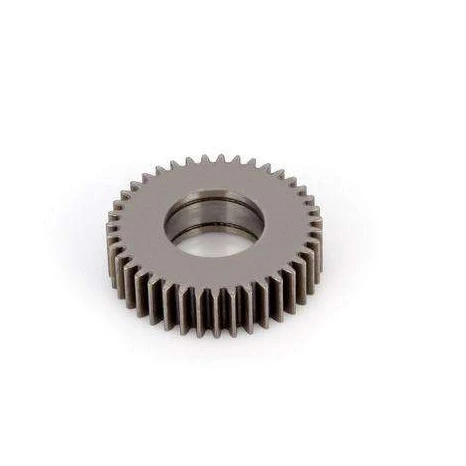
(sintered ndfeb)
FAQS on sintered ndfeb
Q: What are the key advantages of sintered NdFeB magnets?
A: Sintered NdFeB magnets offer exceptional magnetic strength, high energy density, and excellent temperature resistance. They are widely used in industries requiring compact, high-performance magnets, such as motors and renewable energy systems.
Q: How do sintered NdFeB magnets differ from bonded NdFeB magnets?
A: Sintered NdFeB magnets are produced through a high-temperature sintering process, resulting in superior magnetic properties and durability. Bonded magnets use resin and have lower strength but greater design flexibility for complex shapes.
Q: What applications are sintered NdFeB bushings commonly used for?
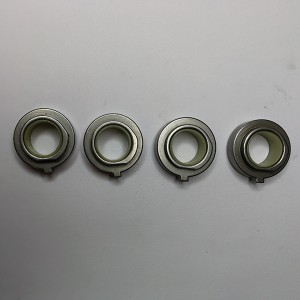
A: Sintered NdFeB bushings are ideal for high-speed, low-friction environments like precision machinery and aerospace systems. Their self-lubricating properties and wear resistance ensure longevity in demanding conditions.
Q: Can sintered NdFeB magnets operate in high-temperature environments?
A: Yes, certain grades of sintered NdFeB magnets can withstand temperatures up to 200°C with proper coatings. However, performance may degrade at extreme temperatures, requiring thermal stabilization treatments.
Q: How is corrosion resistance addressed in sintered NdFeB products?
A: Sintered NdFeB magnets are prone to oxidation, so they are often coated with nickel, zinc, or epoxy. For bushings, additional treatments like phosphating improve corrosion resistance in humid or harsh environments.