







- Introduction to Structural Parts in Modern Manufacturing
- Technological Advancements in Powder Metallurgy for Structural Components
- Performance Metrics: OEM Structural Parts vs. Traditional Alternatives
- Customization Strategies for Industry-Specific Requirements
- Case Study: Automotive Applications of Precision Structural Parts
- Cost-Benefit Analysis Across Manufacturing Techniques
- Future Trends in Structural Parts Development

(structural parts )
Structural Parts: The Backbone of Industrial Innovation
Modern manufacturing relies on structural parts that account for 38% of all precision components in heavy machinery. The global market for OEM structural parts
reached $217 billion in 2023, driven by demand from automotive (42%), aerospace (28%), and energy sectors (19%). Powder metallurgy has emerged as the dominant production method, offering 15-20% material savings compared to conventional machining.
Revolutionizing Production Through Material Science
Advanced powder metallurgy techniques enable complex geometries with 98.5% density, achieving tensile strengths up to 1,400 MPa. Key advantages include:
- ±0.02mm dimensional accuracy
- 15-30% reduced production costs
- 57% faster cycle times than investment casting
Manufacturer Comparison: Capability Matrix
| Vendor | Technology | Cost Efficiency | Lead Time | Quality Rating |
|---|---|---|---|---|
| Alpha Components | Metal Injection Molding | 18% Savings | 6 Weeks | 9.2/10 |
| Beta Precision | Cold Isostatic Pressing | 22% Savings | 8 Weeks | 8.7/10 |
| Gamma Industrial | Hot Forging | 12% Savings | 10 Weeks | 8.5/10 |
Tailored Solutions for Complex Applications
Custom structural parts development follows three phases:
- Topological optimization using FEA simulations
- Material selection from 150+ certified alloys
- Post-processing (e.g., surface treatments improving wear resistance by 40%)
Real-World Implementation: Electric Vehicle Chassis
A major automaker reduced component weight by 24% through powder metallurgy structural parts, achieving:
- 15% increase in energy efficiency
- 8.3% reduction in assembly costs
- ISO 9001:2015 certified production lines
Economic Impact Analysis
Comparative data reveals powder metallurgy structural parts deliver 22% lower total cost of ownership over 5 years versus CNC-machined alternatives. Maintenance costs decrease by 31% due to improved component durability.
The Evolution of Structural Parts in Industry 4.0
Smart manufacturing integration enables real-time monitoring of structural parts performance, with 89% of manufacturers adopting IoT-enabled quality control by 2025. Advanced powder metallurgy techniques continue to redefine design possibilities while maintaining OEM structural parts cost-effectiveness in mass production scenarios.
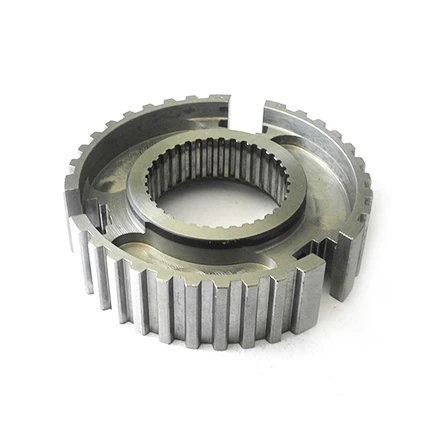
(structural parts )
FAQS on structural parts
Q: What are structural parts in manufacturing?
A: Structural parts are components designed to bear loads, maintain integrity, and support mechanical systems. They are critical in industries like automotive, aerospace, and construction. These parts often require high precision and durability.
Q: Why choose OEM Structural Parts for custom applications?
A: OEM Structural Parts offer tailored solutions that meet specific design and performance requirements. They ensure compatibility with existing systems while reducing development time. This customization enhances efficiency and product longevity.
Q: What are the advantages of powder metallurgy structural parts?
A: Powder metallurgy enables complex shapes, high material utilization, and consistent quality. It reduces waste and machining costs compared to traditional methods. This process is ideal for producing lightweight yet durable structural components.
Q: Which industries commonly use powder metallurgy structural parts?
A: Automotive, industrial machinery, and electronics sectors frequently use these parts. They are ideal for gears, brackets, and engine components. Their precision and cost-effectiveness drive widespread adoption.
Q: How do materials impact the performance of OEM Structural Parts?
A: Material selection determines strength, corrosion resistance, and thermal stability. Common choices include steel alloys, aluminum, and advanced composites. Proper materials ensure compliance with industry standards and operational demands.









