







Understanding High-Performance Valve Seats in Modern Machinery
In the intricate world of industrial fluid control and automotive systems, the integrity and performance of components are paramount. A critical element, often overlooked yet fundamental to system efficiency and longevity, is the valve seat. These precision-engineered components are designed to provide a leak-tight seal against a closing valve, ensuring optimal flow control and preventing media bypass. Their importance spans across a multitude of applications, from ensuring the precise combustion in an engine to regulating the flow of hazardous chemicals in petrochemical plants. The demands placed on these components are rigorous, requiring exceptional wear resistance, thermal stability, and corrosion protection. As industries strive for higher efficiency and reduced maintenance, the manufacturing processes for these vital parts have evolved significantly, with powder metallurgy emerging as a leading technology for producing superior components.
The selection of the right material and manufacturing process for a valve seat directly impacts its operational lifespan and the overall reliability of the system it serves. Traditional methods such as casting or machining often present limitations in achieving the fine tolerances, uniform material properties, and cost-efficiency required by modern industrial standards. This has led to the increasing adoption of advanced manufacturing techniques, particularly for complex machinery parts like valve seats. The industry trend is towards components that not only meet stringent performance criteria but also contribute to energy conservation and reduced environmental impact through their enhanced durability and efficiency. This shift underscores the need for expert manufacturing capabilities that can deliver high-quality, long-lasting solutions.
The Precision of Powder Metallurgy for Valve Seat Production
Detailed Manufacturing Process Flow
The production of a high-quality valve seat via powder metallurgy (PM) is a multi-stage process that capitalizes on the controlled compaction and sintering of metal powders to achieve superior material properties and precise geometries. This method begins with meticulously prepared metal powders, often alloys of iron, copper, nickel, or specialized high-strength steels, chosen for their specific attributes like wear resistance, corrosion resistance, or thermal conductivity.
1. Powder Blending: Raw metal powders, along with alloying elements and lubricants, are precisely blended to achieve the desired chemical composition and flow characteristics. 2. Compaction: The blended powder is fed into a rigid die and compacted under immense pressure, typically ranging from 300 to 800 MPa. This forms a "green compact," a fragile, porous part that holds the approximate final shape of the valve seat. This stage requires high precision tooling to achieve complex geometries with tight tolerances. 3. Sintering: The green compact is then heated in a controlled atmosphere furnace, below the melting point of the main constituent material. During sintering, particles bond together through atomic diffusion, reducing porosity and increasing density, strength, and hardness. The specific atmosphere and temperature profile are critical for achieving the desired microstructure. 4. Sizing/Coining (Optional): For even tighter dimensional tolerances or increased density, the sintered part can undergo a secondary compaction process called sizing or coining. This further refines the dimensions and surface finish. 5. Post-Sintering Operations (Optional): Depending on application requirements, parts may undergo heat treatment (e.g., carburizing, nitriding for enhanced surface hardness), machining for specific features, steam treatment for corrosion resistance, or impregnation for improved bearing properties.
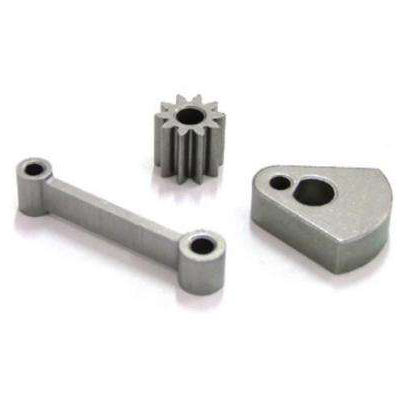
This meticulous process ensures that each sintered structural part, including the valve seat, possesses uniform density, superior mechanical properties, and excellent surface finish. The inherent characteristics of PM, such as near-net-shape manufacturing, significantly reduce material waste and subsequent machining operations, leading to cost efficiencies.
Technical Specifications and Performance Metrics
The performance of a valve seat is defined by a range of critical technical parameters that dictate its suitability for specific applications. Our powder metallurgy valve seats are engineered to meet and exceed stringent industry standards such as ISO and ANSI, ensuring robust performance and longevity. Below is a representative table outlining typical specifications for PM valve seats, though precise parameters will vary based on material composition and application demands.
The controlled porosity inherent to powder metallurgy can be leveraged to create parts with self-lubricating properties or to enable secondary impregnation with resins, enhancing resistance to wear and corrosion. This unique characteristic contributes significantly to the extended service life of PM valve seat components, reducing the need for frequent replacements and maintenance. Our commitment to quality ensures every part meets the exacting demands of modern industrial applications.
Diverse Applications and Key Industry Trends
The versatility and superior performance of powder metallurgy valve seat components make them indispensable across a broad spectrum of industries. In the automotive sector, they are critical for engine valve trains, where their high wear resistance and thermal stability contribute to improved fuel efficiency and reduced emissions. In industrial applications, such as petrochemical, metallurgy, and water supply & drainage systems, valve seat components are essential for controlling the flow of various media, often under high pressure and corrosive conditions.
Specifically, in the petrochemical industry, PM valve seats crafted from corrosion-resistant alloys are vital for handling aggressive chemicals and crude oil derivatives, ensuring system integrity and preventing costly leaks. For metallurgy, these parts withstand extreme temperatures and abrasive particles encountered in metal processing. In municipal water management and drainage, where long-term reliability and resistance to mineral buildup are crucial, durable machinery parts like PM valve seats offer significant advantages, ensuring continuous and efficient operation. Their inherent characteristics contribute to energy savings by maintaining efficient flow dynamics and preventing premature wear, which would otherwise lead to pressure drops and increased pumping requirements.
Current industry trends highlight a growing demand for advanced sintered structural part solutions that offer not just superior performance but also sustainability. Manufacturers are increasingly seeking components that are lighter, more durable, and produced with minimal environmental impact. Powder metallurgy aligns perfectly with these trends, offering exceptional material utilization (typically over 97%) and significantly reduced energy consumption compared to traditional machining from solid stock. This focus on efficiency and sustainability is driving innovation in material science and processing techniques for valve seats and other critical industrial components.
Advantages of Powder Metallurgy Valve Seats Over Traditional Methods
When comparing powder metallurgy with conventional manufacturing techniques like casting, forging, or extensive CNC machining for producing a valve seat, several distinct advantages emerge that underscore PM's superiority for specific applications.
- Material Utilization and Cost-Efficiency: PM is a near-net-shape process, meaning the final component is formed very close to its final dimensions. This drastically reduces material waste, often resulting in utilization rates exceeding 97%, a significant improvement over subtractive methods like machining which can generate substantial scrap. This directly translates to lower material costs and overall production cost savings, especially for high-volume production of complex machinery parts.
- Dimensional Precision and Surface Finish: PM can achieve exceptional dimensional accuracy and a fine surface finish directly from the sintering process, often eliminating or greatly reducing the need for secondary machining operations. This is particularly beneficial for critical sealing surfaces of a valve seat, where tight tolerances are essential for optimal performance.
- Uniform Material Properties: Due to the homogenous blending of powders, PM parts exhibit highly uniform material properties throughout the component, free from segregation issues common in castings. This consistency ensures predictable performance and reliability of the sintered structural part under various operating conditions.
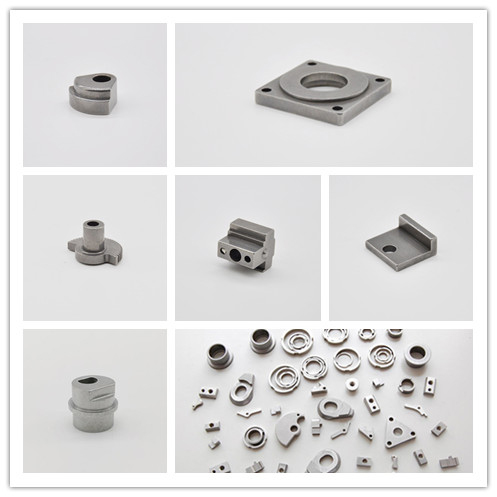
- Design Flexibility: Powder metallurgy allows for the creation of complex geometries, including internal features and intricate profiles, which would be difficult or impossible to achieve cost-effectively with other methods. This design freedom enables optimized valve seat designs for improved flow characteristics and sealing efficiency.
- Tailored Material Composition: The ability to blend various metal powders allows for the creation of unique alloy compositions with specific characteristics, such as enhanced wear resistance, improved corrosion resistance, or precise thermal expansion coefficients, tailored precisely for the demands of the valve seat application.
These advantages collectively lead to a more durable, reliable, and cost-effective valve seat solution, making powder metallurgy the preferred choice for demanding industrial and automotive applications.
Custom Solutions and Quality Assurance Excellence
Tailored Valve Seat Solutions for Unique Demands
Recognizing that standard components may not always meet the unique challenges of every industrial application, we specialize in providing bespoke valve seat solutions. Our approach to customization begins with a deep understanding of the client's specific operational environment, performance requirements, and dimensional constraints. This collaborative process involves:
- Material Selection: Collaborating with clients to select the optimal powder alloy (e.g., stainless steel, tool steel, specialized iron-based alloys) that best suits the application's demands for wear, corrosion, temperature, and strength.
- Design Optimization: Utilizing advanced CAD/CAM tools to refine the valve seat geometry, ensuring perfect fit, efficient flow, and extended service life. This includes optimizing angles, chamfers, and surface finishes.
- Prototyping and Testing: Developing prototypes for rigorous testing under simulated or actual operating conditions, ensuring the customized machinery parts meet all performance benchmarks before full-scale production.
- Post-Processing Customization: Applying specific heat treatments, surface coatings (e.g., hard chrome plating, PVD), or impregnations (e.g., oil, resin) to enhance specific properties like lubricity, hardness, or corrosion resistance.
This tailored approach ensures that each sintered structural part we deliver is perfectly engineered for its intended purpose, offering superior performance and long-term reliability.
Unwavering Commitment to Quality and Trustworthiness
Our dedication to delivering exceptional quality is foundational to our operations. We adhere strictly to international quality management systems, holding certifications such as ISO 9001. Every stage of the valve seat manufacturing process undergoes rigorous quality control, from raw material inspection to final product verification. Our comprehensive quality assurance protocols include:
- Dimensional Inspection: Utilizing advanced measurement equipment like CMMs (Coordinate Measuring Machines) to verify precise dimensions and tolerances.
- Material Analysis: Conducting spectrographic analysis, hardness testing (e.g., Rockwell, Vickers), and density checks to confirm material integrity and composition.
- Non-Destructive Testing (NDT): Employing techniques like eddy current testing or ultrasonic inspection for internal defect detection.
- Functional Testing: Where applicable, conducting performance tests to simulate real-world operating conditions, ensuring the valve seat functions as intended.
We pride ourselves on transparent communication regarding our delivery cycles, providing realistic lead times and proactive updates. Our products come with a robust warranty commitment, reflecting our confidence in their durability and performance. Comprehensive customer support is available to assist with technical queries, order tracking, and after-sales service, ensuring a seamless experience for our B2B partners. This commitment to quality, transparency, and support builds lasting trust with our clients globally.
Frequently Asked Questions (FAQs) About Powder Metallurgy Valve Seats
-
Q1: What industries primarily benefit from PM valve seat components?
A1: Industries such as automotive (engine valve seats), fluid control (pumps, industrial valves), HVAC, medical devices, petrochemical, and general industrial machinery widely utilize PM valve seats due to their superior wear resistance, precise dimensions, and cost-effectiveness. They are vital for any system requiring precise flow control and reliable sealing.
-
Q2: How does powder metallurgy enhance the service life of a valve seat?
A2: PM allows for the precise control of material composition, density, and microstructure. This enables the creation of highly wear-resistant alloys and uniform properties throughout the part, significantly extending its operational life compared to traditionally manufactured valve seats. Additionally, controlled porosity can facilitate self-lubrication or impregnation for enhanced durability and corrosion resistance.
-
Q3: Can PM valve seat parts withstand extreme temperatures and corrosive environments?
A3: Yes, by selecting appropriate metal powders and alloying elements (e.g., stainless steel, nickel-based alloys), powder metallurgy valve seats can be engineered to perform exceptionally well in both high-temperature applications and highly corrosive chemical environments. Post-sintering treatments like steam treatment or specialized coatings further enhance their resistance capabilities.
-
Q4: What is the typical lead time for custom sintered structural part orders?
A4: Lead times for custom orders vary depending on design complexity, material availability, and order volume. After an initial consultation and design finalization, we provide a detailed production schedule. We are committed to efficient production and strive to meet agreed-upon delivery cycles, ensuring timely delivery for all our machinery parts.
-
Q5: What quality certifications do your powder metallurgy products hold?
A5: We adhere to strict international quality management standards and are certified to ISO 9001. Our manufacturing processes incorporate rigorous quality control measures at every stage, ensuring that all our powder metallurgy parts, including valve seats, meet the highest industry benchmarks for performance and reliability.
Leading the Future of Industrial Components
The demand for precision-engineered, high-performance valve seat components continues to grow across critical industries. Powder metallurgy offers an unparalleled combination of material efficiency, dimensional precision, and customized performance characteristics, making it the ideal manufacturing process for the next generation of industrial components. By embracing advanced materials and meticulous process control, manufacturers can deliver solutions that not only meet but exceed the escalating demands for durability, efficiency, and cost-effectiveness in modern machinery. Our expertise in producing superior sintered structural part solutions ensures that our partners receive components that elevate their systems' overall performance and longevity.
References
- German, R. M. (2014). Powder Metallurgy and Particulate Materials Processing. Metal Powder Industries Federation.
- Kuhn, H. A., & Medding, B. L. (Eds.). (2000). Powder Metallurgy. ASM International.
- International Organization for Standardization (ISO). (Various). ISO 9001: Quality Management Systems.
- American National Standards Institute (ANSI). (Various). Standards related to Valve Design and Testing.
- Metal Powder Industries Federation (MPIF). (Various). Standard Test Methods for Powder Metallurgy Materials.









