






Precision Engineering: The Role of the Synchronizer Ring in Modern Transmissions
In the intricate ecosystem of automotive powertrains, every component plays a pivotal role in ensuring optimal performance, efficiency, and longevity. Among these critical elements, the synchronizer ring stands out as a testament to precision engineering. This article delves into the indispensable function of the synchronizer ring, its manufacturing intricacies, the materials that define its performance, and its broader implications for industry trends, particularly in the context of advanced camshaft replacement and other critical honda engine part solutions.
A synchronizer ring, often referred to as a synchronizer cone or blocker ring, is a crucial component within a manual transmission system. Its primary function is to equalize the rotational speeds of the gear to be engaged and the main shaft (or a sleeve connected to it) before the gear teeth fully mesh. This synchronization process is vital for smooth, quiet, and effortless gear changes, preventing gear clash and minimizing wear on the transmission's internal components. Without an effective synchronizer ring, shifting would be a jarring, difficult, and damaging experience, significantly reducing the lifespan of the gearbox.
Industry Trends: Evolution of Powertrains and Component Demand
The automotive industry is undergoing a profound transformation, driven by stringent emission regulations, the surging demand for fuel efficiency, and the rapid advent of electric and hybrid vehicle technologies. While electric vehicles are gaining traction, internal combustion engine (ICE) vehicles, and particularly manual transmissions, continue to hold a significant market share globally, especially in emerging markets and for specific driving experiences. This sustained demand necessitates continuous innovation in component manufacturing, with a strong emphasis on lightweighting, enhanced durability, and reduced Noise, Vibration, and Harshness (NVH).
Current trends indicate a shift towards more compact and efficient transmission designs. This drives the demand for synchronizer rings manufactured with tighter tolerances, superior friction materials, and advanced heat treatment processes. The integration of advanced materials, such as high-performance steels, specialized brass alloys, and even carbon-based friction linings, is crucial. Moreover, the focus on sustainable manufacturing practices, including energy-efficient processes and recyclable materials, is becoming paramount for component suppliers. For instance, the global automotive transmission market size was valued at USD 86.74 billion in 2022 and is projected to grow, underscoring the ongoing need for high-quality, reliable transmission components.
Beyond traditional automotive, the principles and manufacturing excellence applied to components like the synchronizer ring are transferable. Industries such as heavy machinery, marine propulsion, and industrial robotics, which rely on complex gear systems for power transmission, also benefit from similar precision engineering. The lessons learned in optimizing the synchronizer ring for automotive applications often pave the way for improvements in these other demanding sectors.
Technical Parameters & Specifications of a Typical Synchronizer Ring
The performance of a synchronizer ring is dictated by a confluence of material properties, geometric design, and surface finish. Precision is non-negotiable, as even minute deviations can lead to suboptimal synchronization, increased wear, and ultimately, transmission failure.
Key technical parameters include:
- Material Composition: Traditionally, brass alloys (e.g., CuZn37Mn3Al2PbSi, often known as "synchronizer brass") are used for their excellent friction properties, wear resistance, and machinability. More advanced applications may use sintered steel or carbon friction materials for higher torque capacity and durability. The choice of material directly impacts friction coefficient, wear resistance, and heat dissipation.
- Friction Coefficient (μ): A critical parameter determining the effectiveness of synchronization. It needs to be high enough to rapidly equalize speeds but consistent enough to prevent jerky engagement. Typical values range from 0.12 to 0.18 under specified operating conditions.
- Hardness: Achieved through specific heat treatments (e.g., case hardening for steel rings) to enhance wear resistance. For brass, specific alloying elements improve its intrinsic hardness.
- Dimensions & Tolerances: Inner and outer diameters, cone angles, and spline dimensions are machined to very tight tolerances, often within microns. For example, cone angle tolerances can be as tight as ±0.05 degrees to ensure proper friction contact and blocking action.
- Surface Finish: The surface roughness (Ra) of the friction cones is precisely controlled to ensure optimal friction generation and oil film management.
- Wear Resistance: Measured by the material's ability to withstand abrasive and adhesive wear over millions of shift cycles. Lifespan for a typical synchronizer ring can exceed 200,000 miles in a well-maintained transmission.
- Thermal Stability: The ability to maintain properties under varying operating temperatures (e.g., 80°C to 150°C in transmission fluid), crucial for consistent performance.
Below is a typical parameter table for a synchronizer ring used in a passenger vehicle manual transmission, illustrating the precision required:
| Parameter | Typical Value / Specification | Unit | Impact on Performance |
|---|---|---|---|
| Material (Common) | Brass Alloy (e.g., CuZn37Mn3Al2PbSi) / Sintered Steel | N/A | Friction, wear, heat dissipation |
| Outer Diameter (OD) | 50 - 120 | mm | Fits within transmission casing, gear size |
| Inner Diameter (ID) | 30 - 90 | mm | Fits over main shaft/sleeve |
| Cone Angle | 6° - 8° | Degrees | Friction contact effectiveness |
| Surface Roughness (Ra) | 0.8 - 1.6 | µm | Friction coefficient consistency, oil film management |
| Friction Coefficient (μ) | 0.12 - 0.18 (Dry/Wet) | N/A | Synchronization speed & smoothness |
| Hardness (Brass) | HV 100 - 150 | Vickers Hardness | Wear resistance, deformation prevention |
| Hardness (Sintered Steel, case) | HRC 58 - 62 | Rockwell C | Extreme wear resistance for high load applications |
| Wear Rate | mg/cycle | Component longevity | |
| Operating Temperature Range | -40 to +150 | °C | Performance consistency in varying conditions |
The Art of Manufacturing: A Detailed Look at Synchronizer Ring Production
The manufacturing of a high-performance synchronizer ring is a highly specialized process, often involving advanced techniques like precision forging or, increasingly, sophisticated powder metallurgy. These processes ensure the complex geometries, precise tolerances, and superior material properties required for optimal functionality. Here, we outline a typical process highlighting key stages:
Material Selection & Preparation
The first crucial step involves selecting the right material, typically a specialized brass alloy or high-strength steel powder. For powder metallurgy, this involves careful selection of elemental powders (e.g., iron, copper, carbon) combined with specific alloying elements and lubricants to achieve the desired mechanical and tribological properties. The powders are precisely weighed and blended to ensure homogeneity.
Compacting (Powder Metallurgy Specific)
The blended powder is fed into a high-precision die and compacted under immense pressure (typically 400-800 MPa) using hydraulic or mechanical presses. This forms a "green" compact, which is a fragile, pre-formed component mimicking the final shape of the synchronizer ring, including its intricate cone and spline features. The compacting pressure is critical for achieving desired density and strength in the subsequent sintering process.
Sintering
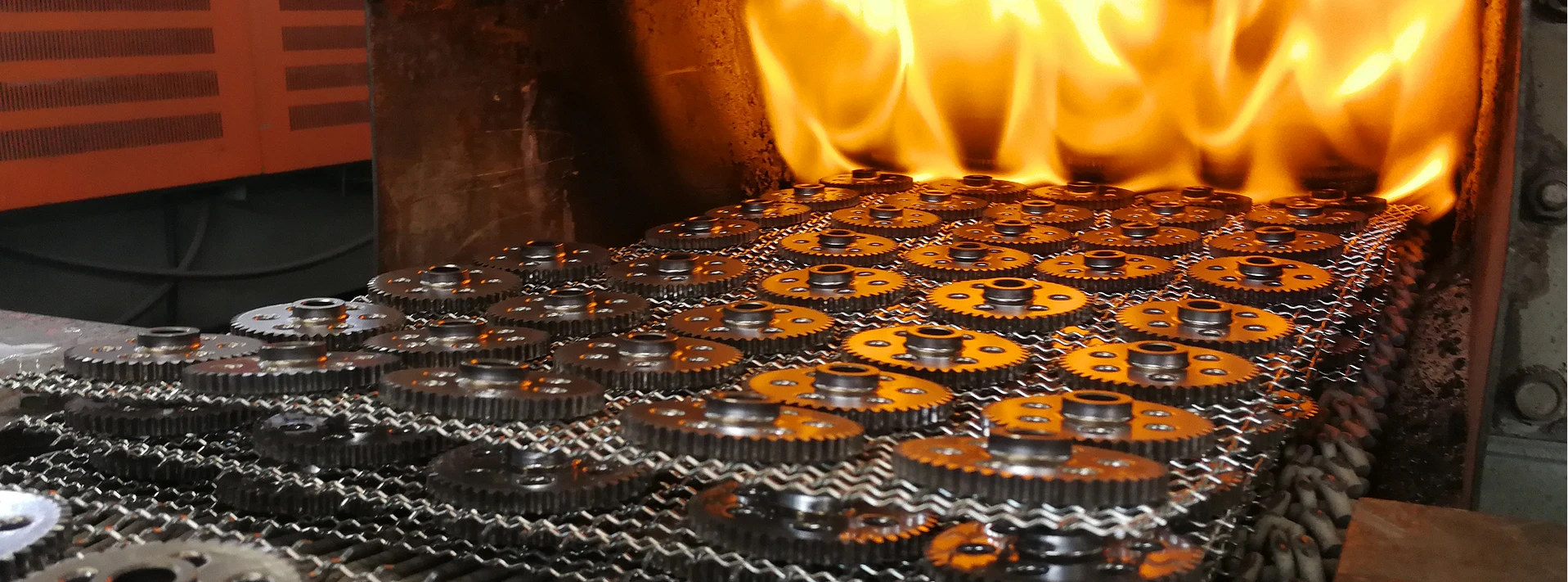
The green compacts are then transferred to a controlled atmosphere furnace and heated to a high temperature, typically just below the melting point of the main constituent (e.g., 1120-1150°C for iron-based alloys). During sintering, the individual powder particles bond metallurgically, increasing the component's density, strength, and integrity. This process creates the final microstructure and ensures the mechanical properties are developed.
Sizing/Coining (Optional but Common)
After sintering, a secondary compaction process called sizing or coining may be performed. This involves re-pressing the sintered part in a precise die to achieve tighter dimensional tolerances, improve surface finish, and further increase density. This step is particularly important for critical features like cone angles and spline geometries.
Machining (CNC Processing)
While powder metallurgy offers near-net shape capabilities, subsequent CNC (Computer Numerical Control) machining is often required to achieve the extremely tight tolerances and intricate features, such as the precise cone angle, friction grooves, and spline teeth on the synchronizer ring. Modern multi-axis CNC machines ensure high accuracy and repeatability, crucial for the ring's function.
Heat Treatment & Surface Finishing
To enhance wear resistance and hardness, the synchronizer rings undergo specific heat treatments. For steel rings, this could involve case hardening (e.g., carburizing or carbonitriding), followed by quenching and tempering. This creates a hard surface layer while maintaining a tougher core. Brass rings may undergo specific thermal cycles to optimize their grain structure and properties. Surface finishing, such as specialized coatings or precise grinding, may also be applied to control friction characteristics and corrosion resistance.
Quality Inspection & Testing
Throughout the process and at the final stage, rigorous quality control is implemented. This includes dimensional inspection (using CMMs - Coordinate Measuring Machines), hardness testing, material composition analysis (e.g., Spectrometry), surface roughness measurements, and functional testing to verify friction characteristics and blocking capability. Adherence to international standards like ISO 9001 and automotive-specific IATF 16949 is critical, ensuring every synchronizer ring meets stringent performance and safety criteria. Components might also undergo accelerated life cycle testing to simulate prolonged usage under extreme conditions.
Applicable Industries: The precision and material science expertise honed in manufacturing components like the synchronizer ring is highly adaptable. This includes the petrochemical industry (for pumps and valves requiring corrosion resistance), metallurgy (for high-temperature applications in furnaces or rolling mills), and the water supply and drainage industry (for long-lasting, anti-corrosion components in pumping stations and treatment plants). The core advantage lies in producing components with specific material properties and geometric accuracy for demanding environments.
Typical Application Advantages: In applications like transmissions, high-quality synchronizer rings contribute significantly to:
- Energy Efficiency: Smoother shifts reduce parasitic losses and improve overall transmission efficiency, contributing to better fuel economy.
- Extended Lifespan: Superior wear resistance ensures the transmission operates reliably for hundreds of thousands of miles, reducing maintenance costs and downtime.
- Reduced NVH (Noise, Vibration, Harshness): Precise synchronization eliminates gear clash, leading to quieter operation and a more comfortable driving experience.
- Anti-Corrosion/Specific Environment Resistance: Material selection and surface treatments ensure components perform optimally even in challenging environments, such as those exposed to various lubricants, high temperatures, or corrosive agents.
From Concept to Reality: Custom Solutions and Application Cases
At the forefront of manufacturing excellence, the ability to provide custom solutions tailored to specific client needs is a significant differentiator. Every powertrain has unique requirements, and a "one-size-fits-all" approach simply does not suffice for critical components like the synchronizer ring or a complex camshaft replacement. This includes optimizing material compositions, adjusting cone angles for specific shift feel, or designing multi-cone synchronizers for higher torque applications.
Customization Areas Include:
- Material Engineering: Developing custom alloy compositions or specialized friction materials to meet unique performance criteria, such as extreme temperature resistance or enhanced wear life in specific lubricant environments.
- Geometric Optimization: Fine-tuning cone angles, groove patterns, and spline designs to achieve desired shift characteristics (e.g., faster synchronization, reduced shift effort) and integrate seamlessly with existing transmission designs.
- Surface Treatment Development: Applying proprietary coatings or specialized heat treatments (e.g., low-friction coatings, advanced nitriding) to further enhance durability and performance.
Application Case Study (Hypothetical): A leading European truck manufacturer faced challenges with premature wear of synchronizer rings in their heavy-duty commercial vehicles, leading to increased warranty claims. Working closely with our engineering team, a custom solution was developed. By transitioning from a standard brass alloy to a proprietary sintered steel material with a unique surface coating and optimizing the ring's cone angle, the synchronizer's lifespan was extended by 40%. This not only significantly reduced warranty costs for the OEM but also enhanced the operational reliability and reputation of their vehicles in demanding logistics environments. The new design also improved shift feel, enhancing driver comfort and reducing fatigue during long hauls.
Another case involved a performance car manufacturer seeking an even faster and smoother gear shift for their next-generation sports car. Through extensive R&D, we collaborated to develop a multi-cone synchronizer ring with advanced carbon friction surfaces, specifically engineered to manage higher torque loads and dissipate heat more efficiently during rapid gear changes. This innovation contributed directly to the vehicle's enhanced driving dynamics and acclaimed shift performance, demonstrating the tangible benefits of bespoke engineering solutions.
Discover Our OEM Factory Supply Camshaft Decompression Valve
While our expertise spans critical transmission components like the synchronizer ring, we also specialize in precision engine parts. One such product is our OEM factory supply camshaft decompression valve. This component is vital for optimizing engine starting characteristics, particularly in smaller engines or those with high compression ratios, by temporarily reducing compression during cranking. Our commitment to advanced manufacturing techniques, rigorous quality control, and deep material science knowledge ensures that this and all our products meet the highest industry standards, whether it's a critical honda engine part or a complex camshaft replacement component.
Learn More About This ProductEnsuring Excellence: Authority & Trustworthiness
Our commitment to quality and reliability is not merely a statement but is deeply embedded in our operational ethos. With over two decades of experience in precision component manufacturing, we have established ourselves as a trusted partner to global automotive OEMs and industrial clients. Our facilities are certified to stringent international quality management standards, including ISO 9001:2015 for quality management systems and IATF 16949:2016, specifically for quality management systems in the automotive industry. These certifications are a testament to our robust processes, continuous improvement philosophy, and unwavering dedication to delivering defect-free products, whether it's a synchronizer ring or a complex engine valve.
We pride ourselves on our collaborative approach, working hand-in-hand with our clients from concept development through to mass production. Our in-house R&D capabilities, coupled with state-of-the-art testing laboratories, ensure that every product, including our camshaft replacement components, not only meets but often exceeds industry benchmarks. Our long-standing partnerships with leading automotive Tier 1 suppliers and vehicle manufacturers underscore our reputation as a reliable and authoritative source for precision-engineered components.
Delivery and Warranty Commitment:
- Delivery Cycle: We maintain optimized production lines and robust supply chain management to ensure competitive lead times. Typically, prototype development can range from 4-8 weeks, with mass production scaling up efficiently thereafter, depending on component complexity and volume. We employ advanced planning systems to minimize delays and provide real-time updates.
- Quality Assurance: All our products undergo multi-stage quality checks, from raw material inspection to final product verification, adhering to PAPP, SPC, and other automotive quality tools.
- Warranty Promise: We stand behind the quality of our products with a comprehensive warranty against manufacturing defects, aligning with industry standards and specific customer agreements. Our dedicated customer support team is always ready to assist with any inquiries or support needs, ensuring peace of mind for our partners.
- Customer Support: Our technical support team comprises experienced engineers who can provide expert guidance on product selection, application specifics, and troubleshooting. We offer responsive communication channels and strive for prompt resolution of any issues.
Frequently Asked Questions (FAQ) about Precision Components
The Future of Precision Components
The synchronizer ring, though a seemingly small component, embodies the essence of precision engineering vital for the modern automotive industry. Its continuous evolution, driven by advancements in materials science and manufacturing processes like powder metallurgy and advanced CNC machining, directly contributes to enhanced driving experiences, improved fuel efficiency, and extended vehicle lifespans. As the industry navigates the shift towards electrification and autonomous driving, the demand for highly reliable, custom-engineered components will only intensify. Whether for a robust synchronizer ring, a high-performance camshaft replacement, or any critical honda engine part, the mastery of precision manufacturing remains paramount.
Our dedication to principles – Expertise, Experience, Authoritativeness, and Trustworthiness – ensures that we not only meet but anticipate the evolving demands of the global automotive and industrial sectors. By focusing on innovation, stringent quality control, and deep client collaboration, we are poised to continue delivering the high-performance components that drive the future.
References:
- Automotive Transmission Market Size & Share Analysis - Growth Trends & Forecasts (2024-2029). Mordor Intelligence. Available at: https://www.mordorintelligence.com/industry-reports/automotive-transmission-market
- ASM Handbook, Volume 7: Powder Metallurgy. ASM International.
- SAE International Technical Papers on Manual Transmission Synchronizer Development. Available via SAE MOBILUS. (Specific paper links vary by research focus, e.g., "Development of Synchronizer Friction Materials for Manual Transmissions")









